
Key Takeaways
Every organization handles leave differently, but does that mean there’s a right way and a wrong way? How you support employees through leave has a direct impact on whether they stay, how quickly they come back ready to contribute, and what it costs you when the experience falls short.
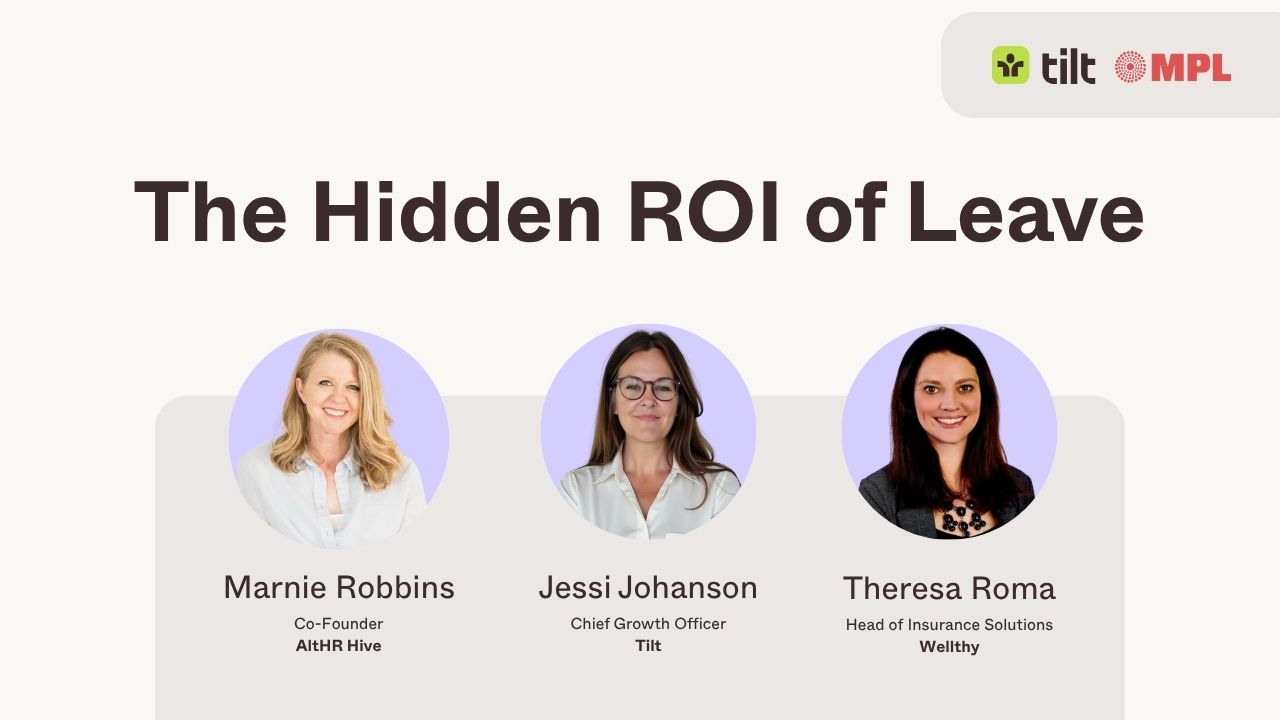
In a recent webinar hosted alongside The Modern People Leader, Tilt’s Chief Growth Officer Jessi Johansson, AltHR Hive’s Co-founder Marnie Robbins, and Wellthy’s Head of Insurance Solutions Theresa Roma explored the real, measurable ROI behind thoughtful leave management. The conversation covered how leave experience ties directly to retention, why caregiving and leave need to live in the same system, and how to build an internal business case with numbers that hold up in a leadership meeting.
1. Leave Is a Retention Variable, Not a Soft Benefit
Leave management directly affects whether your employees choose to stay or pursue opportunities elsewhere. When someone has a positive leave experience, their likelihood of sticking around changes significantly. As Johansson shared, “If you handle your leave with care… their eNPS score or their engagement with the employer is significantly different when they return from leave, and they are way more likely to stay. It’s a difference of 70% eNPS compared to 30 or less.“
That’s the difference between an employee who comes back energized and invested, and one who’s already updating their resume. When leave is treated as a priority, it impacts more than just the employee taking the leave of absence. It also leaves an impression on everyone around them—who are likely observing how the employee is being treated and cared for during that time.
2. Caregiving and Leave Aren't Two Benefits, They're One Experience
Organizations that treat caregiving support and their leave policy offerings as two separate employee benefits tend to step in too late—because by the time an employee flags that they need to take a leave, they’ve often already been struggling for a while. As Roma explained, “When companies treat caregiving and leave as separate programs, they end up responding too late in the journey. Leave becomes that moment of intervention when in reality it’s often close to the finale.”
When support or resources exist before leave begins, employees aren’t starting their leave already depleted. They have a plan, they’ve had help navigating the complexity before it peaked, and when the leave ends, the return isn’t starting from zero.
Roma also pointed to something that doesn’t get enough attention: the return-to-work phase is where most leave breakdowns happen for caregivers. “Just because your leave is up doesn’t mean your caregiving responsibilities are up.” When caregiving and leave are designed as one connected employee experience rather than two handoffs, that transition gets smoother and you keep your teams intact.
3. The Cost of Turnover Is Greater Than the Cost of Investment
For HR leaders who need to make the internal case for better leave support, Robbins offered a frame that’s harder to argue with than engagement scores alone: turnover math.
Roughly one third (33%) of employees leave their organization within 18 months of taking a leave. When you run the numbers on what a single turnover event costs, as Robbins put it, “that turnover cost pays for your paid leave of absence or for your support of that leave of absence.”
Robbins also raised what she called “velocity to impact,” the idea that an employee who felt genuinely supported during leave doesn’t just come back, they come back ready to contribute. Faster ramp time, stronger early performance, higher engagement right out of the gate. The ROI shows up in ways a single line item won’t capture.
How Teams Are Maximizing Their Leave ROI
Once the value is realized, the next step is to evaluate how to maximize your return to help employees stay longer, perform better, and remain engaged once their leave is complete. Leave management solutions are often a valuable tool HR teams look to, but they’re not all made the same.
Johansson closed the conversation by reflecting on what HR teams should look for when selecting a leave management solution: “Any vendor that you are using to manage leave should reduce the administrative burden. But we fundamentally believe that it shouldn’t remove you, HR, from the employee experience.”
The goal isn’t to automate your team out of the picture, but instead to free enough of your time so you can show up for the moments that count.
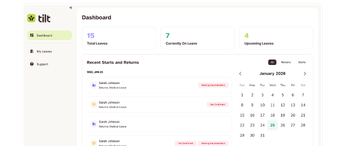
Whether you’re managing a workforce spread across the country, or handling just a few leaves a year, Tilt’s Leave Experience Management platform simplifies the leave process for People teams so you can focus on the meaningful work that got you into HR in the first place. To learn more about what this looks like in practice, you can explore our platform here or by meeting with a member of our team.