


Guest post provided by OnTheClock.
What do teams in fast-growing companies tend to struggle with, whether they’re building software, serving customers, or running busy retail floors?
Not the work itself, but the simple act of keeping time, attendance, and leave information in sync.
Ask anyone in HR, and you’ll get a knowing smile. Time gets tracked in one system, leave requests land somewhere else, payroll follows its own process, and suddenly everyone is double-checking numbers that should have matched in the first place. Nothing dramatic, but just enough to slow everything down.
In this post, we’ll look at why these gaps happen, how businesses can create a more seamless flow from time tracking to leave management, and what a smoother, more connected employee experience really looks like.
Why Connected Time and Leave Systems Matter Today
Payroll has become increasingly complicated, especially as teams move between on-site, hybrid, and fully remote work. Yet many businesses still manage essential tasks like tracking time and leave requests through disconnected tools. HR ends up stitching data together, managers spend time verifying numbers, and employees often wait for basic answers about their leave data or sick leave, which could be streamlined with automated leave management.
When systems do not speak to each other, the impact is immediate. Small errors lead to big frustrations, missing hours, incorrect benefits balances, or delays in payroll. Recent forecasts show strong growth in HR software adoption, signaling that businesses are moving away from disconnected workflows and toward tools that integrate more smoothly.
Connected systems help prevent these issues by keeping information consistent at every stage of the leave lifecycle. They support smoother operations and a better employee experience by offering:
- Accurate, real-time hours
- Clear benefits balances
- Fewer bottlenecks for HR and managers
When time, attendance, and leave flow together, businesses spend less time fixing problems and more time supporting their people.
The Biggest Challenges Companies Face When Systems Don't Connect
For many businesses, the biggest struggle is not the lack of tools. It’s that they rarely connect well. Time tracking may live in one system, scheduling in another, payroll somewhere else, and leave requests in a completely separate platform. Instead of information moving smoothly between these tools, it often lands in a spreadsheet or an exported file that someone must manually adjust, introducing risk and unnecessary complexity to the leave management process.
Most companies rely on one of four methods to connect their systems. None of them is perfect:
- Built-in integrations that only move partial or incomplete data
- Third-party connectors like Zapier that still require oversight
- Manual work that depends on someone doing everything correctly
- Large all-in-one platforms that try to combine everything, but often deliver weaker functionality in certain areas
This lack of alignment is more common than most people think. In fact, an SHRM report found that only 18% of HR executives say their systems are fully integrated. While the report looks broadly at HR strategy, the underlying issue is the same: organizations are juggling too many disconnected tools.
The problem is not just inefficiency; it’s the risk that something important, like a seamless employee leave experience, will be missed during their most critical moments. When time and leave information do not sync, employees feel it immediately. Incorrect pay or wrong hours on a paycheck are not small issues. They affect trust, motivation, and the overall employee experience.
Disconnected systems also make it harder for HR teams to keep up with leave needs as policies, employee expectations, and compliance requirements continue to evolve. Instead of spending time on meaningful HR work, they become data troubleshooters.
How Small and Mid-Sized Businesses Can Build a Seamless Workflow
Creating a connected experience across time tracking, attendance, payroll, and leave management does not have to be overwhelming. The key is choosing the right system through a clear, structured approach.
Start with strong research. Compare reviews, learn from other businesses, and explore forums where users share what works and what doesn’t. Then create a shortlist and test those tools in real workflows. Most SaaS platforms offer trials. Use them to understand usability, support quality, and how well the tool fits everyday operations.
Before deciding, create a simple requirements list: must-haves, nice-to-haves, deal-breakers, and feedback from testing. This prevents choosing a tool just because it looks attractive or affordable.
A thoughtful approach on the front end saves significant time, cost, and frustration later. Choosing the right tool once is far easier than replacing the wrong one a few months down the line.
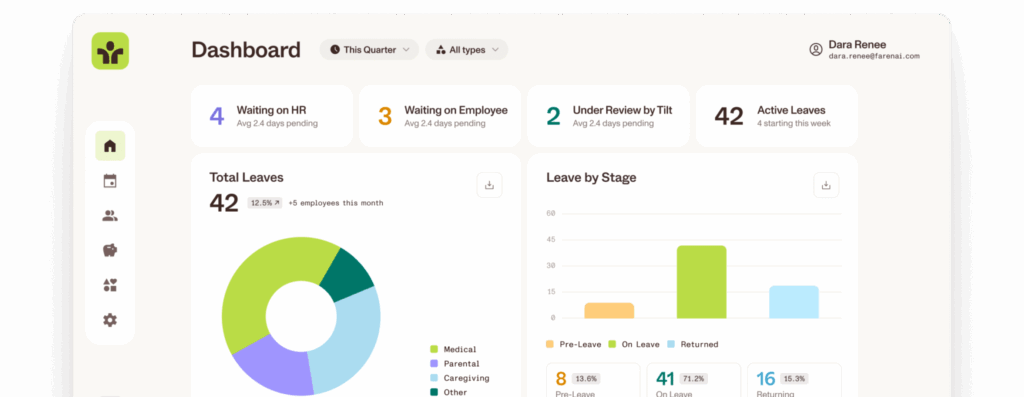
Building Accuracy and Trust in a Flexible Work Environment
In a world where flexibility is the norm, accuracy and transparency in everyday HR tools, especially leave tracking, matter more than ever.
What Employees Expect Today
Employees want tools that are simple, modern, and accessible anywhere. They expect clear visibility into their hours, leave balances, and schedules without waiting for someone else to provide that information.
Why Transparency Strengthens Trust
When people can check their records anytime, it reduces uncertainty. Real-time access helps employees feel confident that their hours and pay are correct. Employees should not have to guess how leave decisions are made, and workflows run more smoothly when everyone understands how leave works.
How Modern Systems Support Flexibility
Not every employee works behind a desk. For those constantly on the move, access to a computer is not always guaranteed. Modern solutions provide this flexibility with mobile support that gives employees 24/7 access to manage their leave directly from their phone—anytime, anywhere.
Keeping Controls Without Adding Friction
Businesses can still maintain accuracy through location rules, approval workflows, and other built-in safeguards. These tools ensure the system stays reliable without making employees feel restricted.
What the Future of Leave Management Looks Like
The future is moving toward systems that connect more naturally, not necessarily fewer tools. Businesses are looking for platforms that specialize in their core function but integrate cleanly with others. Instead of relying on a single tool for everything, companies are prioritizing smoother data flow between tracking time, attendance, and leave type, so employees get clarity without the complexity.
There is also a growing focus on employee wellness. Businesses want to know how people are feeling, especially in remote or hybrid settings. Features like quick check-ins or eNPS may become part of the same platform employees already use to clock in or request time off, making well-being a natural part of daily operations.
As these trends continue, a connected approach, where each tool does its job well and communicates clearly with the others, will support a better, more enjoyable employee experience.
Author Bio
Dean Mathews is the founder and CEO of OnTheClock, the easy-to-use employee time tracking, scheduling, PTO, and payroll app that helps over 16,000 small businesses and 180,000 people worldwide.
With over 20 years of experience designing and developing business applications, Dean views software development as a true art form. In his eyes, when a product is crafted with care and precision, it can touch lives, transform businesses, and make work better for countless people.
When he is not perfecting time tracking, Dean enjoys spending time with family and friends, and finding ways to make the world just a little better. You can connect with him on LinkedIn.

