

Challenge: For an HR Benefits Partner at a mid-sized tech company, leave had become one of the most complex and demanding parts of her role. With hundreds of leaves each year, leave management relied heavily on manual work, lived across disconnected systems, and depended almost entirely on HR alone to guide employees through deeply personal moments. While the intent was to be supportive, this in-house approach created hidden compliance risk, financial exposure, and an experience that could not scale with the organization’s growth.
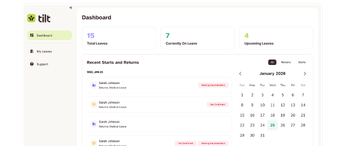
Solution: The HR team partnered with Tilt to intentionally redesign leave as a clear, human-centered experience. By introducing a centralized leave platform with guided employee support, built-in compliance workflows, and structured state program coordination, the team moved leave out of inboxes and spreadsheets and into a system designed for both care and control. Tilt allowed HR to stay accountable for the experience without being personally involved in every interaction.
Results:
- A clear, single destination for all leave-related questions, reducing employee confusion and HR interruptions
- Scalable, empathetic employee support throughout the leave journey, even when HR could not be directly involved
- Visible, documented compliance workflows that reduced risk and increased confidence
- Improved financial discipline through guided state program coordination, without sacrificing employee care
Continue reading to see how this HR leader transformed leave from a fragile, manual process into a system employees could trust and HR could confidently stand behind.
The Core Challenges HR Faced With In-House Leave Management
What looked like a manageable process on paper quickly became overwhelming in reality. Leave was touching too many systems, too many stakeholders, and too many sensitive moments to live in spreadsheets and inboxes.
Several challenges surfaced consistently:
- Leave depended on one person. Nearly all coordination, communication, and guidance flowed through HR, creating bottlenecks and burnout.
- Employees lacked clarity. Without a defined process, employees often did not know what steps to take, where to go, or what to expect.
- Compliance lived in the background. Required notices, documentation, and education were difficult to track consistently.
- Financial risk was growing. Paying 100 percent of leave without requiring state or disability programs masked overpayments and unnecessary spend.
As leave volume increased, the human cost became clearer. Employees waited for answers. HR spent hours in one-on-one meetings. Small issues escalated quickly simply because there was no shared system to absorb the complexity.
“I don’t have time to meet with every single employee that goes out on leave. We had 400 employees take leave already this year… and before the tool, I was taking those meetings myself.”
Prioritizing a Human-Centered and Sustainable Leave Management Solution
Rather than continuing to patch a fragile system, this HR leader chose to step back and redesign leave from the ground up.
“We really viewed it as a line in the sand for redefining our process.”
That decision marked a shift from managing leave reactively to designing it intentionally. The goal was not simply to reduce administrative work, but to create a leave experience that employees could trust and HR could stand behind.
From the beginning, her priorities were clear:
- Employee experience came first. Employees needed clarity, guidance, and support during vulnerable moments.
- Administration needed to be sustainable. HR required a system that could handle volume without relying on constant manual effort.
“Obviously, both pieces go hand-in-hand for leave management. I wanted to make sure the employee experience was optimized… to get them in a better situation.”
This clarity helped frame every decision that followed.
How Tilt Redefined Leave for Employees and HR
1. Clear Ownership and a Single System
Before Tilt, employees often searched for answers across Slack messages, emails, and internal teams. Leave questions bounced between HR, managers, and payroll, slowing everything down and creating unnecessary delays.
With Tilt, leave finally had a clear home.
Employees knew exactly where to start. Even those who were only exploring whether leave was an option could go to one place and get clarity without escalating questions to HR.
“Just knowing who to go to has really changed the whole process…They can start identifying ‘Tilt is the go-to for all things leave-related.’ But even employees who are just inquiring about leave can go to Tilt and have that introductory conversation, even if it’s just to understand if leave is the right choice for them.”
This single change eliminated confusion, reduced interruptions, and gave employees confidence that they were getting accurate information from the start.
2. Employee Support That Scales Without Losing Empathy
One of the biggest challenges with the in-house model was that care depended on HR’s availability. As leave volume grew, that model became unsustainable.
Tilt changed how support was delivered. Employees received timely, empathetic guidance throughout their leave, even when HR could not be personally involved in every case.
“Leave is a very sensitive process and I want people to feel celebrated if it’s celebratory or feel cared for if it’s more complicated. I know Dani delivers very empathetic communication towards my employee base and is VERY responsive and supportive of them.”
For HR, this meant peace of mind. For employees, it meant consistent, responsive care during vulnerable moments.
3. Compliance That Is Visible, Documented, and Defensible
Before Tilt, compliance requirements lived in the background. Notices, documentation, and manager education were difficult to track consistently, increasing risk without clear visibility.
Tilt brought compliance into the workflow itself. HR could see what had been communicated, when it had been delivered, and how managers were being guided.
“Compliance is the biggest risk mitigation Tilt helps with. Previously, we weren’t providing any employees with FMLA designation or their rights notices. Just being able to know that even if an employee doesn’t take FMLA but we delivered the notice to them we’re meeting our compliance as a business is a HUGE piece of mind aspect.”
Compliance shifted from a quiet concern to a documented, confidence-building part of the process.
4. Financial Responsibility Without Sacrificing Care
Paying employees at 100 percent during leave felt supportive, but it masked significant financial exposure. Without structured guidance around state and disability programs, the company was overpaying unnecessarily.
Tilt made it possible to reduce spend while showing up for employees when it mattered most. Clear instructions, guided steps, and proactive communication helped employees navigate state programs with confidence.
“Requiring our employees to go through those state programs…would have been really difficult for me to implement without a tool. For it to be sustainable and actually work well, you need a tool to do that. So for Tilt to outline the instructions for the employees and walk them through the whole process and then also outline the payment aspect [is] super helpful and saves [the company] a bunch of money.”
The Payoff
By partnering with Tilt, this HR leader transformed leave from a fragile, manual process into a human-centered experience designed to scale.
- Employees gained clarity, confidence, and support
- HR gained control, visibility, and peace of mind
- The organization reduced risk while strengthening trust
Leave became what it always should have been: a thoughtfully designed experience that supports people and protects the business at the same time.
About Tilt
Every leave is a defining moment in the employee experience. Tilt exists to transform these moments from sources of stress and risk into opportunities for trust, care, and connection. Through Leave Experience Management (LXM), we ensure leave is seamless, compliant, and empowering—so HR can lead with confidence and employees feel fully supported when it matters most.