

Leave. It’s one of those HR topics everyone nods politely at in meetings, but few organizations truly master. For employees, a leave of absence can be a pivotal moment in their relationship with a company. Handled well, it deepens trust. Mismanaged, it can create ripple effects that last far beyond the leave itself or even cost an organization a valued employee.
So why do so many leave programs quietly unravel? The answer isn’t “bad HR.” It’s structural. Across the leave journey—from pre-leave to return-to-work—fragmented ownership, lost context, and broken handoffs create confusion, risk, and unnecessary strain. Let’s dissect the anatomy of a leave experience to see where most programs break down, and how continuity can transform the entire process.
Pre-Leave: Firefighting Before It Begins
The moment an employee initiates leave, HR often jumps into “firefighting mode.” Paperwork, approvals, compliance checks—the administrative load can be overwhelming. Brandon Salisbury, Tilt CMO, puts it plainly, “Overwhelmingly, [HR leaders] are drowning in administrative tasks… it takes away from the critical opportunities to really support that employee.”
Here’s the challenge: when administrative tasks dominate, the human side of leave—showing empathy, providing guidance, anticipating needs—gets lost. Managers might not even know someone is leaving until the last minute, creating the infamous “where’s Jane?” moment. Misalignment at this phase isn’t about negligence, but the structural friction of multiple systems, unclear ownership, and ad hoc processes.
A well-designed leave program anticipates this phase. It reduces repetitive tasks, keeps everyone informed, and ensures that the employee doesn’t have to chase down answers or repeat their story to multiple stakeholders.
Pre-leave is more than paperwork. It sets the tone for the entire experience, shaping whether employees feel confident in the process and secure in their role while they’re away..
Active Leave: Where Context Gets Lost
Once an employee goes out on leave, the need for coordination doesn’t go away—it often becomes more complex. Even a straightforward leave can have multiple stakeholders, including HR, payroll, managers, and external vendors. When each group is working from different systems or timelines, it can be difficult to maintain a clear and consistent view of what’s happening.
“One of the biggest challenges we see is the breakdown in communication during leave,” notes Salisbury. “HR, employees, and managers all rely on each other, but information often gets lost—dates change, pay questions arise, and managers may not even know someone is out. That black box of communication can create confusion for everyone involved.”
Fragmented ownership means that context gets lost. Payroll teams may not know the nuances of policy exceptions. Managers may be out of the loop on updated timelines. HR may have to repeatedly reconnect with the employee to answer questions that could have been captured once and shared broadly. Every handoff risks misalignment, frustration, and lost trust.
When visibility disappears, the organization loses continuity. Employees feel unseen, HR feels reactive, and compliance confidence erodes. Structural breakdown—not individual error—is the culprit. A smooth active leave phase requires systems and processes that maintain a single source of truth, keeping everyone informed without adding administrative burden.
Return to Work: Reintegration Pitfalls
The final phase—return to work—is often where earlier breakdowns become the most visible. Managers may be unprepared for the employee’s first day back, or the team may not know what accommodations or updates are necessary. Salisbury points out, “They could be on one end where they’re like, ‘Hey, I thought this person was supposed to be here today,’ or they may be shocked and surprised that they showed up… And now they’re totally unprepared to help reintegrate them into the team.”
Even minor missteps here can ripple into disengagement, lost productivity, or strained relationships. Too often, organizations treat the return phase as a checkbox rather than a continuation of the leave journey. But a successful reintegration matters: it ensures that employees re-enter smoothly, HR stays informed, and managers are equipped to provide support from day one.
Rethinking Leave as a Continuous Experience
The common thread across all phases? Leave problems rarely stem from poor intentions. They’re structural. Context is lost, visibility disappears, and continuity breaks down. Compliance, speed, and even policy intelligence can’t compensate for these gaps once leave becomes complex.
That said, HR teams can take tangible steps today to reduce friction and strengthen the leave experience:
- Map the journey end-to-end. Document the full leave lifecycle—from pre-leave notifications to active leave and return—so everyone understands where handoffs happen and where communication gaps often occur.
- Standardize communication touchpoints. Establish clear meaningful points in the leave journey where HR, employees, and managers check in. Even simple reminders or templates for updates can prevent the “black box” problem Salisbury described: confusion over pay, dates, and manager awareness.
- Centralize critical information. Find a safe and secure way to share appropriate updates with the people who need them so context isn’t lost if a team member is out or transitions roles.
- Empower managers with clarity. Provide concise summaries about who is on leave, key dates, and any accommodations needed, so reintegration is smooth and predictable.
- Build empathy into processes. Even small gestures—like acknowledging milestones or life events—can preserve trust and show employees they’re seen, without adding administrative burden.
This is where leave experience management (LXM) comes in as a more strategic, technology-driven approach. As Salisbury explains, LXM reframes leave not as a series of isolated tasks but as an experience across the employee lifecycle: “At the core… it’s a simple, intuitive approach to leave that centers both the employee and HR. It reframes leave of absence, not as an administrative afterthought, but really as an experience in the employee lifecycle… and allows human-to-human connection in critical life moments.”
By keeping HR informed, automating repetitive tasks, and providing clear visibility to managers and employees alike, LXM preserves continuity from pre-leave to return. Employees don’t have to repeat their story, HR can focus on strategic support, and managers are prepared for reintegration—all while maintaining compliance and operational efficiency.
Continuity is the Competitive Advantage
In small to mid-market organizations, leave may not seem glamorous—but it’s a defining employee experience. Treating leave as an ongoing journey, rather than isolated phases, reduces risk, strengthens trust, and empowers HR to focus on what matters: supporting people.
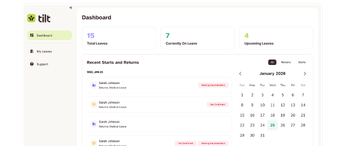
Tilt’s leave experience management platform transforms leave into a seamless, connected journey. From onboarding the leave request to supporting employees while they’re away, and ensuring smooth reintegration, Tilt creates continuity where traditional programs falter. As Salisbury notes, the goal isn’t just compliance, it’s enabling HR to show up for the moments that matter most.
When leave is designed end-to-end, HR teams regain time, employees feel supported, and organizations retain talent. That’s the anatomy of a leave experience done right.