

Leave management has never been simple.
You’re trying to support employees through some of the most important moments in their lives, while also keeping track of compliance, payroll, and internal processes that all need to line up at the same time. And as your company grows, that balance gets harder to hold together.
The challenge isn’t that HR teams aren’t committed to supporting employees. It’s that most have historically been asked to choose between two imperfect options: manage leave themselves or outsource it entirely.
Today, more organizations are realizing there may be a better way.
Where Most HR Teams Turn for Leave
When you look at how teams actually manage leave today, most end up in one of two places.
One approach is to manage everything internally. You’re tracking leave in spreadsheets, managing timelines in calendars, and keeping the whole process moving through a mix of systems, reminders, and experience. A lot of it lives in your head or in a handful of people who know how everything fits together.
The other approach is to hand it off completely to a third-party provider. A vendor takes over the administrative work, employee questions get routed through call centers, and HR steps out of most of the day-to-day work.
Tilt’s Chief Technology Officer Lisa Zimmerman shares, “we find that most teams are strategically making this decision of ‘Do I want to do it manually?’ or ‘Do I want to outsource?’ and they think those are the only two options they have. So they’re doing the best they can with what’s presented to them, yet neither system can meet their organization’s needs.’
Why Most Leave Solutions Fall Short of HR's Needs
Both approaches can work, but they tend to hit limits as an organization grows.
When you’re managing leave manually, things start to stack quickly.
“Managing leave manually might be fine in the beginning,” Zimmerman notes. “But as with most companies, you have more employees that come along, and with more employees you have more leave cases to manage. More states are creating leave laws, so trying to keep up with your federal laws, state laws, local municipality laws, as well as your company policies, it creates a lot of work for teams to do it manually.”
On the other side, outsourcing can remove the administrative lift, but it also removes HR’s visibility into the leave process altogether. If employees have questions or need help, HR may not have the context needed to step in and provide support.
“In those cases where you’re handing everything over, HR often loses that employee relationship. The employee is often dealing with a call center that might not even know their name…and when they reach out to HR for help, HR doesn’t have visibility into their leave. So HR really loses that personal connection that they would like to have.”
Outsourcing helps the process move along, but the connection HR and employees long for is often missing from the leave experience.
How Leading HR Teams Are Managing Leave Instead
As both models show their limits, more HR teams are shifting toward a different approach.
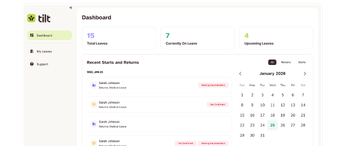
Instead of choosing between doing everything manually or handing everything off, HR teams are moving toward centralized systems that bring leave into one place while keeping HR in control of the process.
“We’re seeing HR teams move towards software that gives them a centralized system to manage their leave,” Zimmerman explains. “They’re looking for a single system that keeps them out of other tools and makes them feel in control. This helps them to track timelines, coordinate payroll, see leave status up close, and everything lives where it’s easy to go.”
Instead of information being spread across systems and people, everything lives in one place.
And most importantly, HR stays involved.
What HR Should Look for When Evaluating Leave Solutions
When you start looking at leave platforms, there are two factors to keep in mind:
1. Centralization
One of the biggest challenges in leave management isn’t necessarily completing the work—it’s finding the information.
Tools that act as a source of truth can be a significant help to HR for managing leave. When information lives in one place, HR spends less time searching for answers and more time supporting employees.
“The most important thing that you need to look for is whether the tool actually centralizes everything,” Zimmerman says. “Can you keep track of your documentation? Does it show you your timelines? Does it give you visibility and make sure that you’re staying compliant? If you chose something where one of those pieces are still outside your system, it didn’t solve your problem, you just added one more system to the mix.”
2. Flexibility and Scalability
Every team approaches leave differently. Some teams want to manage the process themselves with better tools and structure, while others want support when things get complex, while maintaining control and visibility of the employee experience.
The right solution should adapt to how your team works, not force you into a new model that doesn’t fit.
What the Right Leave Solution Unlocks
When leave is centralized and visible, HR’s day-to-day experience changes quickly.
You’re no longer piecing together information from different systems or trying to track down context across emails. You can see what’s happening, where each employee is in the process, and what needs attention.
Zimmerman describes it this way: “the right tool really helps HR feel like they’re in control of the process, and they have full visibility end-to-end for what’s happening with a leave. And then as the company grows, the leave program grows with them.”
That scalability matters because it keeps the process from breaking as headcount increases.
For employees, the experience becomes more consistent too. They know what’s happening, who to go to, and what to expect along the way.
“From an employee standpoint, the impact is just as important,” Zimmerman notes. “Instead of feeling lost in the process, they have HR supporting them. They have somebody who’s their advocate that they can ask questions to, that can set expectations, and tell them what to expect.”
And when employees feel supported and informed throughout the leave journey, organizations are likely to see stronger retention, engagement, and post-leave performance. According to Tilt’s 2026 Leave Benchmark Report:
- Organizations that highly prioritize leave report an employee Net Promoter Score (eNPS) of 70, compared to just 30 among organizations that place a lower priority on leave.
- Those that value leave see 92% post-leave retention, compared to only 68% among organizations where it isn’t valued.
- 61% of employees in high-priority leave environments report successful post-leave performance, compared to 19% in lower-priority environments.
When employees have a positive leave experience, they’re more likely to stay, perform well when they return, and maintain a stronger connection to the organization—and having the right tools and visibility to support employees throughout leave plays an important role in making that experience possible.
Where HR Teams Can Begin Their Search
If you’re evaluating where to go next, the best place to start is to evaluate your current leave process. Where are you losing visibility? Where is time getting pulled away from higher-impact work? Where is the employee experience inconsistent?
Once you have clarity there, then it’s finding the best solution for you, whether that’s done in-house or through a dedicated leave provider.
Tilt’s Leave Experience Management platform is built to give HR teams more control and visibility, while removing a lot of the manual work that usually sits underneath leave management. To see what this looks like in practice, you can explore our platform here or by meeting with a member of our team.