

For many HR professionals, the thought of taking on more control in leave management can trigger a familiar worry: more control equals more work. But what if that assumption is holding you back from delivering a better employee experience while actually reducing your task list?
The truth is, lack of visibility is often the real culprit behind HR overload. When you can’t see where leave requests stand, what decisions have been made, or where exceptions occur, HR teams get pulled into reactive, often repetitive work. Payroll corrections, explaining policies, tracking intermittent leave hours, and coordinating between managers and vendors.In short, HR’s workload often grows because control is missing, not because it’s present.
The Hidden Cost of Losing Visibility
Many organizations default to outsourcing leave to alleviate workload. On the surface, handing leave off to a vendor seems like an easy win: someone else handles the process, HR steps back, and peace of mind follows. But in reality, HR didn’t eliminate the work. It just lost visibility and control of it. When a black box sits between HR and employees, gaps form. Employees feel anxious, communication breaks down, and HR ends up spending time cleaning up problems that could have been prevented.
When HR loses visibility and control, gaps begin to form. Employees don’t know what’s happening next. Managers don’t have the information they need in order to take care of their team. HR is left piecing together updates across systems and stakeholders. What was meant to simplify the process often leads to more follow-up, more confusion, and more time spent resolving issues after the fact.
These issues become even more apparent when you consider a more complex situation like an intermittent leave. As more employees request flexible, non-linear time away from work, HR teams are navigating an increasing volume of fragmented schedules, payroll coordination challenges, and compliance considerations. Without clear visibility, complex leave situations quickly become extremely time-consuming.
Oversight Without Micromanagement
The key to control without overload lies in the type of involvement HR takes on. Effective oversight focuses on decisions, communication, and exceptions. Not execution.
Instead of manually guiding every leave step, HR can monitor high-level progress, identify impactful data, and step in when empathetic support is truly needed. This allows HR to stay connected to the experience without becoming the bottleneck.
A strong leave experience is built on clarity and continuity. Employees should be given the tools to understand what’s happening, what’s coming next, and who is responsible at each step. When the right structure is in place, HR doesn’t need to constantly intervene. The process itself is doing the heavy lifting.
This is where control becomes an advantage. With clear visibility into leave journeys, HR can prevent issues before they escalate, rather than spending time reacting to them later.
The Power of Technology and Automation
Technology plays a critical role in enabling this balance. The goal isn’t to remove HR from the process—it’s to remove HR from the repetitive parts of the process.
Leave management includes a significant number of standardized, repeatable tasks: sending reminders, tracking documentation, answering common questions, and managing timelines. These are necessary, but they don’t require human judgment.
By allowing technology to handle these mechanics, HR teams can ensure consistency and accuracy while freeing up time to focus on more meaningful work. The result is fewer errors, faster responses, and a more reliable experience for employees.
Most importantly, this approach reinforces a simple principle: technology supports the process, but HR remains present where it matters most.
Redefining HR’s Role in Leave
When leave systems are designed for visibility and continuity, HR’s role naturally shifts from reactive to strategic.
Instead of chasing down updates or resolving confusion, HR can focus on guiding managers, supporting employees through complex situations, and ensuring policies are applied thoughtfully and consistently. These are the moments that have the greatest impact—not just on operations, but on culture.
Leave is often one of the most personal and high-stakes experiences an employee will have at work. How it’s handled shapes trust, loyalty, and long-term engagement. When HR has the visibility and capacity to show up in those moments, it creates a lasting impression.
At the same time, this approach challenges the idea that outsourcing or stepping back reduces workload. In reality, HR is still responsible for outcomes—compliance, employee experience, and business continuity. The difference is whether they’re managing those outcomes proactively or reacting to them after something goes wrong.
Tilt: Control Without the Chaos
At Tilt, we believe HR should never have to choose between control and capacity.
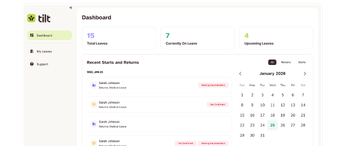
Our leave experience management approach is designed to give HR full visibility into every leave while removing the administrative burden that slows teams down. By streamlining routine tasks and improving communication across employees, managers, and HR, we help teams stay aligned without adding extra work.
That means HR can stay focused on decisions, communication, and exceptions—without getting pulled into every operational detail.
With Tilt, HR doesn’t just manage leave—they shape the experience. You gain control, employees gain clarity, and your team gains the time and space to focus on strategic priorities instead of reactive firefighting.
Because more control shouldn’t mean more work. It should mean better outcomes—for everyone.
FAQs
How can HR stay involved without micromanaging leave?
HR can stay involved by focusing on key decisions, communication, and exceptions while relying on systems to manage administrative tasks. This ensures oversight without being involved in every step.
How can HR rescue time spent on leave management?
HR can reduce time by automating repetitive tasks like notifications, tracking, and documentation, allowing them to focus on strategic and employee-focused work.
Why does lack of visibility create more HR work?
Without visibility, small issues go unnoticed until they escalate. This leads to more reactive problem-solving, increased interruptions, and more time spent resolving avoidable issues.