Most leave programs do a good job handling the time someone is out. The approvals, the documentation — those parts are usually covered.
But when an employee returns to work, the structure often disappears.
That moment tends to be treated like a reset button for the employee and their team. They’re expected to jump back into meetings, projects, and routines that may have changed while they were gone. It’s in these moments that the employee experience either continues or starts to feel disconnected.
When an employee returns to work it isn’t the end of their leave, it’s the final phase – and here is why continuing the support and structure during that transition is so important.
Why the Return-To-Work Is a Critical Phase of the Leave Journey
Coming back from leave isn’t the same as returning from vacation.
An employee may be recovering from a medical condition, adjusting to life with a new child, caring for a family member, or returning after a significant life event. At the same time, their team has continued moving forward. Priorities may have shifted, projects may have changed, and new people or processes may be in place.
Without a thoughtful return-to-work plan, employees often spend their first few weeks trying to answer questions on their own:
- What did I miss?
- What’s expected of me right now?
- Is it okay if I’m not fully up to speed yet?
- Who should I go to if I need help?
A little structure during this transition can answer those questions before employees have to ask them.
The Difference Between Processing and Supporting a Leave
Processing a leave is going through the motions. Everything is moving along, but it’s a transactional process for everyone involved. Fill out this documentation here, send this notice there, and come back by this date.
As CPO of Winder Law Firm, Jessica Winder, puts it, “When I think of processing a leave, I really just think of paperwork. You’re really just getting everything done and checking all the boxes. Nothing more.”
Administrative tasks are important. Employees need accurate documentation, compliant processes, and clear timelines.
Supporting a leave goes above and beyond the paperwork and due dates. It means checking in with the employee once they’re back, asking what communication styles work best for their needs, meeting with them regularly upon their return to see if things are going smoothly. “The part that is most personal is how they’re going to be treated and how they’re feeling throughout the leave journey,” Winder shares. “Feelings matter, and they matter to employees quite a lot.”
Four Elements of an Effective Return-To-Work Plan
While the right plan will look different for every organization, there are a few components that should be considered in every return-to-work plan. By incorporating a built-out plan, your team can help stay aligned with people leaders and other stakeholders and how to support an employee coming back from a leave of absence.
1. Manager Preparation
Before an employee returns from leave, managers should already have clarity on what the return will look like and how they should support the employee through the transition. Winder recommends to “give managers an outline that covers when the employee is coming back, all the things they need to know, and how they can partner with you on what has changed since they have left.”
What this looks like in practice is HR stepping in earlier than the return date and giving managers a structured plan.
HR can equip managers with:
- A short return-to-work summary (date, expectations, accommodations if any)
- A list of key updates since the employee went on leave
- Any team or project changes that affect day-to-day work
- A clear outline of what “success in the first month back” looks like
From there, the manager’s job becomes less about figuring things out in real time and more about being present with the employee when they return.
2. First-Week Touchpoints
The first week back is often a whirlwind for employees. They’re not only re-entering the workforce, they’re likely still processing or experiencing the life changes that prompted their leave in the first place. “People want to talk to someone on their first day,” Winder notes. “Even if it’s just a video call, they want to know that someone knows what’s going on with them. It’s a great way to just say, ‘are you okay?’ That’s truly what I needed when I returned.”
What this can look like in practice:
- A manager checks in the first day back focused on how they’re doing, not asking about tasks
- A lightweight HR touchpoint during the first week
- Reassuring the employee that they’re not meant to be at full-speed
- Flexibility around meetings or nonessential responsibilities
Having a checkpoint the first week provides the stability needed for employees to return with strength and confidence instead of wondering what to do next.
3. Phased Workloads
Instead of expecting employees to immediately resume their full workload, consider a phased approach that allows them to rebuild momentum.
What this can look like in practice:
- Reducing meeting load in the first 3–5 days back
- Breaking projects into smaller tasks instead of full ownership
- Gradually increasing responsibility over the first 2–3 weeks
The goal here isn’t to slow work down. It’s to remove the pressure of immediate re-entry so employees can rebuild confidence without feeling overwhelmed.
4. 30-Day Check-In
Once employees reach the 30-day mark, they’re no longer in ‘figuring it out’ mode. They’ve reconnected with their team, their projects, and are starting to feel a sense of normalcy.
Winder shares that she recommends a 30-60-90 day approach—the same approach she uses for a new hire. “The 30-day check-in is really to understand how an employee is doing. How’s it going? Are you ready to move forward? What could have been different for your re-onboarding process? Let’s see how we can make it even better for the next person when it comes to leave.”
What this can look like in practice:
- A structured 30-day manager check-in conversation
- A short reflection from the employee on what helped or didn’t
- Space to adjust workload, expectations, or support if needed
- Capturing feedback to improve future return-to-work experiences
This step doesn’t just further support the employee, but it often separates a one-time process from a continuously improving system.
Redefining Your Return-To-Work
The employee experience doesn’t end when leave does.
When it’s designed intentionally, it creates clarity for managers and stability for employees at a moment where both really matter.
When it’s not, employees are left to interpret what “coming back” should feel like on their own.
That’s why having a framework can make all the difference. When you design a leave experience that extends beyond the leave itself and includes the return, employees move from feeling processed to feeling supported.
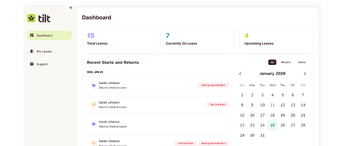
Tilt’s Leave Experience Management platform is built to support HR, managers, and employees throughout the leave journey—gathering everything they need in one, centralized location. To see how this can simplify your leave management, explore the platform here or by meeting with a member of our team.