

As an HR leader, you already know leave is an important part of the employee experience.
But most People leaders can’t quantify how much of an impact it can have on the business.
Tilt surveyed 120 organizations in the 2026 Leave Benchmark Report, and one the questions was what level of priority their leave experience was to them.
What the data showed was that how organizations prioritized leave played a significant role in affecting key business outcomes like employee retention, performance, and engagement. Keep reading to see how your leave program can make a meaningful impact across your organization.
1. Prioritizing Leave Strengthens Employee Retention
Most employees won’t remember every policy they’ve ever read or every HR process they’ve completed.
But they do remember how they were treated during a leave of absence.
Whether someone is welcoming a new child, managing a health condition, or caring for a family member, leave often becomes one of the most personal interactions they’ll have with their employer. How that experience feels can have a lasting impact on how they view the organization long after they return.
The data reflects that reality.
Organizations that prioritize leave see 92% of employees remain with the company one year after returning from leave, compared to just 68% at companies that don’t.
As Tilt CEO Jen Henderson explains, “you don’t get many chances as an employer to really show someone that you care about them as a person. Life events are one of those moments where it actually shows.”
When employees are supported throughout the leave journey, they not only come back feeling recharged, but also more likely to stay with the organization for the foreseeable future.
2. Prioritizing Leave Improves Employee Performance
Employees who have a positive leave experience aren’t just more likely to stay. They also tend to get back up to speed faster when they return.
As an HR leader, you know employees don’t come back and immediately pick things up where they left off. Work has moved forward, priorities may have shifted, and there’s usually a ramp-up period before employees return to full speed.
Organizations that prioritize leave see 61% of employees return to strong performance after leave, compared to only 19% at companies where leave isn’t.
As Henderson shares, “Returning from a leave is no joke. I don’t care what kind of leave it is, what kind of unique employee you are, or company you work for, it’s no joke. The reason that I believe very strongly that re-entry is the most important part of the leave life cycle is that you’ve changed.”
Because employees have changed, getting back up to speed isn’t as simple as flipping a switch. But when leave is met with care, employees re-engage more quickly and return back as a high performer sooner.
3. Prioritizing Leave Creates Stronger Employee Engagement
While engagement is often viewed as something that develops through everyday experiences, some moments carry more weight than others.
Leave is one of those moments.
Employees often look back on leave as a reflection of how supported they felt by their employer during a challenging or important period in their life. That experience can influence how connected they feel to the organization after they return.
One place this becomes visible is in employee net promoter scores (eNPS). Organizations that prioritize leave see eNPS scores around 70, compared to just 30 in environments that have it as a low priority.
Henderson adds that if you have, “An employer who genuinely cares, you are going to, without question, get compounding output, engagement, and impact back from that employee when they return.”
How Teams Can Start Taking Meaningful Action
Fortunately, improving these outcomes doesn’t require a complete overhaul or starting over from scratch. For many organizations, it starts with creating more consistency throughout the leave journey.
That can include:
- Improving communication with employees
- Giving managers greater visibility into the process
- Creating a more structured return-to-work experience
- Helping employees better understand what to expect at each stage of leave
The other step HR leaders can take is to simply prioritize your leave program. Whether it’s by carving out more time to review the process or by collaborating with leadership to bring in a dedicated leave solution, there isn’t a one-size-fits-all strategy—but that doesn’t mean it has to be difficult.
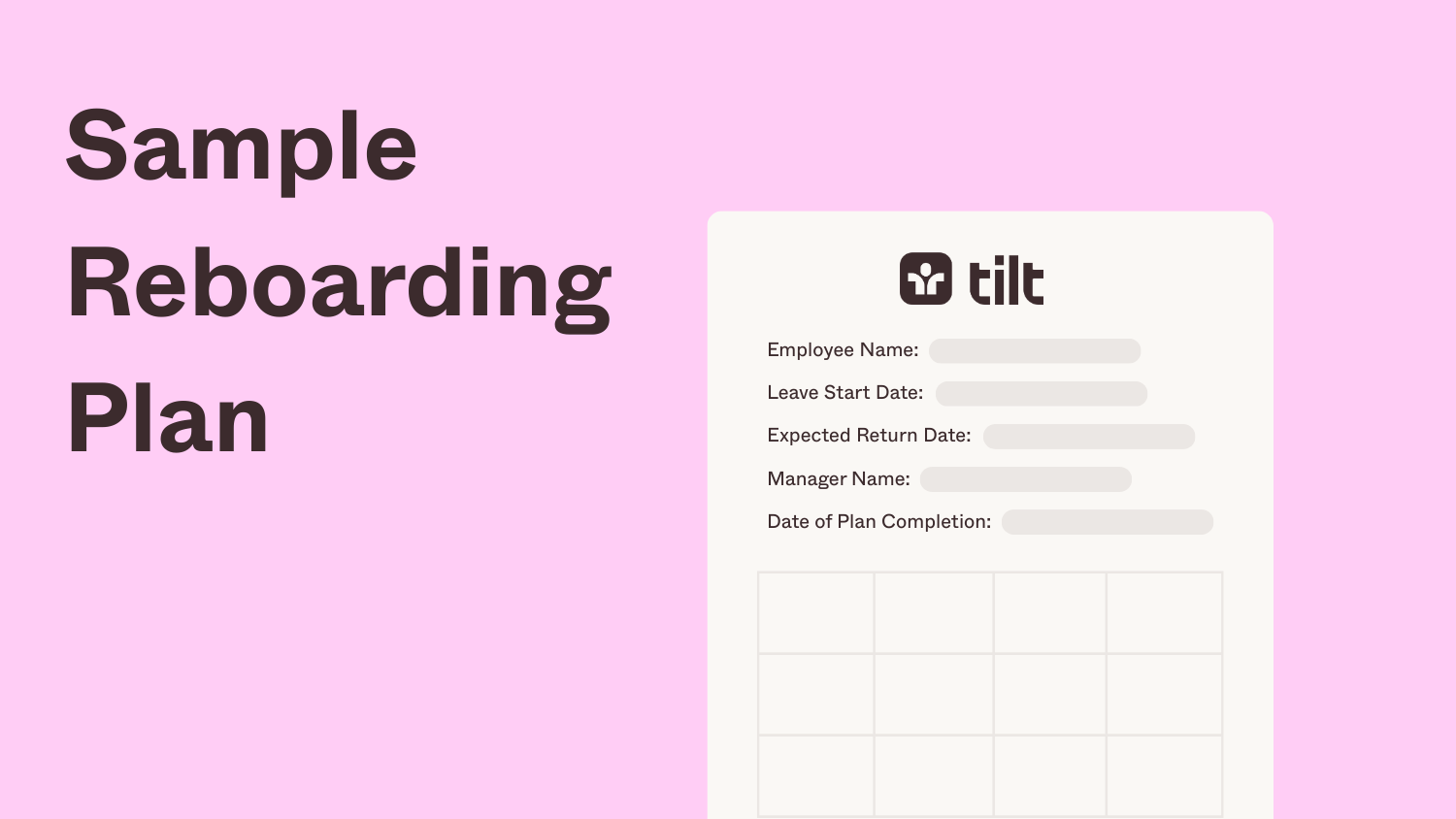
If you’re not sure where to start, here is a reboarding plan template managers can use to create a supportive return-to-work experience.
The ROI of Prioritizing Leave
When organizations value leave, the benefits extend well beyond compliance. Employees are more likely to stay with the organization, return to full speed faster, and remain engaged after they come back to work.
While leave may only represent a short period of time in an employee’s career, the experience can influence how they feel about their employer long afterward.
As more organizations look to improve these outcomes, many are adopting a more structured approach. Tilt’s Leave Experience Management platform helps HR teams bring together communication, guidance, visibility, and compliance into a single experience, making it easier to support employees while creating better outcomes for the business.
To see what this can look like for your team, schedule time with our team or take a tour of the platform today.