

In HR, your team carries a lot at once. You’re tracking requests, answering employee questions, and making judgment calls, all while ensuring every decision holds up from both a compliance and people perspective.
But it’s not always the workload itself that’s difficult. It’s the constant switching, remembering, checking, and double checking that requires the most energy.
When that mental overhead builds, it becomes harder to focus on the moments that actually need your attention. Conversations feel more rushed, decisions take longer, and the risk of missing something important starts to weigh on how you show up each day.
This is where the real value of AI shows up in HR. Not as a replacement for judgment, and not as a shortcut, but as a way to reduce cognitive load. When applied thoughtfully, AI becomes a capacity multiplier that helps HR leaders stay present, accurate, and human in the moments that matter most.
Reducing the Administrative Load HR Carries Every Day
A significant portion of HR work revolves around heavily manual tasks. Tracking updates, sending reminders, documenting details, and following up across multiple workflows are all essential, but they often pull HR leaders away from the work that requires deeper experience, judgment, and empathy.
Over time, that tradeoff becomes harder to manage. The more energy spent keeping processes moving, the less capacity there is to focus on employees, guide managers, and make thoughtful decisions.
AI helps shift that balance by helping with the administrative lift that can consume your day. When those repetitive tasks are done with the help from AI, HR leaders are free to focus on the work that actually requires their attention.
This is exactly how Winder Law Firm CPO Jessica Winder approaches it in her own role. By using AI to reduce the amount of manual work on her plate, she can stay focused on higher-impact responsibilities. “I need everything around me to be efficient. I automate things that are repetitive and get them off my plate,” she explains. “Whether it’s tracking, reminders, or documentation, I use AI to take care of those things so I’m not using my bandwidth on them and can focus on what actually needs my attention.”
When repetitive work is automated, HR can reallocate their attention toward decision-making, employee support, and leadership alignment. That shift is what creates the capacity to operate more intentionally instead of reactively.
What this looks like in practice for your team:
- Using AI to handle recurring administrative tasks
AI can support HR by setting reminders, tracking required actions, and keeping workflows moving without constant manual input. This reduces the need to revisit the same tasks throughout the day. - Streamlining internal updates and communication
AI can help draft updates, summarize information, and organize key details so HR is not starting from scratch each time. This makes communication faster while still allowing for a human review before anything is shared. - Offloading documentation and first-pass drafting
Instead of manually creating every document or response, HR can use AI to generate a starting point, then refine it based on context and nuance. This saves time while keeping control in HR’s hands.
What Happens When HR Doesn't Have to Carry It All
When administrative work is reduced, the first shift shows up in how HR experiences their day. The mental load begins to change.
In HR, your cognitive load builds quickly. Even when you’re organized, the volume of details can make it hard to stay focused.
As Winder explains, one of the biggest challenges in HR is the constant mental juggling that happens throughout the day. “You’re constantly switching tasks. One moment you’re talking to leadership about risk, the next you’re supporting an employee going on leave, then you’re dealing with a vendor. That amount of switching drains your energy because you’re not able to focus and get into a flow.”
That constant switching does more than create stress. It makes it harder to track details, harder to stay ahead of deadlines, and harder to feel confident that everything is being handled the way it should be.
AI helps reduce that mental overhead by organizing information, tracking progress, and surfacing the right details at the right time. Instead of relying on memory to keep everything moving, HR leaders can trust that the details are accounted for and focus their attention where it is actually needed.
What this looks like in practice for your team:
- Organizing and surfacing the right information at the right time
AI can structure employee data, leave details, and policy information so it is easier to access when needed, reducing time spent searching and second guessing. - Tracking progress across workflows without manual oversight
AI can monitor where things stand across tasks, leaves, or projects and highlight what needs attention next. - Providing timely reminders and prompts
AI can surface upcoming deadlines and required actions so nothing depends solely on memory, helping HR stay proactive without constant checking.
Making Better Decisions in the Moments That Matter
With less administrative burden and clearer visibility into what’s happening, HR leaders are better equipped to make informed, confident decisions. AI can help surface the insights that are often difficult to see when you’re buried in day-to-day work.
Whether it’s supporting employees through complex situations or interpreting policy in real time, these decisions require context and care. They rely on judgment, experience, and a clear understanding of the people involved, and that responsibility should always remain firmly with HR.
Winder reinforces this in how she approaches her work. “We are adamant that we use AI to help us, but anything that has to do with our employees, with the policy, we make the final decision. We think of AI as a co-pilot…It’s here to help me, but I will make the final decision based on my level of expertise.”
When insights are surfaced early and information is easier to access, you spend less time piecing things together and more time evaluating what actually matters. That shift leads to decisions that are more consistent, more thoughtful, and better aligned with both people and policy.
What this looks like in practice:
- Using AI for insight, not for final decisions
AI can surface patterns, risks, and recommendations, while HR determines the final decision and course of action based on the full context. - Keeping human review at the center of important decisions
Decisions that affect employees, policy, or sensitive situations should always be reviewed by HR to ensure accuracy, fairness, and care. - Preparing more effectively for conversations
With relevant information surfaced ahead of time, HR can enter conversations with clarity and confidence instead of reacting in the moment. - Maintaining consistency across decisions
Access to structured, reliable information helps ensure decisions are aligned and fair while still allowing room for human judgment.
Creating More Space for the Human Side of HR
As AI reduces the administrative and cognitive load, something important shifts: it creates the space HR leaders need to be more present, more proactive, and more intentional in how they support people.
Winder describes this in her own work, sharing that, “When I started using AI on tasks that were administratively focused, I got so much time back that I was able to walk around and talk to people. I want employees to feel like HR isn’t just there when something is wrong, [but that we can have real conversations and build relationships].”
What this enables goes beyond time savings. When HR leaders are no longer pulled in multiple directions by administrative demands, they can engage more meaningfully with employees, support managers earlier, and contribute more strategically to the organization. That’s where trust is built and where HR has the greatest impact.
What this looks like in practice:
- Creating more time for meaningful employee interactions
With less time spent on administrative work, HR can focus on listening, coaching, and building stronger relationships across the organization. - Supporting managers before issues escalate
When insights and updates are easier to access, HR can step in earlier to guide managers and prevent small challenges from becoming larger problems. - Recognizing patterns and trends sooner
AI can help surface recurring themes across employee feedback, workload, or engagement, giving HR the opportunity to respond thoughtfully and proactively. - Operating with a more strategic focus
With reduced mental overhead, HR leaders can spend more time aligning with leadership, shaping initiatives, and making decisions that impact the broader organization.
Turning Insight Into Action
AI creates real value in HR when it reduces the amount you have to carry in your head and gives you clearer, more accessible information to work from. When administrative work is handled more consistently and key details are easier to track, you have more capacity to focus on what actually requires your judgment and attention.
For many teams, adopting AI starts with small, practical changes. It can mean identifying where manual work is slowing things down, reducing reliance on memory to track important details, and creating more structure around how information is organized and surfaced.
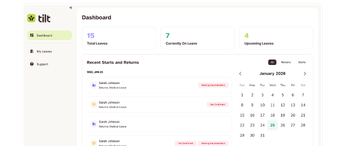
It can also mean working with a partner that is already building with this in mind. At Tilt, our Leave Experience Management platform integrates AI-powered capabilities to help HR teams reduce administrative lift, stay aligned on critical information, and make decisions with greater clarity and confidence.
If you want to see how this can work in practice, download our free whitepaper, 3 Ways HR Can Safely Adopt AI, or by connecting with a member of our team.