


If you work in HR, chances are there’s at least one process your team wishes worked a little better.
Maybe your team is spending too much time on manual work. Or maybe your organization has grown, and a process that worked well a few years ago is starting to feel harder to manage.
When you’re dealing with those challenges every day, it’s natural to want to start looking for a new technology solution.
But before you start booking demos and comparing platforms, it’s worth taking a step back and asking yourself:
What am I actually trying to solve?
Getting clear on that question first can help you determine whether you really need new technology—and, if you do, what your team should look for.
Identify the Root Cause
It’s easy to assume that a frustrating process means you need a new tool. But technology isn’t always the root of the problem.
Brett Ungashick, Founder and CEO of OutSail, has worked with thousands of HR teams navigating technology decisions. Any time an HR team comes to him and says ‘we need new technology,’ he starts by digging into the reason behind that request.
“That action is often a symptom and maybe not the root cause. What we really want to get right away is understanding [their ‘why’].”
That “why” matters. If you don’t understand what’s creating the problem, it’s possible to invest in a new system only to find that the same frustration remains.
The issue could be your technology. But it could also be how your current technology was implemented, how your team is using it, or how the underlying process is designed.
Before you start looking for something new, ask yourself:
- Where are you and your team spending too much time?
- What part of the current process is causing the most frustration?
- What are you trying to simplify?
Once you understand what you’re trying to solve, you can start figuring out what’s actually getting in the way.
How to Know If Your HR Team Has a Technology, Process, or People Problem
As you begin asking those questions, you may find that there is actually more than one problem.
For Ungashick, peeling back the layers is what helps his team understand what’s really going on. “We’ll have conversations with folks where it’s, ‘hey, I can’t stand provider x, they’re ruining my life.’ And then you start to peel back the layers and [uncover that] there’s different things going on behind the scenes.”
Those layers can reveal three common types of problems:
- A technology problem: Your current system genuinely can’t do what you need it to do, or it has become a poor fit as your organization has grown and your needs have changed.
- A process problem: Your technology can support what you’re trying to accomplish, but the way the work is set up creates unnecessary steps, friction, or inefficiencies for your team.
- A people problem: Your technology and processes can support the work, but your team may need more training, resources, or bandwidth to use them effectively.
You may even have a combination of all three.
Understanding which problems you actually need to solve can keep you from buying technology to fix something technology was never going to fix.
What Your Team Needs Before You Start Looking
This is where it’s tempting to jump straight into features.
One moment you’re finding a new automation that could save your team time or a capability you hadn’t considered before, and the next thing you know you’ve got a list of preferences as long as your inbox.
That’s why it’s important to start with the end in mind.
When Ungashick consults with HR teams, he says, “the first thing that we work on is defining goals. What are the key outcomes that, if we hit these, we’re going to feel better?”
Think about your own team. If you had the right technology in place six months from now, what would you want to be different?
Maybe you want less manual work. Maybe you need information to move easily between systems. Maybe you want employees to have a smoother leave experience. Maybe you need to create more bandwidth for your team as the organization grows.
Those outcomes are more useful than a list of features because they give you something to measure against.
As you think through those priorities, it’s also worth considering:
- What do you need the technology to improve for your team?
- Which outcomes would make the biggest difference to your day-to-day work?
- What does your team need from the implementation and training process?
- What kind of support will you need once the technology is up and running?
How to Evaluate HR Technology for Your Organization
Now that you’ve identified the root problem and established goals for what you would like the HR technology to accomplish, the next step is to take those priorities into your search for the right solution.
Of course, every organization’s search will look different, which is why having your goals front and center will help you filter out tools that don’t meet your team’s needs.
Spoiler alert: there will be a handful of those.
With so many tools in the market, it can be a slippery slope when it comes to demoing too many solutions.
Because once you look at too many options, everything starts to blend together.
“If you’re looking at the vendors from a features lens, everyone looks really similar,” Ungashick notes. “It’s gotten very easy to build features. If you say there’s 600 features we need, you send it out to 10 vendors, you’re going to get 10 responses that have 599 check marks back, right? If you go with goals, that’s where every vendor has to pick what they are going to be about. And if you’re really clear what your goals are, you can start to do that matching and not have everyone looking the same.”
If your biggest goal is reducing manual work, pay attention to how the solution would actually change your team. If you need better visibility, look at how easily you can get the information you need. If employee experience is a priority, think about what the process will feel like for the people using it.
You’re looking for a solution that fits the needs you identified at the beginning of the process.
And that can give you a much better way to move through the noise of the HR technology market. As Ungashick puts it, “Keep the main thing, the main thing all the way until the finish line. Once you’ve figured out what it is, it’s probably going to be the best way to make everyone’s lives a little bit easier.”
Start Your Search with Clarity
Investing in new HR technology starts well before you begin comparing platforms. Get clear on the problem you’re trying to solve, understand what’s really causing it, and define what you want to change. From there, you can go into the search with a better sense of what your team needs and a clearer way to evaluate whether a solution will actually get you there.
A trusted HR technology consultant can also help you make sense of that process, from identifying what you need to understanding which solutions may be a strong fit for your organization.
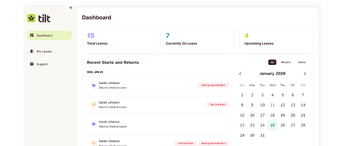
And if leave management is one of the areas you’re looking to improve, Tilt can help you create a leave experience that works better for employees, managers, and your HR team. Whether you prefer to manage leave in-house or alongside support from Tilt’s Leave Specialists, you can choose the level of support that works best for your team. Take a tour of our platform here or meet with a member of our team.

OutSail is an HR technology advisory firm that helps organizations find the right software for their needs. With expert guidance and insight into the HR tech market, OutSail helps HR teams navigate the buying process with greater confidence and find solutions that support their goals.
Learn more about how OutSail helps HR teams navigate HR technology decisions.