

Most leave programs are built to guide employees up until their leave is over. You cover everything from processing requests, handling documentation, and supporting them however you can while they’re out.
But then the employee returns to work.
The moment they come back to work tends to be treated like the finish line. In reality, it’s often where the employee experience becomes most vulnerable. The structure, communication, and planning that existed throughout the leave can suddenly disappear, leaving employees, managers, and HR teams to navigate the transition in real time.
Return-to-work shouldn’t be an afterthought in the leave process. It’s one of the most overlooked phases of the leave experiences, and it quietly determines how supported employees feel long after their leave officially ends
How Leave Is Managed Today and What Most Teams Miss
HR teams tend to put a lot of structure around the leave itself. You’re coordinating communication, compliance, and making sure employees have everything they need to ensure a smooth leave experience.
But when they return, that structure often disappears.
Employees return to workplaces that have continued moving without them. Priorities may have shifted. Teams may have changed. New projects, processes, or leaders may be in place. Yet many employees are expected to simply pick up where they left off.
According to Jessica Winder, Chief People Officer at Winder Law Firm, this is where many organizations unintentionally create a poor experience.
“Most companies get the return-to-work wrong because they are very conscious of preparing for a leave, but not for when the employee comes back. They’re making sure that people have what they need, that the employee has what they need, all these things. And unfortunately, I’ve heard horror stories of people coming back and nobody even knew that they were back. There was no welcome back, there was no message in Teams, there was nothing. This person returned and they were like ghosts.”
Most teams don’t miss preparing for the leave, or supporting employees while they’re out.
They miss the handoff and transition for when they return.
Why Return-To-Work Is a Critical Part of Leave Management
Return-to-work is the moment where employees step back into a workplace that hasn’t skipped a beat. Projects have moved forward, priorities may have shifted, and teams may look different than when they left. On top of that, employees are expected to pick right back up where they left off.
But returning after a leave of absence isn’t as easy as flipping a switch.
In reality, returning from leave often requires employees to navigate change both personally and professionally. Someone returning from parental leave, a medical leave, or a caregiving leave may still be adjusting to major life circumstances while simultaneously trying to regain their footing at work.
That is why Winder shifts the return as a way to re-onboard her employees. “I refer to return-to-work as re-onboarding. Depending on how long someone is gone, you need to re-onboard them—and the company is normally different.
When I went out on two maternity leaves, I came back to a startup environment—and it felt like they were completely different companies. Nothing was the same. We had new products, new processes, everything was different. It’s a problem when companies drop the ball when someone returns and do not re-onboard them.”
For example, if an employee comes back from a medical leave, having a structured return-to-work (or re-onboard) process is going to make all the difference. They’re not only navigating change within their personal life, but also within the organization. Between new projects, new teammates, or a completely new environment, re-onboarding employees upon their return is one of the most important factors in helping them get back to speed and creating a complete, meaningful leave program.
What Happens When Return-To-Work Isn't Prioritized
If return-to-work isn’t intentionally designed, the gaps in your leave program can show up quickly.
An employee comes back and spends their first days trying to figure out what changed, who owns what, and where they fit into the current flow of work. Managers are reacting instead of guiding, teams are filling gaps in real time, and HR is pulled back into tasks that should have already been handled.
Even in well-run leave programs, this is where the experience can start to feel disconnected.
Winder described the emotional impact that often goes unspoken when the return-to-work is missing structure: “Most employees that come back from leave are already questioning if they should return. So if they’re already questioning if they should come back and then they have a negative return-to-work experience, the likelihood that they’re going to leave within the next six months is threefold.”
Even after returning, employees may not be ready to immediately operate at 100%.
“Just because someone is back does not mean that they are back up to full capacity,” Winder shares. “There’s a difference in that. Some might think, ‘oh, this person’s back, they can do it all.’ But that’s not true. If you don’t have that flexibility, you’re creating another barrier for them to get back up to speed.”
These experiences don’t go unnoticed:
- Teammates observe how their peers are treated and apply that to how safe they feel taking leave themselves
- Workload starts to feel unclear during transition periods
- Expectations shift without alignment, creating inconsistency across managers and peers
As Winder shared, “everyone is always watching for what’s coming next with other people,” and that observation shapes how others interpret whether they can safely step away in the future.
What Happens When Returned To Work Is Prioritized and Designed Well
On the other hand, when return-to-work is intentionally designed, the experience becomes structured, predictable, and far less stressful for everyone involved.
Employees are able to focus on reintegrating onto the team rather than navigating confusion, managers understand their role in supporting their team, and HR doesn’t need to step in to resolve avoidable confusion. There’s a shared understanding of how the transition will work.
Winder described one of her strongest return experiences as something that felt fully intentional and structured from day one: “When I came back from leave, I went through an orientation. The company sent out a welcome back email. I had a welcome back Slack message of ‘Jessica is back’. The first week when I returned, they told me not to attend any meetings so that I can just catch up. They had documents prepared for me that covered what I missed and then another for what I need to be watching. That was the whole first week!”
In that type of environment, employees spend their first week rebuilding context instead of immediately trying to contribute at full intensity. That creates clarity, reduces pressure, and shortens the time it takes to get back to meaningful work.
What HR Needs To Build an Intentional Return-To-Work Experience
Building an intentional return-to-work experience starts with treating it as a defined phase of leave, not an informal transition.
Winder’s recommendation is to: “treat them like a new hire. How would you get a new hire up to speed? Treat them this way. And that’s why I call it re-onboarding because I truly think whatever your onboarding plan is, treat them the same way and have that expectation before they leave.”
In practice, treating employees who return from leave like a new hire can look like:
- A welcome-back plan that outlines what the employee’s first few weeks will look like
- A “what you missed” resource that gives employees context without requiring them to piece everything together themselves
- Intentional check-ins with their manager to align on priorities, expectations, and any accommodations they may need
- A gradual ramp back into responsibilities instead of expecting full capacity on day one
When these pieces are in place, return-to-work stops being reactive. It becomes something teams can actually plan for and execute consistently.
The Right Solution Can Make All the Difference
Return-to-work is often overlooked because it doesn’t feel urgent until it breaks.
But when it does break, the impact is immediate. Employees can feel disconnected, managers lose clarity, and HR ends up managing outcomes that could have been prevented with structure.
When it is designed well, everything shifts.
Instead of coming back into confusion, employees return with clarity, managers know their next steps, and HR can focus on delivering a positive experience instead of playing catch up.
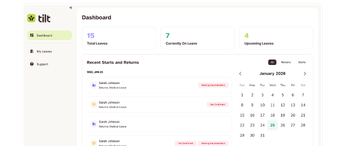
Tilt’s Leave Experience Management platform helps HR to design a leave experience that works for them, their employees, and their people leaders—helping return-to-work go smoothly. To see how this can look for your organization, schedule time with Tilt or take a tour of the platform.