7 Unspoken Anxieties Employees Really Have About Leave

For most employees, the reason for taking a leave of absence only tells one side of the coin. While an employee focuses their energy on dealing with the loss of a loved one, recovery from a serious injury, or the birth of a child, employees are also wrestling with very real concerns that extend beyond their immediate course-altering life event. 

Unpacking these concerns can help further humanize the complicated journey that is taking a leave of absence. By better understanding what’s going through the minds of employees taking a leave of absence (or wanting to take one) it allows us to provide a more supportive and empathetic approach to managing a leave.

1. Job Security

If it’s in the headlines then it’s likely on the minds of employees, and these days it’s hard to open up a browser and not learn about another tech giant laying off staff. When employees realize they need to take a leave of absence, especially if the leave is for an extended period of time, they may look at the economic climate and have real concerns about their job being at risk. 

This can have a few adverse effects. The obvious is a constant worry of the unknown about their job security, the other effect is a little less easy to detect. An employee thinking their job may be at risk might forgo taking a leave of absence they not only need, but are also legally entitled to. 

2. Financial Concerns

While job concerns can lead to financial concerns, what’s important to underscore is that even if an employee’s job is secure the bills must be paid. If the leave is unpaid (perhaps only a job-protected leave) or if they are unable to collect disability or unemployment benefits an employee might feel a real financial squeeze at an inopportune time in their life.

It’s important to stay mindful that providing clarity around pay during a leave of absence, as well as continuing to fight the good fight internally for more paid leave benefits, can do wonders in alleviating concerns around finances.

3. Stigmas & Stagnation

The stigmas associated with taking a leave of absence take a variety of forms. From employees being worried about being passed up for promotion, to feeling like taking a leave might cause backlash in their current role, to wondering if their role will be eliminated if they leave. 

The added issue with career stagnation and stigma concerns surrounding LOAs is that they’re often hard to talk about to an employer. These concerns of course are based on a lot of workplace truths, in fact, Tilt was founded because of these stigmas (more on that here). Removing these stigmas starts from the top, which is why it’s so important to get leadership buy-in so employees feel empowered to take leave.

4. Returning to Work

If stigmas and stagnation are hindering employees taking a leave in the first place, an equal concern is their uncertainty about the work environment they’ll be returning to. Employees may be concerned about the amount of work they will face upon returning from a leave of absence. 

Will they be overwhelmed? Will they return with nothing to do? It’s possible their role might look different than when they left, and it’s possible their colleagues have taken the returning employee’s responsibilities in their absence. Provide a roadmap to help managers make the re-boarding experience a positive and make the return to work experience a positive one.

5. Manager mishaps

Managers are wonderful at a lot of things that pertain to their job descriptions, but unfortunately LOA experts they are not. While the relationship between HR and managers is different from managers and their direct reports, it’s important to understand that employees might have serious concerns about even telling their manager for reasons described in section 3, and then how they’ll behave once they’re on leave.

Educating managers about what they can and can’t do or say is vital to a successful LOA experience, and guiding them with tips to keep employees engaged in a supportive and legal way throughout the leave journey can help alleviate these concerns.

6. Health and Well-Being

When an employee goes on leave it’s easy for those still working at your organization to detach themselves from the very real-life experiences they are going through. The truth is that the life event itself doesn’t tell the full picture of the employee’s leave experience. They may be battling physical and emotional trauma while they are on leave and it might be a major concern in the lives of your people taking leave.

Having an empathetic approach to leave management can help ensure that your employees feel supported in more than just a transactional manner. A human approach to leave can help make employees feel that they have the space or support they need when their health and well-being is suffering.

7. Process Confusion

The processes that HR has used to manage leaves historically is as confusing and  frustrating to employees as it is to People Teams. Process confusion gets compounded when the employee’s life has been flipped upside down. When you need to focus all your energy on a loved one or are going through a critical live event yourself, the last thing you need is for the process of taking a leave to add anything to your overflowing plate.

Make the leave process as simple for your people as possible. Take out the guesswork and give them the guidance they really need to make leave easy. This can be difficult for many people teams because they might be working with legacy systems or don’t know how to break free from spreadsheet purgatory. If this is the case you might want to turn to 3rd party leave management solutions that can take the burden off both your plate and the plate of your employees.

Shine light on relief

Bringing light to these concerns is important for organizations because only then can HR be empowered to provide the support and resources necessary to help employees navigate the leave of absence process. Not only is providing a positive leave experience the right thing to do for your people, it can also help to promote a positive work-life balance and increase employee engagement, retention and satisfaction.

About Tilt

Tilt is leading the charge in all things leave of absence management through easy-to-use tech and human touch. Since 2017, our proprietary platform and Empathy Warriors have been helping customers make leave not suck by eliminating administrative burdens, keeping companies compliant, and providing a truly positive and supportive leave of absence experience for their people.

Related Posts

New Leave Policies Don’t Have to Mean New Leave Software

Adding new leave policies to your employee benefits package can be a massive uphill battle. You want to stay competitive in the talent acquisition race, but despite the ROI plea your higher-ups can’t connect the dots between robust employee support and attracting and retaining top talent.

The frustration many HR departments face is that when they do finally convince the powers that be to incorporate new policies, they find that their outdated systems make it a nightmare to try to implement and manage anything new. Where old leave management systems fear change, Tilt embraces it. Being fearlessly flexible is kind of what we’re all about, and that goes for both the Tilters ushering in this new generation of leave management to our product itself.

Whether you’re a small yet mighty People Team of one or two, or a fully formed department, it’s critical that the tools and systems you have in place for managing leaves of absence are as adaptable as your organization is progressive in the evolution of its leave policies. 

When a new policy gets implemented within your organization, or an existing policy gets updated, nothing changes in your workflow whatsoever. We personally handle incorporating any new updates to your organization’s leave benefits right into our platform, meaning you don’t have to lift a finger to rest assured your people are getting all forms of support you fought tooth and nail for.

Are you adding mental health leave policies to your benefits? Perhaps military leave benefits that extend beyond USERRA or the job protections that exist from FMLA. Maybe you want to increase the amount of leave you’ll cover for caring for a sick family member from 4 to 6 weeks. No matter how your policies change, Tilt’s seamless capability to evolve as your policies do will set you and your employees up for a successful leave journey the way you intended.

There are a variety of ways in which a leave can go sideways for your employees, and they aren’t always fun to talk about. For example, a parental or caregiver leave could turn into a bereavement leave, and if you’re managing leaves across multiple systems today you’re running a serious risk of an employee not getting the leave support they’re expecting to receive.

You also might need to be able to manage and facilitate applying for state benefit programs in states you’ve previously never had employees residing. The new workforce is a dispersed workforce, and if you aren’t up to date on the latest leave laws in New York because up until a month ago you never had employees in New York, you’ll be thankful a solution like Tilt can manage all leave types across the country.

With Tilt, you’ll never have to worry about the new policies you’ve implemented not being administered effectively, efficiently, and consistently for every leave type across every state for every leave request. Your leave management software should make your life easier, and it should scale and evolve as your organization does.

About Tilt

Tilt is leading the charge in all things leave of absence management through easy-to-use tech and human touch. Since 2017, our proprietary platform and Empathy Warriors have been helping customers make leave not suck by eliminating administrative burdens, keeping companies compliant, and providing a truly positive and supportive leave of absence experience for their people.

Related Posts

5 Ways HR and Leadership Can Partner to Promote Positive Leaves

In the file named, “Well yeah, no duh,” you might read something that explains that the best, most impactful initiatives you can fathom for your people will go nowhere without support from leadership. This happens across all departments at most organizations, but it’s especially true for HR and People Teams who often need to sell the idea of investing in something with an ambiguous (to them) return.

So let’s talk about how to create clarity from ambiguity as it pertains to one of the most important factors in an employee’s journey, the ever-growing need for a positive leave of absence experience. This can be used as a template for other initiatives you deem important as well.

1. Take a seat at the table

“Take” is the operative word here. In order for you to have a real shot at advocating for what’s best for your people, you can’t wait for someone in leadership to slide the chair out and tuck you in with the budget barons and decision-makers. Insist with persistence that it’s critical to the successful operation of the organization that there be a direct line of communication between the people keeping the organization running and those running the organization.

Establish a seat at the table first to build relationships and alignment on your vision for a better leave of absence experience for your employees, and once you feel a level of trust has been established between you, your team and leadership, you can then roll out your plan for success with a much higher success rate.

If you aren’t a consistent presence at the table, any proposals you present to leadership will have the equivalent effect of a car driving by; a muted white noise that goes in one ear and zooms out the other.

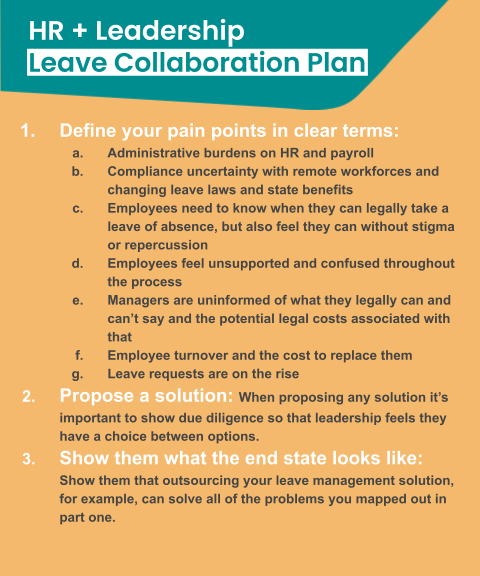
2. Map out a plan

Now that you’ve taken your place at the table it’s important to have some sort of plan for accomplishing your leave of absence goals. This can look different for everyone as every organization is different, but here are some ideas to get you going:

When proposing a solution to management it’s essential to provide your recommendation, but your recommendation will have a higher chance of succceeding if it shows you’ve put in the work to vet options. 

You might think hiring headcount is the best way to mitigate the problems above, or you might find that outsourcing your leave of absence management to the experts is your best bet and most cost-effective.

If it’s the latter, explain that with an external solution your People Team and payroll will be freed up to do more meaningful work, employees will have a positive leave experience and actually return engaged, managers will understand what they can and can’t do, and you can financially take advantage of state benefits you might have otherwise footed the bill for.

Money tends to talk the loudest, so don’t be shy about expressing the cost benefits of employee retention and mitigating compliance risks and legal battles.

Empower leadership to leave loudly

Oftentimes the most basic tropes have some of the deepest meanings. We may casually toss around the concept of leading by example, but when it comes to leave of absence it can have a profound effect on employee morale to see leadership actually using the benefits they provide themselves. 

So many employees are afraid of the backlash that might come from taking a leave of absence that they’re too afraid to take one. This can act as an invisible barrier to employee satisfaction and not to mention any backlash for taking a protected leave of absence can get your organization into hot water. 

A great example of leaving loudly was when Reddit co-founder Alexis Ohanian (husband of Tennis superstar Serena Willams) did so by taking paternity leave and outwardly sharing his views on why it’s important. Whatever stigmas his employees thought there were around taking paternity leave immediately had no teeth once the organization leader demonstrates with both action and words that it’s okay.

Educate to help eliminate stigmas

Part of your solution should revolve around education of some sort. As our workforce ages, the antiquated mindset of the generations that preceded us are becoming more glaring. To be crystal clear that is not the fault of any generation in particular, we all are responsible for adapting to the time we’re in.

Sometimes that can feel daunting, but it’s critical to not just provide materials on what are considered unhealthy stigmas surrounding a leave of absence, but also on why it’s so important to get it right. Again, this can be materials you develop on your own if you have the bandwidth, but this also might be a solution that an external leave management solution can provide you and your employees and their managers.

Without an understanding and buy-in from leadership, however, you run the risk of your employees believing that stigmas are being removed around taking a leave of absence, but the actions of leadership aren’t matching. A rising star employee who is about to be a new mother, for example, needs to know that her job can’t be marginalized based on assumptions of her ambition by leadership.

Advocate for policies that matter to your people

When a Tilt customer shared that they had surveyed their employee population and learned that there was uncertainty and uncomfortably around miscarriage leave, they did something about it.

Already a policy in New Zealand, this growing tech company realized they could take an existing policy that miscarriage leave would fall under anyway, and carve out a specific policy that meant employees could alleviate confusion around taking time off for such a critical life event, and it also meant they wouldn’t have to have uncomfortable conversations with managers who might not understand that a miscarriage leave is something the company supports. 

Talk to your employees, find out what leave policies matter to them, and with your established relationship with leadership, you’ll be better positioned to leverage your expertise and make a positive change on your employees’ leave experiences.

About Tilt

Tilt is leading the charge in all things leave of absence management through easy-to-use tech and human touch. Since 2017, our proprietary platform and Empathy Warriors have been helping customers make leave not suck by eliminating administrative burdens, keeping companies compliant, and providing a truly positive and supportive leave of absence experience for their people.

Related Posts

Leaving Loudly: How an Investment in Tilt is an Investment in Your People

What a difference a year makes. 12 months ago People Teams and HR departments around the country were fighting tooth and nail for any competitive advantage to attract and retain top talent because they were growing so quickly. Today, many of those same departments are looking at ways to weather the economic lull as headlines of layoffs run amok. 

As organizations take stock of their year ahead, it’s becoming evident that the one area investments must remain strong in is the people who are weathering an equivalent level of uncertainty to the organizations that employ them. With job uncertainty comes myriad side effects that can have an impact on an employee’s mental well-being both in and outside of work, and it’s yet another layer of responsibility that falls on the shoulders of already-overworked people teams. 

In this way, it’s more important than ever to invest in your people to let them know they are supported by your organization not only when times are good, but also when you’re running a little lean. 

The rise of LOAs

As leave of absence requests continue to climb due to the reduction of stigmas (woohoo!) and the increase of stress (opposite of woohoo!), the emphasis on a positive leave experience has never been more critical to company health. A leave of absence can be a tipping point between an employee that feels supported by their employer and them walking out the door, which only furthers the uncertainty of the rest of your staff.

Tilt’s leave management solution goes way beyond the efficient tech tool People Teams use and love for lifting the burdens and confusion surrounding LOA management. We’re an opportunity for you to show that the “there when you need us” relationship goes both ways. 

Employees need to know that in the same way they continuously stand up and deliver when asked upon by their employer, their employer will stand up and do the same when life comes crashing down like a ton of bricks.

Tilt supports People Teams and their people

People Teams aren’t immune to these stresses either. Which makes the pressure to be experts in all things leave feel even more monumental on top of their regular duties. Today HR is being asked to do all of the administrative tracking of who’s on leave and what forms they need to fill out and file, they need to keep up with payroll, and also make sure managers aren’t having a foot-in-mouth moment that can find you in legal hot water is too much for most to handle, let alone to do all of that in a way that results in a positive experience for the person taking the leave.

Tilt is in investment in your people, and it’s in investment in you. We take all the guesswork out of the leave journey by streamlining all processes and doing so with a beating heart. With a dedicated staff of Leave Success Managers, investing in Tilt is like investing in an extension of your team whose sole purpose is to support your people when they need it most.

Giving your employees the gift of Tilt is a leave-of-absence security blanket that’s there when your people need it most, and now it’s needed more than ever.

About Tilt

Tilt is leading the charge in all things leave of absence management through easy-to-use tech and human touch. Since 2017, our proprietary platform and Empathy Warriors have been helping customers make leave not suck by eliminating administrative burdens, keeping companies compliant, and providing a truly positive and supportive leave of absence experience for their people.

Related Posts

How Do You Manage Change With New Leave Policies?

It’s easy enough to say that change is nothing to be afraid of, but when it comes to the practical application of change it can often feel overwhelming, confusing and sometimes a little scary. In the workplace it’s no different. Employees have so many things going on in their day-to-day tasks that changes or disruptions in that flow need to be handled with care and attention.

So when you’re updating or adding new leave policies to your benefits package, the way in which you manage that change can have a big impact on them retaining that information and feeling confident that they know what benefits are available to them.

This is often easier said than done because as we all know benefits are top of mind for some employees, while others prefer to not think about them until they might need them and they’re scrambling for answers.

Get employees involved early

When employees feel involved in your organization’s policies they’re more likely to feel invested and aware of the changes that are coming down the road. The earlier you loop them into the process, whether via employee survey or asking them to participate in committees, the better your chances of them being prepared for when the changes take place, and can give them a stronger sense that their needs matter. 

To prevent employees from expressing their desire for leave policies that your organization couldn’t possibly deliver, it’s important to set expectations upfront when having conversations around updated or new leave policies.

Get leadership buy-in

It’s not uncommon for HR to be the ones communicating changes to your organization’s policies, but an easy way to assist with change is getting leadership to explain why these changes (hopefully enhancements) were important to the company moving forward before the changes take place.

It’s okay to have them go into depth on their decision for increasing leave policies or adding in new ones to better support your people. Demonstrating that these changes clearly matter to your leadership and they took the suggestions of the employees seriously can go a long way into making any changes easy.

Make it easy to find the latest and greatest

Having a single source of truth for your employees to access is important both from a transparency standpoint and and educational standpoint. With that said, it’s important to have a clear point of contact within your organization who acts as a visible (remotely or otherwise) leader for your policies so there’s no confusion about who they can ask questions to.

For those of you on small yet mighty People Teams, this is all the more reason to have a single source of truth at the ready you can point them to should they have any questions. Even if it’s been communicated ad nauseam, being able to send them a link with all the latest and greatest information can be a lifesaver.

Outsource your leave management

If you’d rather focus on getting new policies implemented but don’t have the bandwidth to educate employees or ensure they’re using the latest information when taking a leave of absence, you can also look at outsourcing your LOA management.

An external leave management vendor can help ensure that the leave policies you’ve updated or added are being administered accurately once an employee takes a leave with these policies in effect. If you go the route of seeking outside help, it’s important that an external leave management vendor can adapt to your organization’s changes on the fly and have the expertise to navigate any leave law questions that might arise based on your new policies (or old ones for that matter). 

Having your new policies laid out clearly for your employees to follow once they need to go on leave is where the rubber meets the road with change management.

About Tilt

Tilt is leading the charge in all things leave of absence management through easy-to-use tech and human touch. Since 2017, our proprietary platform and Empathy Warriors have been helping customers make leave not suck by eliminating administrative burdens, keeping companies compliant, and providing a truly positive and supportive leave of absence experience for their people.

Related Posts

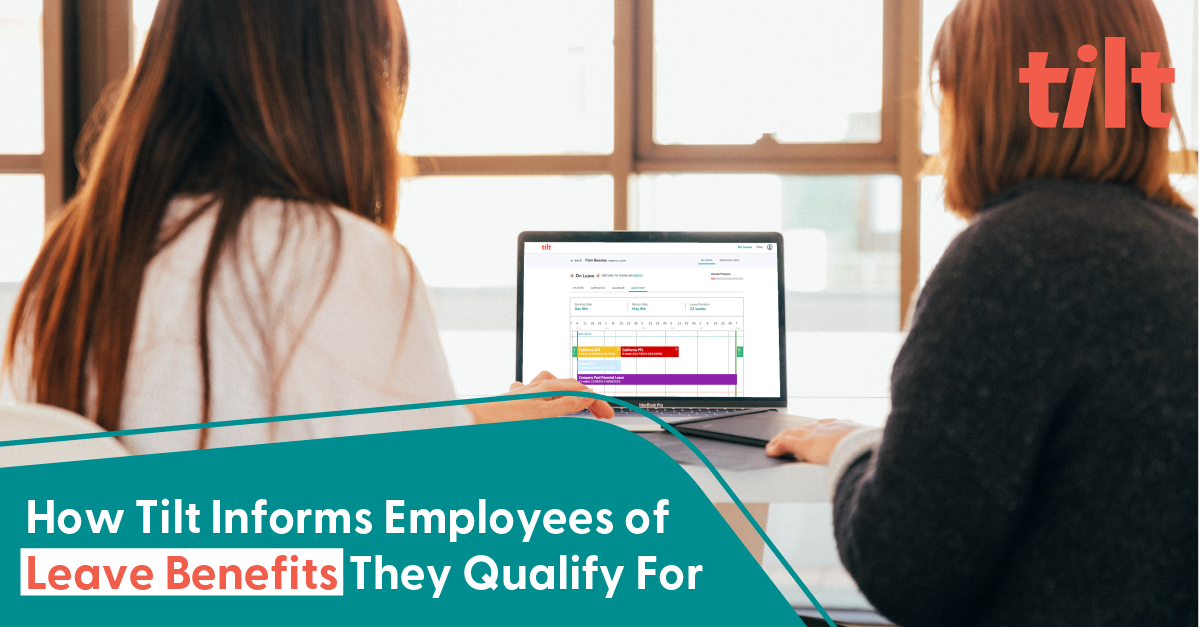
How Tilt Informs Employees of Leave Benefits They Qualify For

They say knowledge is power, but when it comes to understanding the leave laws and benefits programs that employees are entitled to, that knowledge can be a nightmare for employees to obtain. When your employees need to go on leave there’s a good chance their worlds are either currently, or about to be, flipped on their heads.

Give leave some love and give your employees the power of Tilt, the empathetic leave management solution that takes the benefits guesswork out of the equation. Tilt provides your people with the knowledge they need in an easy-to-follow roadmap for a successful leave of absence journey.

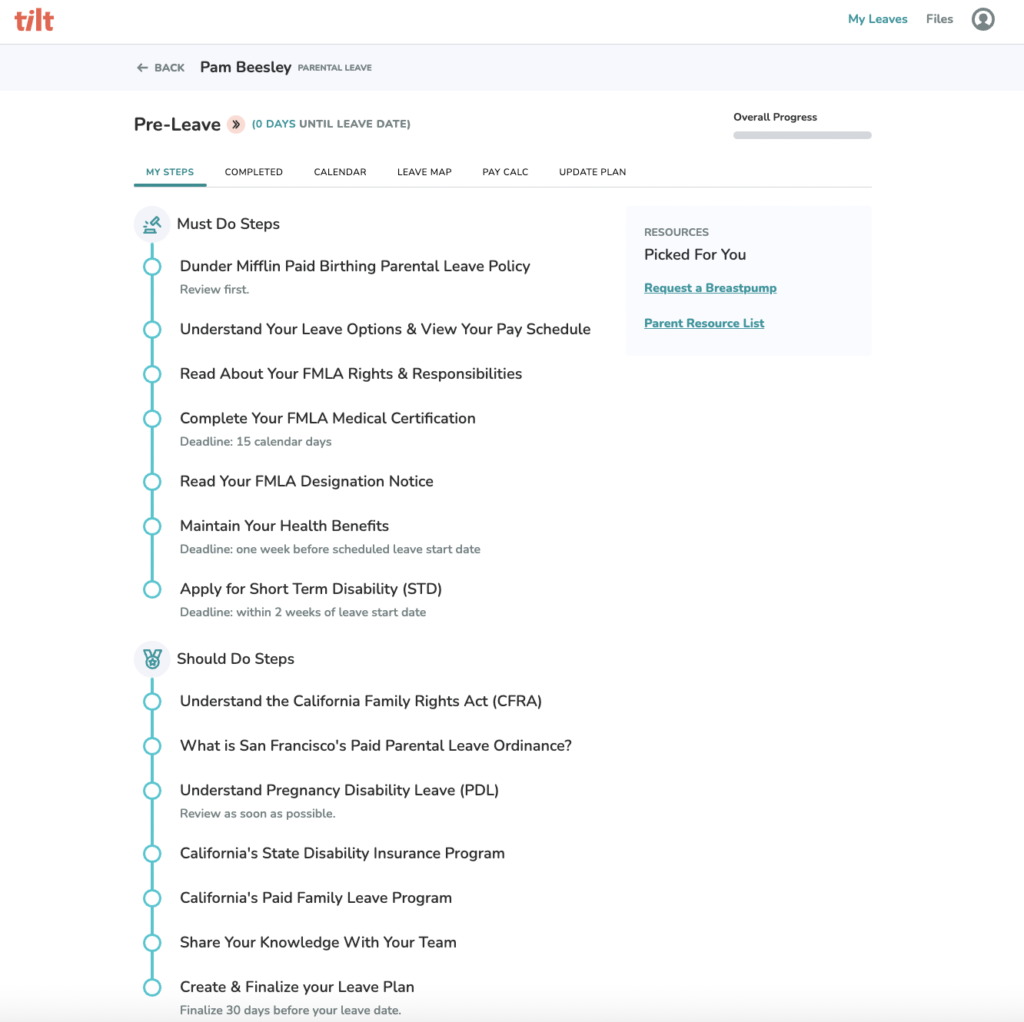
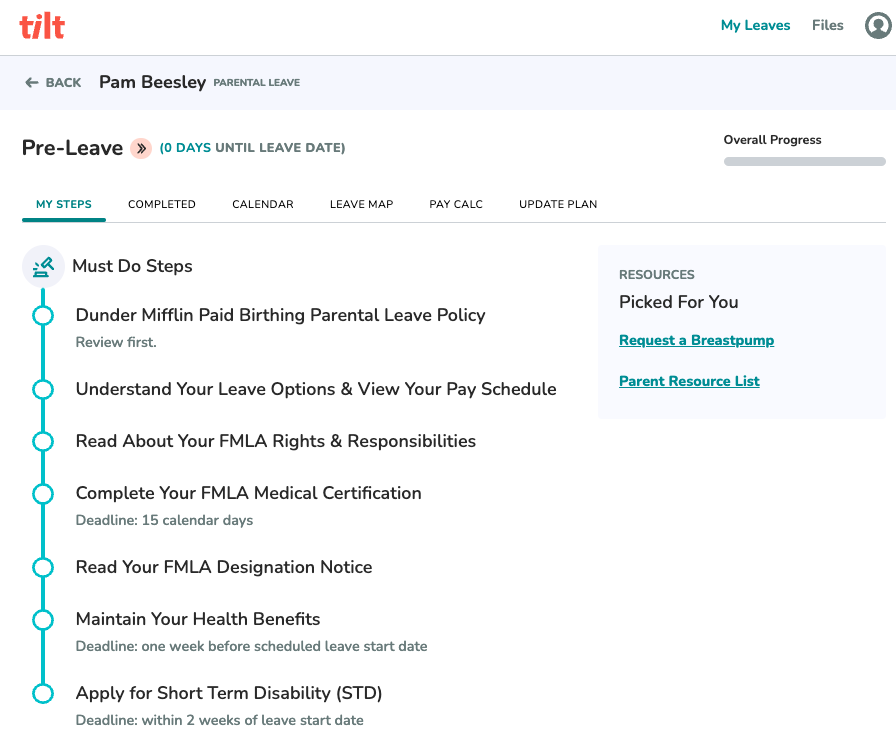
With automatic FLMA eligibility determination, our Leave Success Managers can quickly build out your employees’ leave plan letting them know if they’re eligible for FMLA benefits and job protection rights right out of the gate. Depending on the state they live in and the type of leave they’re taking, employees will have a customized leave plan waiting for them with all the information they need to apply for the benefits they qualify for. 

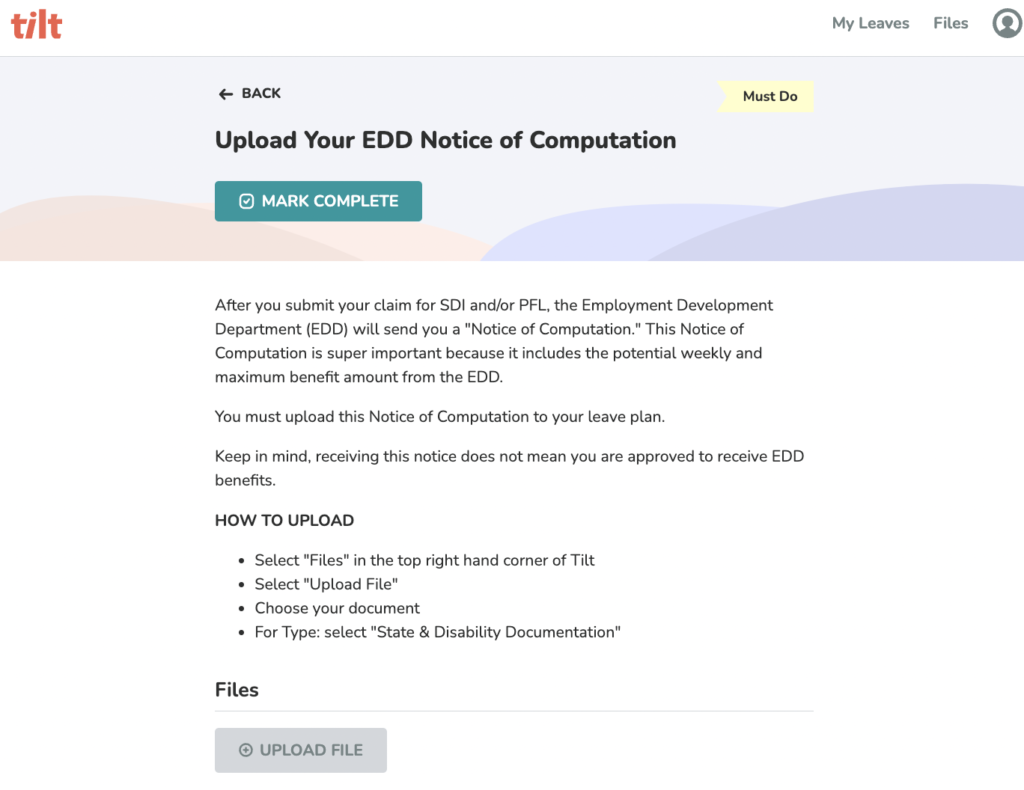
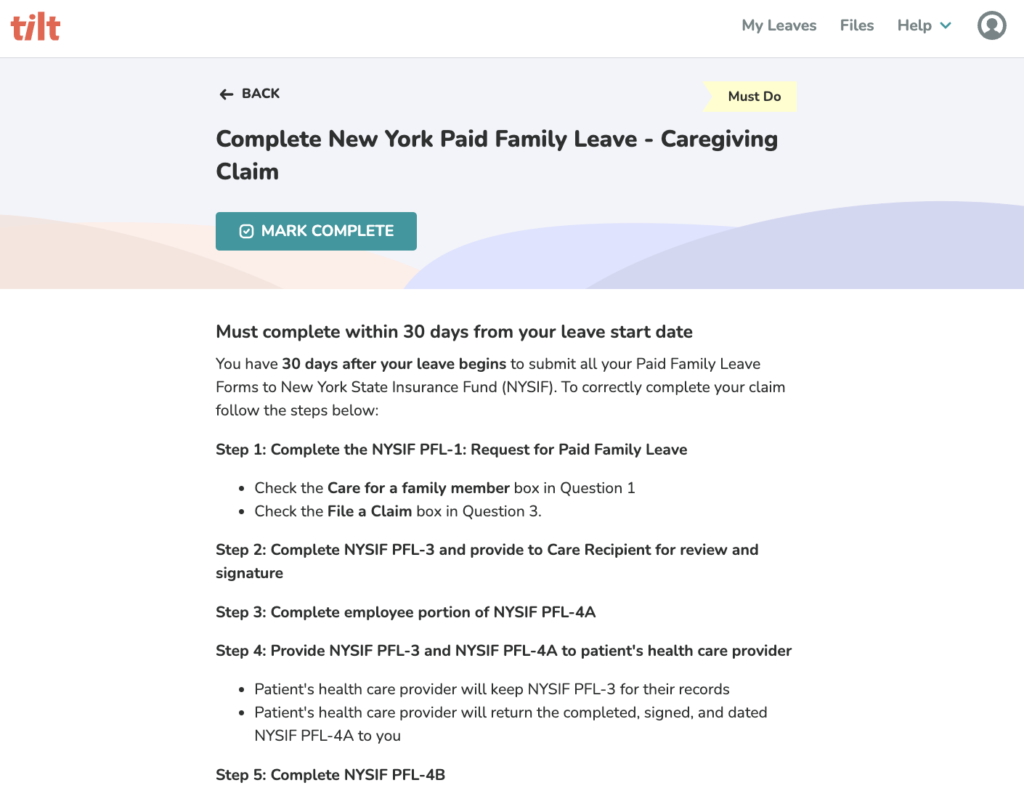
Here’s an example of what a California employee in San Francisco might see in preparation for parental leave:

Pre-Leave Plan
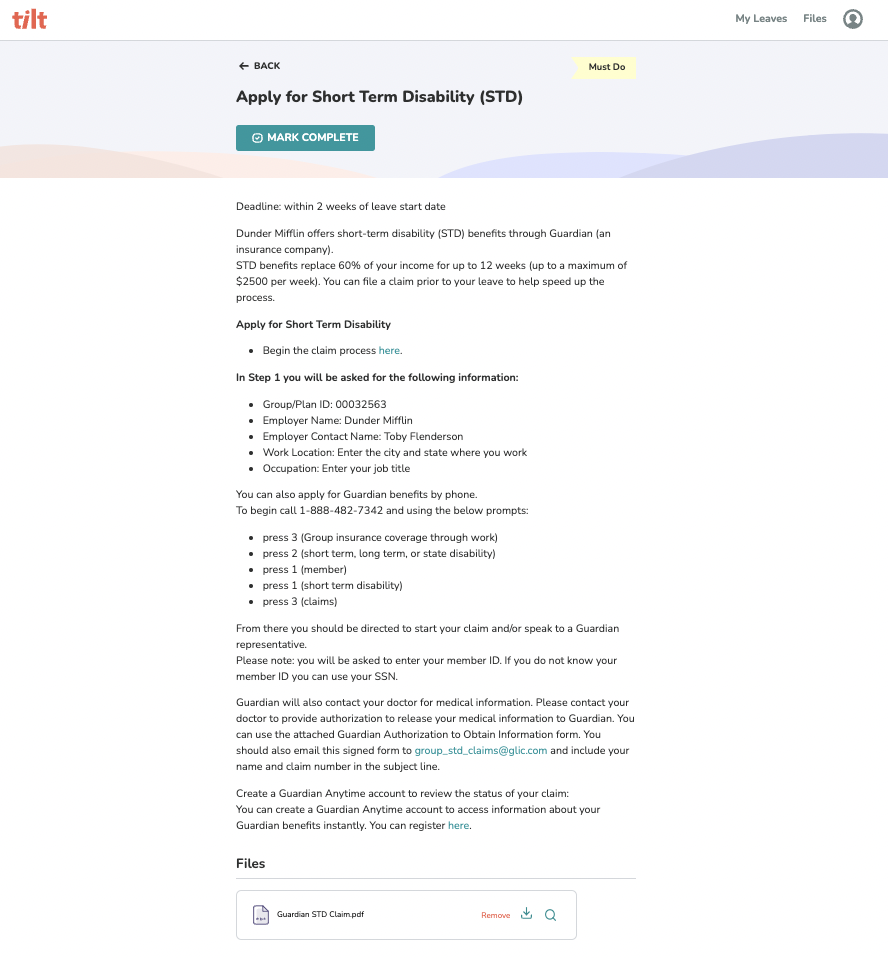
Applying for STD

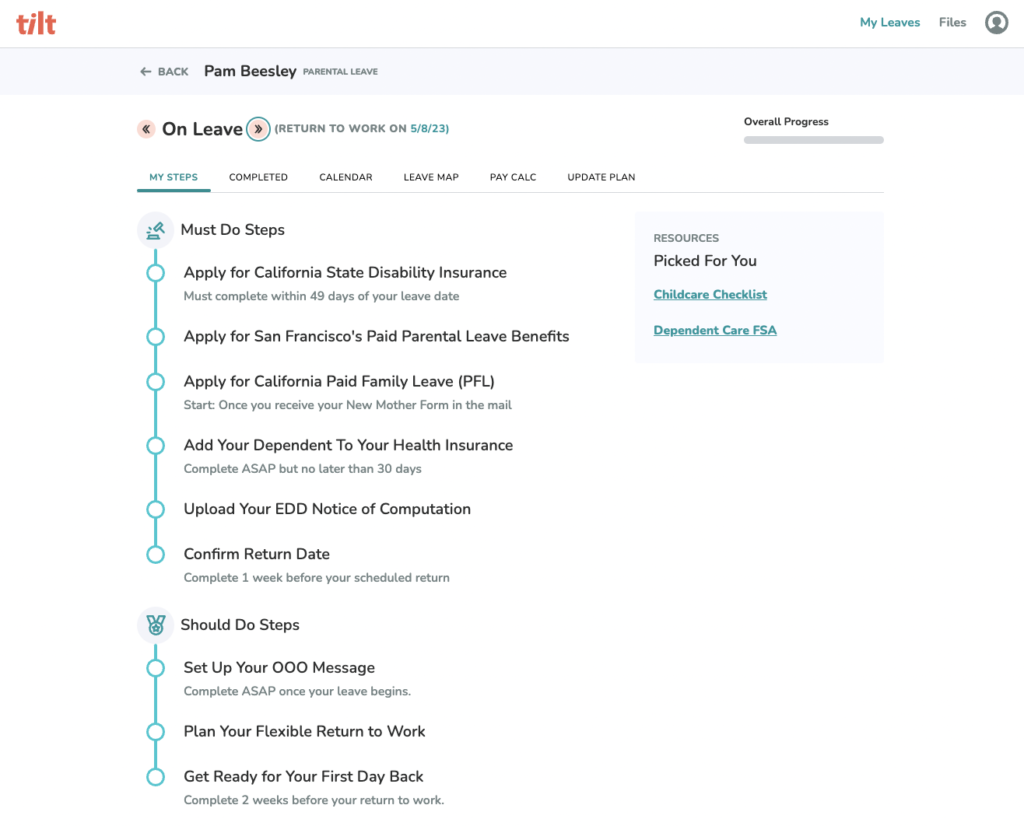
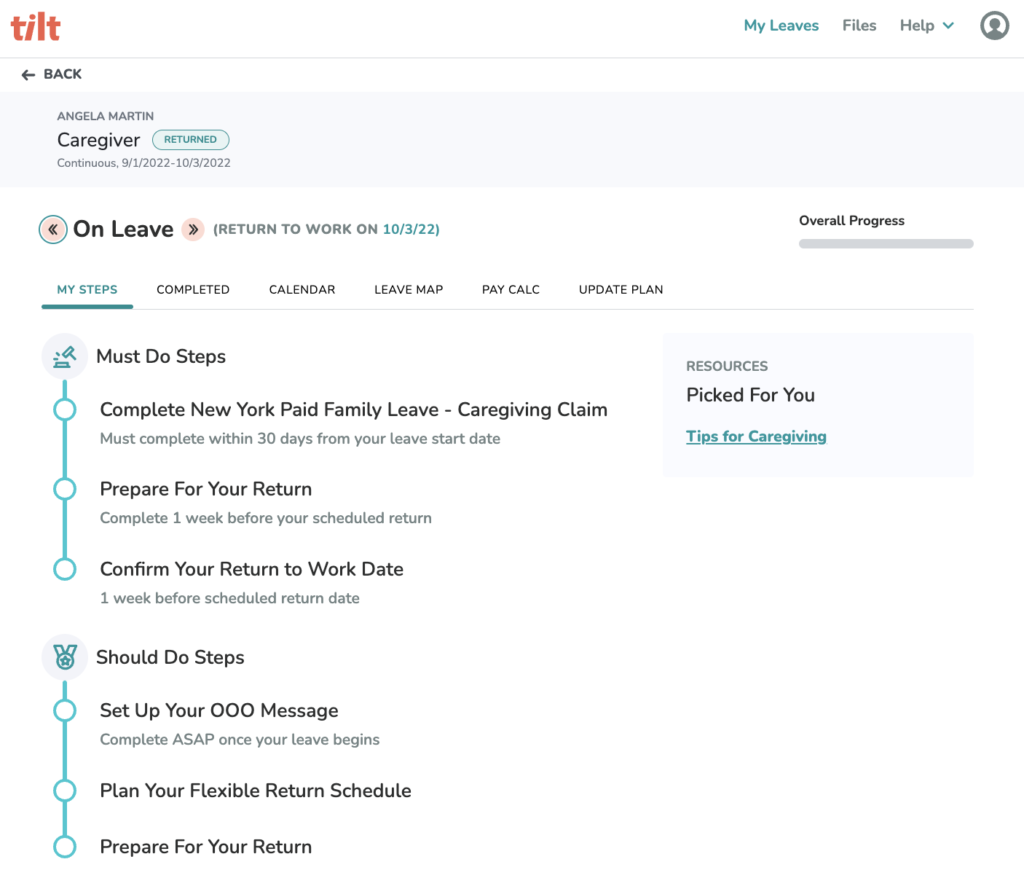
Tilt takes pride in making sure your people have everything they need before a leave, including which benefits and programs they qualify for as well as details on how to apply for them. Leave prep is only the beginning of the benefits information journey. Tilt also keeps them up-to-date on all benefits-related activities they should be aware of while ON leave as well.

On-Leave Plan
EDD Notice

Tilt believes an empathetic approach to leave management goes beyond a fantastic user experience on a tech platform (though we love providing that too). Even the most straightforward leaves can be complex, scary, and confusing times in the lives of your people. 

Your employees might have questions about the benefits or programs they qualify for, and HR managers shouldn’t have to rely on LNLLGSBs (Late-Night Leave Law Google Search Benders) or praying they aren’t leading employees astray and potentially putting your company out of some money, more on that here

Our dedicated team of Leave Success Managers (LSMs) are there every step of the way should your employees ever need a partner with a pulse, because when you’re going through mental health woes or a bereavement, having questions answered via a pre-recorded robo-operator labyrinth is unacceptable.

Dani Warford - Leave Success Manager

“Tilt was definitely the best part of my leave. Dani did an amazing job on checking in with me and making sure I was taken care of and had all my ducks in a row. I am very appreciative of them.” – Katelyn H. @ Robinhood

From sophisticated tech customized for every employee to compassionate LSMs support, Tilt keeps employees informed of the leave benefits and programs they qualify for and makes the process easy and breezy throughout their entire leave journey.

About Tilt

Tilt is leading the charge in all things leave of absence management through easy-to-use tech and human touch. Since 2017, our proprietary platform and Empathy Warriors have been helping customers make leave not suck by eliminating administrative burdens, keeping companies compliant, and providing a truly positive and supportive leave of absence experience for their people.

Related Posts

How a Poor Leave Experience Led to the Inception of Tilt

Updated April 22, 2025

Sometimes the greatest ideas come from an undefinable stroke of inspiration deep down within us. Other times, they are stumbled upon by accident by the right person at the right time. Then there are great ideas that are born when two leave of absence experiences go so unbelievably badly that a never-built-a-start-up-in-her-life Jen Henderson says, “I can only imagine how many people out there are experiencing this same mistreatment…something should be done.”Where most people might leave it at that, Jen decided to take matters into her own hands and build the solution to the problem she wished she had available to her so that others like her wouldn’t suffer her fate. More specifically, so that by the time her daughter was old enough, she wouldn’t also have to suffer from a bad leave experience someday.

Where most people might leave it at that, Jen decided to take matters into her own hands and build the solution to the problem she wished she had available to her so that others like her wouldn’t suffer her fate. More specifically, so that by the time her daughter was old enough, she wouldn’t also have to suffer from a bad leave experience someday.

Before we get into that, it’s important to unpack what went sideways that lit the fire and planted the seed that would become Tilt.

“I worked for 15 years in Fortune 500 companies and I loved it. I absolutely loved my career. I gave everything I had to it and got very accustomed to promoting every two years,” Jen recalls. “Being the go-to person at the top of the nine-box was my comfort zone, as was sitting at that proverbial table, so to speak.”

All of that would change when she became pregnant. The moment she made the announcement to her employer there was an unmistakable shift in the way she was viewed as an employee. The proverbial table she once was welcome at was suddenly siloed by stigma. The assumption was made that Jen would no longer have the time, drive and dedication she had proven throughout her career.

Just because she was going to be a mom. 

“I was devastated and frustrated to say the least. At that stage of my career, however, I wasn’t going to give in so I turned the other cheek, moved on, and moved forward. I did what I knew best and began clamoring my way back up the ladder with a new Fortune 500 organization.”

Five years later lightning struck Jen a second time. With her corporate career back on track she became pregnant again, and this time the reaction wasn’t just icing her out of meetings and making assumptions about her own personal career ambitions as a parent.

This time, the proverbial table Jen was sitting at had a promotion taken off of it. Weighing the pros (financial) and cons (gag order and the perpetuation of a broken system) of taking legal action, Jen came up with Tilt…ish. It was more like the moment she knew she wanted to help fix the problem– but even she had no idea what that might look like.

“It was enough for me to say ‘This isn’t right.’ Even though I didn’t quite know what the solution needed to be, I couldn’t just turn the other cheek again.”

After doing some preliminary research on the matter Jen got confirmation that lightning hadn’t actually struck her twice. That euphemism is reserved for rare occurrences, fluke happenstances, and dumb luck. Her experience was many things, but it was far from a fluke.

Women and men alike were having horrible leave of absence experiences because their employers did not have the resources, education, or empathetic understanding of what it’s like to go through the loss of a loved one, the birth or adoption of a child, or the crushing anxiety that can make work unbearable.

From there Jen went through more adversity as a first-time, female founder of a start-up, which has its own stigmas and assumptions that perhaps she’ll tackle in her next life. With the encouragement  of some amazing supporters and partners who believed in her vision, she’s taken Tilt from a passion for changing the status quo to back-of-the-napkin iterations, all the way to where we are today.

During life’s most important and challenging moments, no one should have to worry about navigating a complicated leave process. Now, Tilt exists to ensure that leave is effortless, compliant, and fully supported, so HR teams and employees can focus on what truly matters.

This passion for leave can be felt in everything we do at Tilt, from every Tilter, and by every organization that trusts us to deliver on our promise to give leave some love. Because when life happens, that’s when you need us the most.

About Tilt

Tilt is leading the charge in all things leave of absence management through easy-to-use tech and human touch. Since 2017, our proprietary platform and Empathy Warriors have been helping customers make leave not suck by eliminating administrative burdens, keeping companies compliant, and providing a truly positive and supportive leave of absence experience for their people.

Related Posts

The Hidden Bond Between Leave and Retaining Key Employees

Getting leave of absence management right isn’t easy. On top of payroll monitoring, time off tracking and applying for benefits, every employee is different as are their circumstances for requesting a leave. On the flip side, getting LOA management wrong is quite easy. HR Teams have to worry about botched employee pay, losing track of FMLA hours, missing deadlines on form submissions, and managers behaving in a variety of inappropriate ways that can lead to lawsuits.

Poor leave experiences don’t discriminate based on employee performance, they suck no matter who you are or your position within a given organization. This is why consistency in your LOA management process is critical, because if you think you can’t risk the costs and loss of trying to replace a lower-level employee, there could be significant ramifications if a key employee goes on leaves and never comes back.

An opportunity to strengthen the bond

An employee needing to take a leave of absence from work can, and should, be considered a tipping point in their journey with your organization. Proactive People Teams view a leave of absence as more than just a process they need to execute in order to transactionally get their employees out of the office and then back in, but rather a chance to show that when it’s needed most their employer truly supports them.

No demographic within your organization is this more impactful than with your key employees. We can’t stress enough that every employee should feel this support from their employer when needing to take leave, but the bond is extra impactful for your most valuable employees. The impact is felt both by the high-performing employees themselves, and by the organization which capitalizes on the opportunity to do right by the people most important to the business and strengthen that bond.

Who exactly are these "key employees?"

Hiring and team-building decisions are often made outside of HR, so while in theory every employee should be treated as a key employee, we’d be lying to ourselves if we believed every employee within your organization moved the needle of success to the same degree.

A key employee is one that is widely considered to be vital to your organization’s operations. They might be decision-makers who impact overarching business strategies, they might be your top sales performer, or they might physically represent your company in a public-facing role.

If you want a more practical definition of a key employee, a good litmus test is to close your eyes and think of the employees you’d go “oh crap, what the heck would we do?” if they left your organization.  

The potential to burn a bridge

It’s the rare high-performer who isn’t aware of their positive impact on an organization. As such, they’re the employee population who are also aware that if they aren’t feeling appreciated they have the most career flexibility to take their talents elsewhere. Long hours. Stressful deadlines. Heavy decisions. The day-to-day pressures of being a high performer is something they live with and are acutely aware of, which is why of all the times their employer needs to have their back is when they need to step away from the high-stress environment they’ve been immersed in at work and take care of life’s biggest moments.

Not doing so can be costly. An employee who’s been sacrificing their time, energy, and heart into the business must feel that effort reciprocated when they’re the ones in need. If a key employee doesn’t feel that the equivalent level of respect is being given to them as they’re giving to the organization, the damage to that employee-employer relationship could be irreparable.

Being human is cool (and can save time and money)

Fully supporting an employee on leave means going beyond the transactional. It means making their journey not only easy as possible, but also as empathetic as possible in their time of need. It means making processes and paperwork straightforward, and human support to answer questions that may pop up. Your best employees are at the ready when your organization is up against it, and they’re expecting the same level of humanity when life causes major disruption, planned (like having a child) or otherwise (like the loss of a family member).

By being human and treating a leave of absence as the most human experience your key people are likely to go through, you’re strengthening those bonds and your shoring those bridges. You’re more than telling your high-performers that they matter, you’re showing it to them when it matters most. Not only does this increase the likelihood of them returning from their leave, but also helps ensure they come back more engaged and connected to the organization. 

Leveraging technology can be a massive help for leave of absence efficacy, but without the empathetic component your employees’ experience can be cold and confusing and may have them seeking other opportunities. 

This means HR has to spend the time and money looking to backfill that key employee, and the higher their impact within your organization the more expensive that’s going to be. The costs to replace a high-performing employee can range from 100%-213% of that employee’s salary.

Think long-term

Getting LOA management right is about making sure you’re doing right by your employees who are keeping the engine running, and the importance of getting it right only increases the higher up the chain you go. 

A positive leave experience starts with making it easy to manage your leaves with empathy and has obvious short-term benefits, namely, less stressed out People Teams and employees who feel informed and supported throughout the leave journey thus minimizing the costs associated with turnover.

Long-term it’s sending a message. A message that your people matter. A message that tells your employees that the hard work and effort they put in every day will be met with compassion when the employee’s life goes sideways and the favor needs to be returned.

About Tilt

Tilt is leading the charge in all things leave of absence management through easy-to-use tech and human touch. Since 2017, our proprietary platform and Empathy Warriors have been helping customers make leave not suck by eliminating administrative burdens, keeping companies compliant, and providing a truly positive and supportive leave of absence experience for their people.

Related Posts

5 Benefits Employees Don’t Know They Have

HR teams spend countless hours developing the best possible benefits packages for their people. Despite these monumental efforts and communications, employees often aren’t aware of all the benefits at their disposal. With the understanding that every organization is different and employment statuses vary, People Teams are putting extra emphasis on creative benefits to stay competitive in the talent acquisition landscape. 

More progressive benefits like the fertility benefits Carrot offers or the leave of absence management support we provide at Tilt are wonderful ways to show your employees that your organization is thinking about its people first and foremost. Because of these exciting and forward-thinking benefits getting deserved shine in the headlines, sometimes the more common benefits get lost in the shuffle.

The 5 benefits below are some common benefits (we know not every organization offers these, but a majority do and for the sake of the exercise…) that employees might not be aware they have, and can serve as a good reminder to educate and reinforce all the ways your organization helps support your people, not just the latest cutting-edge perks.

1. Education Assistance or Tuition Reimbursement.

According to SHRM – 83% of companies offer some sort of educational assistance or tuition reimbursement program. While that’s a wonderful statistic, only 5% of employees seem to take them up on it. Of course, not every employee wants or necessarily needs education assistance or tuition reimbursement, but the large discrepancy in the percentage of employees who take advantage of the opportunity should be viewed as an opportunity to remind your employees of this helpful benefit.

2. Legal & Financial Assistance

With hectic life schedules and burdensome workloads it’s sometimes easy to put financial planning on the back burner. Many organizations offer some sort of legal and financial assistance (oftentimes through 401k providers or other financial education programs) that their employees don’t know about it. 

This benefit can help employees answer tough questions that directly impact their quality of life such as how much should they be saving if they want to retire at 65. Supporting your employees in reaching their financial goals is a great way to establish trust and understanding of their long-term plans.

3. Paid Leave

Many employees, in particular the ones who have recently entered the workforce, aren’t aware of all the reasons they can take paid leave under state leave laws or your company’s policies, which may include family and medical leave, organ or bone marrow donation leave, bereavement leave, school visitation leave, or crime witness/victim leave, just to name a few.  While these leave programs are an extremely helpful benefit to employees in their time of need, it can be tricky for HR teams to manage them properly. 

If navigating the ins and outs of FMLA, state paid leave programs, short-term disability benefits and your own paid leave programs stretches you beyond the limits of your bandwidth, LOA management providers can be a great external resource to make your employees’ lives easier when taking advantage of the paid leave benefits available to them. 

4. Work-Life Assistance

Roughly 80% of companies with more than 50 employees offer some sort of health and wellness benefit for their employees. Yours might be one of them, and if so it can be highly advantageous to encourage your employees to capitalize on this benefit. Not only is promoting health and wellness important for the well-being of your people, 72% of employers saw a reduction in healthcare costs after implementing a wellness program.

5. Time Off to Vote

While federal law doesn’t require employers to give employees time off to vote, 29 states do, and 23 of those states require that employers pay their employees for that time. Of course employers can and may (and should in our opinion) provide paid time off for their employees to vote, but this is a benefit that widely flies under the rader for many employees. If you operate in a state with this benefit or have your own policy in place, let your people know!

About Tilt

Tilt is leading the charge in all things leave of absence management through easy-to-use tech and human touch. Since 2017, our proprietary platform and Empathy Warriors have been helping customers make leave not suck by eliminating administrative burdens, keeping companies compliant, and providing a truly positive and supportive leave of absence experience for their people.

Related Posts

Keep Employees Informed on Benefits With Tilt

When a leave of absence journey begins, employees have questions abound. From FMLA regulations to specific company policies to state benefits, trying to understand the evolving intricacies and legalities of a leave is a burden employees and People Teams shouldn’t be asked to manage. 

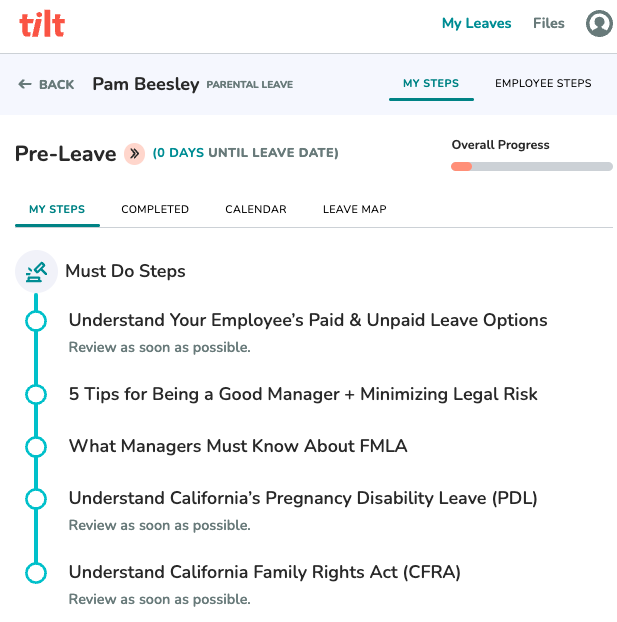
Tilt takes out the guesswork by developing leave plans specific to every employee on leave that is based on the most up-to-date leave law details thanks to our in-house legal and compliance team. The leave plans outline what benefits employees are entitled to from both FMLA (if eligible) and your organization’s policies. It’s not just the employee taking the leave that benefits from this, but their manager as well.

By creating a single source of truth for each leave, no matter the leave, and no matter the state, Tilt provides the relevant information for all pertinent stakeholders so that everyone who needs to know stays in the know. 

When an employee requests a leave of absence and it is entered into Tilt, they’ll see their personalized leave plan laid out before them which goes into detail about the benefits they’re entitled to. Each employee is synced with one of our Leave Success Managers throughout the entirety of their leave journey should there be any questions about benefits or clarity needed around confusing laws. We believe that a set-it-and-forget-it approach to leave management and benefits education will never provide the comprehensive support necessary for a successful leave, which is why a Tilter’s human heartbeat is at the ready to help your people when they need it most.
We also ensure that education around benefits doesn’t begin and end with the employee taking the leave. A well-informed manager is vital to leave of absence efficacy and can make or break the employee’s LOA experience. Managers are a leading cause of employment law violations, and a common misconception is that these managers are bad apples or have malicious intent. A lifetime of stigmas around taking a work leave mixed with a lack of information about leave laws means even the most well-intentioned manager can make a misstep that leaves their employee feeling discriminated against, and your company in some potential hot water.


Tilt prioritizes manager education right within the platform so that before a leave, during a leave, and after a leave, they’re informed about what benefits their employee has rights to. Educating managers on leave benefits fosters an environment of empathy and support whose importance can’t be understated when evaluating the success of a leave.

Between leave law evolution and the expansion of benefits that employers roll out, Tilt takes the burden off of People Teams to educate employees and their managers on what benefits are applicable to the leave and how they’re administered. With Tilt, you can take the guesswork out of leave benefits so you can finally take a load off.

About Tilt

Tilt is leading the charge in all things leave of absence management through easy-to-use tech and human touch. Since 2017, our proprietary platform and Empathy Warriors have been helping customers make leave not suck by eliminating administrative burdens, keeping companies compliant, and providing a truly positive and supportive leave of absence experience for their people.

Related Posts

Join us February 20th, 2025 at 11AM MST – Tilt Live Demo | Register Now>>