Updated on October 7, 2026
Insurance carriers provide valuable benefits and services to your clients. And from a benefits perspective, there’s an obvious appeal to bundling as much as possible together.
One partner. Fewer systems. Fewer relationships to manage.
But when it comes to leave of absence, that convenience can come with a tradeoff.
Leave is more than an insurance benefit. It involves changing federal and state laws, employer policies, employee communications, manager responsibilities, payroll, documentation, and often several different types of leave happening at once.
That creates a different kind of support need—one that goes beyond administering an insurance product.
For People Ops teams, the question isn’t whether their carrier is a good partner. It’s whether they have the technology, visibility, expertise, and resources they need to manage leave effectively.
Leave Is Different From Other Benefits
Insurance carriers are experts in insurance. That’s exactly what your clients rely on them for.
But leave management introduces a different set of complexities.
An employee may need to understand their FMLA rights, determine whether they qualify for a state leave program, coordinate multiple types of leave, provide the right documentation, and understand how their leave affects their pay and benefits.
At the same time, the employer needs to administer the leave consistently, maintain compliance, keep managers informed about what they can and can’t ask an employee, and make sure the right information gets to payroll.
And every leave is different.
An employee could be preparing for the birth of a child, caring for a family member, recovering from an injury, managing a serious health condition, or navigating an unexpected situation they never anticipated.
The support they need isn’t necessarily the same as the support the person before them needed.
That’s where a general benefits experience can fall short of what leave actually requires.
Employees Need More Than a 1-800 Number
Imagine an employee is going through one of the most significant or difficult moments of their life and needs help understanding what happens next.
They call the number listed on their benefits materials. They explain their situation to someone they’ve never spoken with before. If they have another question tomorrow, they may have to explain everything again.
That experience creates friction at exactly the moment when employees need clarity.
HR Teams can find themselves in a similar position. They may not be leave experts themselves, so when an employee has a complicated question, they may simply direct them to the carrier or another resource.
The result is a fragmented experience where no one person necessarily has the full picture.
But employee support is only one part of the equation. The bigger opportunity is giving HR teams the technology and resources to confidently manage the leave process themselves, while providing additional support when they need it.
People Ops Need Visibility and Control
HR and People Ops teams need to know what’s happening with the leaves they’re responsible for managing.
When information is spread across systems, emails, spreadsheets, and external resources, it can become difficult to understand:
- Where an employee is in the leave process
- What information or documentation is still needed
- Which leaves may require additional attention
- What managers need to know
- How a leave may affect payroll
- Whether the organization is consistently administering leave
That lack of visibility can create more work for HR—and make it harder to identify potential compliance issues before they become problems.
A strong leave management solution should give HR teams the visibility, tools, and flexibility to manage leave in a way that works for their organization.
For some teams, that means managing the employee experience and administration entirely in-house. For others, additional employee-facing support can help take work off their team’s plate.
The important thing is having the choice.
What Better Leave Management Looks Like
There isn’t one right way to manage leave.
The right approach depends on your team’s size, expertise, resources, employee population, and how much of the process you want to manage internally.
But regardless of your approach, effective leave management should give your organization the tools and confidence to keep the process moving.
What HR and People Ops Need
HR teams need a centralized way to manage leave while maintaining visibility into what’s happening across their organization.
That means having access to the information they need, consistent processes, clear communication, and tools that reduce unnecessary administrative work.
A strong leave management solution can help your clients:
- Track and manage leave from one place
- Give employees clear information about what they need to do next
- Give managers appropriate visibility and guidance
- Coordinate information across HR, payroll, and other stakeholders
- Navigate complicated leave requirements
- Maintain more consistent leave processes
- Reduce manual administrative work
- Keep the organization informed throughout the leave lifecycle
For teams that have the expertise and capacity to manage employee questions themselves, the technology should give them the tools to do exactly that.
For teams that want additional support, an optional service layer can provide another resource for employees and HR.
What Employees Need
Employees need clarity, too.
Many have never taken a leave of absence before. They may not know what questions to ask, which forms they need, what benefits they qualify for, or how their leave will affect their pay or job.
A good leave experience should make it easier for employees to understand the process and know what to do next.
That can come through clear communication and self-service resources within the technology, direct support from the employer’s HR team, or—when an organization chooses to offer it—additional support from a dedicated Leave Specialist.
The goal is the same: employees should feel informed and supported throughout their leave.
Give Your Clients the Flexibility to Choose Their Approach
The answer isn’t necessarily to replace a carrier relationship that’s working well.
It’s to recognize that leave management has its own set of requirements and may call for specialized technology and expertise.
Your clients can continue to rely on their carriers for the insurance products and benefits they provide while using a dedicated leave management solution to manage the complexity of leave.
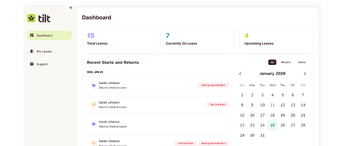
With Tilt, organizations can manage leave in-house with the technology, visibility, and tools they need. And for organizations that want additional help supporting employees or navigating more complex leave situations, Tilt’s Premium Support add-on provides access to dedicated Leave Specialists backed by leave compliance expertise.
It’s not about telling every organization how they should manage leave. It’s about giving them the flexibility to choose what works best for their team.
Give Your Clients More Control Over Leave
Bundling can make benefits administration simpler. But when the underlying need is highly specialized, your clients may benefit from technology designed specifically for leave.
The right leave management solution should give HR the ability to manage leave with greater visibility and control, while giving them the flexibility to decide how much support they want along the way.
That might mean a team managing leave entirely in-house. It might mean adding specialized employee support. Or it might change as the organization grows and its needs evolve.
Tilt gives your clients that choice.
Learn how Tilt helps organizations manage leave or connect with our team to see how Tilt can fit the way your clients manage leave.