Tilt and Paylocity Partner to Power a Smarter, More Confident Leave Experience

Updated on October 28, 2025

When Employees Need Leave, Your Systems Should Already Be Working Together.

We’re thrilled to announce a powerful new connection that simplifies leave of absence management from the inside out: Tilt now offers an API-based integration with Paylocity!

This integration was precisely built to streamline leave-related data syncing, reduce costly errors, and help HR leaders operate with confidence. Critical employee and pay data flows directly from Paylocity into Tilt, meaning no more spreadsheets and zero guesswork.

Built by Tilt. Backed by Expertise.

Unlike platforms that rely on outside connectors, Tilt built this Paylocity integration in-house. That means you get greater control, faster results, and a more secure experience by implementing:

  • Stronger Security and Compliance: Only Tilt accesses your data. This ensures SOC 2 compliance and maintains the strictest security posture.
  • Direct Visibility and Support: We monitor the integration directly and can quickly diagnose issues. You are never left waiting for an external vendor.
  • Faster Innovation: Tilt controls the roadmap. We improve and adapt the experience based on your team’s needs.

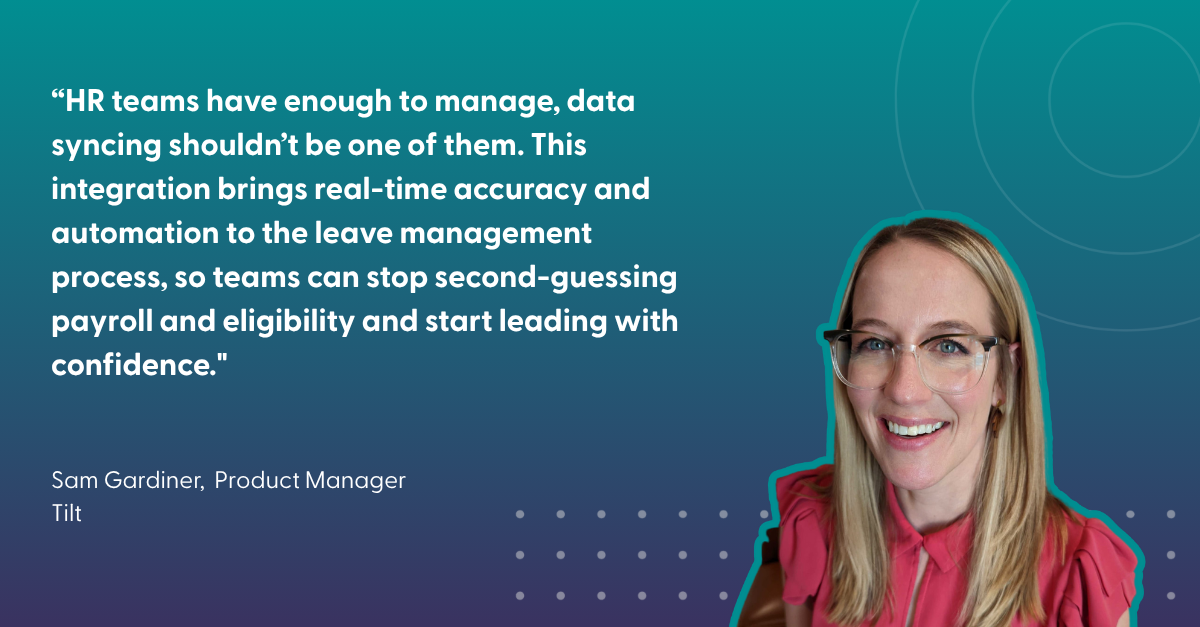
“HR teams have enough to manage. Data syncing shouldn’t be one of them. This integration brings real-time accuracy and automation to the leave management process, so teams can stop second-guessing payroll and eligibility and start leading with confidence.” – Sam Gardiner, Product Manager at Tilt.

Sam Gardiner Quote Image

Built for the HR Teams Who Deserve Better

This integration was specifically built for HR leaders, regardless of your current system setup. It empowers growing companies (100–5,000 employees) to make leave a cornerstone of their employee experience.

  • If You Are a Paylocity Customer: If you’re still wrestling with manual processes, automated syncing and a seamless setup make it easy to finally leave that chaos behind. You’ll spend less time tracking data and more time focusing on strategic impact.
  • If You Are a Tilt Customer: If you’re considering a move to Paylocity, you will still get to keep Tilt’s power and precision. This integration unites your systems, keeping your leave workflows connected and effortless.
  • If You Are Evaluating Both: This is your strategic advantage. Tilt and Paylocity simplify leave, improve accuracy, and give HR leaders the control and confidence they need.

The Smarter, Stronger Path Forward for Leave

Leave management does not require late nights or risky guesswork. With Tilt and Paylocity working together, HR leaders finally have an automated, accurate system built for the real complexity of leave.

The integration removes pressure from HR by ensuring the right data is available instantly. When leave requests start with accurate data, employees feel supported immediately. HR leaders shift from reactive problem-solving to proactive, people-focused leadership—a massive win for retention and company culture.

For teams tired of wrestling with disconnected systems, this is the chance to step into a more seamless, strategic way of working.

Tilt and Paylocity are here to simplify the hard stuff, so you can focus on what matters most: your people.

Tilt is leading the charge in all things leave of absence management through easy-to-use tech and human touch. Since 2017, our proprietary platform and Empathy Warriors have been helping customers make leave not suck by eliminating administrative burdens, keeping companies compliant, and providing a truly positive and supportive leave of absence experience for their people.

Related Posts

How HR Can Support Modern Leave Needs Without Breaking the Rules

For decades, leave of absence has been stuck in a one-size-fits-all time capsule and buried under heaps of bureaucratic bias.

And if we can be honest together, it’s not aging well.

Policies built around a narrow set of qualifying events and legacy systems can’t keep pace with today’s workforce realities. Employees now expect, and deserve, support for a wide range of life moments: caregiving, mental health challenges, fertility journeys, bereavement, and more. But most leave programs weren’t designed with these in mind.

“Ever since the passing of FMLA, leave has been treated as an afterthought,” said Jen Henderson, CEO of Tilt, in a recent conversation with Bereave CEO Justin Clifford. “No need to point fingers. It’s just been the default, not a designed component of the employee journey.”

The good news? HR leaders have an opportunity to change the story. By rethinking rigid policies and prioritizing flexibility and compliance, they can meet modern needs, retain top talent, and turn leave into a true strategic advantage.

Leaves of Absence Aren’t Rare…They’re Rising

It’s time to shift our thinking from if employees will need leave to when. People are not going to stop having babies. People are not going to stop having medical procedures or losing loved ones. Leave is here to stay, and the volume at which employees are expecting employers to support them in their times of need is increasing.

That’s no exaggeration. In 2017, about 7% of employees took a leave annually. Today, that number has more than doubled to 15% and continues to climb. Tailwinds like increasing state-level paid leave legislation, heightened mental health awareness, and a broader definition of caregiving are all contributing to this upward trajectory.

This isn’t just about time off. It’s about creating systems that honor the realities of modern life while remaining legally sound. That’s where the friction often begins.

The Old Way of Managing Leave Can’t Keep Up

Traditional leave policies were written with a narrow framework in mind. Limiting policy to maternity leave and short-term disability ignores major life events employees regularly face. And the systems that were designed to manage those policies weren’t built with flexibility or compliance in mind. They were designed for a simpler, less inclusive era of work, and even then they rarely provided compliance confidence or consistency.

Old-school leave management tools often relied on spreadsheets, siloed HR systems, or generic time-off trackers, none of which were equipped to handle the nuances of real-world leave scenarios.

If they struggled to compliantly manage a straightforward parental leave, they’re even less equipped to address the complex, modern leave landscape that includes mental health, caregiving, and gender-agnostic parental leave across multiple states.

“Bereavement was not treated as a leave qualifying event with any sort of regularity historically,” says Jen. “There are multiple paths to parenting as well, which encompass far more than the person who is carrying the child. It’s recognizing that there are multiple paths to parenting and offering equitable access to caring for that child, no matter how you came to welcome that child to your life.”

These nuances matter. So does how employees are supported when they’re navigating them.

Take caregivers, for example. Nearly all employees have caregiving responsibilities, with 45% taking several days off from work per month for those duties. And it’s not just about time, they also need help. In fact, more than half of caregivers consider quitting during their leave, and are 3X more likely to do so than before they left.

Building Leave Flexibility Without Breaking Compliance

It’s tempting to view leave flexibility and compliance as opposing forces. But with the right approach and the right tools, they can go hand in hand.

Some leading companies are doing just that by adopting more inclusive, empathy-forward leave policies. “Companies are building out much more inclusive types of leave plans,” says Jen. They call them empathy leaves or compassionate leave and put it on a rolling 12 months and say, ‘You get 30 days on a rolling 12 months because life’s going to throw stuff at you and you should have the flexibility to take care of it.’”

These flexible approaches to leave policy don’t just check a box, they reflect a values-driven culture that sees employees as humans first. And they make room for life’s less predictable events while remaining compliant with increasingly complex regulations across states and leave types.

That’s no small task. Between changing laws, differing eligibility rules, and the nuances of leave transitions (say, from parental to caregiver to bereavement), it’s a lot for any HR team to manage manually or off the side of their desk.

Why Default Thinking Is the Real Risk of Leave of Absence

It’s human nature to resist change, especially when it challenges long-held beliefs or entrenched ways of working. In many organizations, the approach to leave management hasn’t evolved, not because people don’t care, but because it’s cognitively and culturally easier to stick with the familiar.

Shifting mindsets around leave by viewing it not as a disruption, but as a strategic imperative, requires unlearning decades of default thinking.

“What has been accepted as the norm of how leave of absence is managed is breaking bones in a lot of ways,” says Jen. “To get people to think about it differently, to see it differently, to really embrace it as a competitive advantage and not an inconvenience for an employee.”

So, why the disconnect?

Part of it is inertia. “The way that it’s always been done is a very, very powerful undercurrent of how organizations run,” she explains. “The default mindset is very strong.”

But default isn’t a strategy.

Today’s HR leaders can’t afford to rely on outdated playbooks, especially when the risk of non-compliance, employee attrition, and brand reputation are on the line.

Modern Leave Management That’s Compliant by Design

Modern leave programs aren’t just about keeping up with laws, they’re about keeping up with people. As employee needs evolve, the systems that support them should too. Historically it seemed like a pipe dream to offer flexible, inclusive leave policy and support to employees without compromising on compliance.

This is exactly what Tilt is designed to do.

By combining automated workflows with expert and empathetic human support, Tilt helps HR teams confidently navigate everything from multi-state leave laws to nuanced policies around mental health, caregiving, fertility, and grief. It’s a smarter, more supportive way to manage leave, and one that exceeds today’s standards and can scale for tomorrow’s expectations.

The result? Confidence. Clarity. Compassion. All in one place.

Because supporting employees through life’s hardest and most meaningful moments shouldn’t feel like a compliance gamble. It should feel like progress.

Tilt is leading the charge in all things leave of absence management through easy-to-use tech and human touch. Since 2017, our proprietary platform and Empathy Warriors have been helping customers make leave not suck by eliminating administrative burdens, keeping companies compliant, and providing a truly positive and supportive leave of absence experience for their people.

Related Posts

Bringing Fairness Back to Leave: Why Modern Policies Matter

Outdated Leave Policies and Procedures Are a Hidden Equity Problem

As much as we’d all like to pretend it wasn’t the case, leave management hasn’t received the attention it deserves.

Often at the mercy of capacity, not a lack of compassion, it’s regularly relegated to an administrative nuisance or a compliance thorn in the side.

But that’s changing.

Today, forward-thinking HR leaders are recognizing that leave isn’t just about paperwork and policies, it’s a powerful lever for creating a more fair, supportive, and inclusive workplace.

When leave is managed inconsistently or built on outdated structures, it can quietly chip away at trust and equity. But when it’s done right? It becomes one of the most human-centered parts of your employee experience.

From disparities in how leave is approved and communicated, to a lack of clarity around who’s eligible for what and when, outdated leave practices introduce friction that affects morale, retention, and equity.

In short: leave isn’t just a policy issue. It’s a process and people issue.

Leave of Absence Inconsistency Isn’t Just Inconvenient, It’s Inequitable

When leave policies are applied unevenly, or simply left to interpretation, bias creeps in. Some employees get flexibility and wiggle room, while others get formally written letters and structure. Some hear “take all the time you need,” while others hear “are you sure you can be out that long?”

It may not be intentional, but it is consequential.

Leave policies that haven’t evolved in over a decade often rely on manual processes or vague documentation, which leaves too much room for judgment calls. And when those calls are influenced by someone’s job level, department, location, or how well they’re liked by their manager? That’s where equity breaks down.

And these inequities don’t go unnoticed. As Jessica Winder, SVP of People at Colab Software, put it: “Leave needs to feel supportive. If you’re just doing the compliance part of this, where it’s just, ‘this is your paperwork, this is what you do,’ people are not receptive to that right now. They want to feel like you care.”

The Real-World Impact of Outdated Leave Policies

Consider what happens when employees across different offices, or even on different teams, receive inconsistent information about how leave works. One gets a heads-up about job protection and pay timelines. Another has to chase down answers. One gets check-ins while they’re out, and another is met with silence.

The consequences are real:

  • Lower morale: Employees who feel overlooked or unsupported are less likely to return engaged and more likely to spread disengagement.
  • Higher turnover risk: “Am I valued here?” is a question employees ask quietly, but act on loudly.
  • Legal and compliance risk: Leave laws are evolving rapidly. As Jen Henderson, CEO and Founder of Tilt, shared: “Every single day there’s more complexity put on HRs plate because this leave space is so dynamic.” Falling behind is no longer a manageable risk, it’s a liability.

Even organizations that think they’ve nailed their leave strategy may be missing the mark. According to a recent report, while many employers view their leave policies as strategic assets, nearly one-third (32%) said they don’t think employees understand them, and almost half (43%) admitted their policies aren’t helping with retention.

Let that sink in.

Outdated Leave Policy Structure Undermines Today’s Expectations

“Twelve years ago, it really was just ‘I’ll send you the documents, you send me back the documents, leave, good luck, let me know when you’re coming back,’” said Jessica. “Whereas now that’s not the case. People want to have conversations. They want to feel like you’re invested in them actually coming back because they’re juggling caregiving or mental health or whatever is going on in their real life.”

Employees expect more than a form and a file. They expect empathy, clarity, and consistent support. That means HR teams need to move beyond “what’s legally required” and start thinking in terms of experience equity.

The hidden equity gaps in leave management often surface around underutilized benefits, too. Studies have found that the usage rate for family care benefits is much lower than for parental care, in part due to a lack of awareness.

When employees don’t know what they’re entitled to, or don’t feel safe asking, that’s another form of inequity.

How to Modernize LOAs for Fairness and Function

To create a more equitable leave program, HR leaders can start with these strategies:

  • Audit and align policies: Ensure policies are clear, current, and consistently applied across job levels, geographies, and teams.
  • Standardize processes: Establish workflows that remove subjectivity and reduce guesswork, for both employees and managers.
  • Make it personal, not just procedural: “Leave should be approached as a whole person experience,” Jessica reminds us. Policies should acknowledge the real-life complexity behind every leave.
  • Train managers: Your people leaders are often the first (and most powerful) point of contact. Equip them with the tools to respond fairly and empathetically.
  • Communicate proactively: Employees shouldn’t have to navigate a maze to understand their options. Make benefits visible, accessible, and human.

Tilt: Operationalizing Equity, One Leave at a Time

HR can’t do it all manually anymore, and they shouldn’t have to. As Jen puts it, “Let’s automate the automatable…so that humans can come to the forefront and be supported through any number of constructions of leave.”

Tilt helps HR teams standardize and streamline their leave programs with compliance baked in, clear workflows that reduce inconsistencies, and real-time communication tools that ensure no employee feels left behind. Whether it’s parental leave, family care, bereavement, or medical leave, Tilt helps HR teams deliver fairness without the guesswork.

Because equitable leave isn’t just about fairness, it’s about building a workplace where every employee feels seen, supported, and set up to succeed.

Bringing fairness to leave management is easier than ever.

Tilt is leading the charge in all things leave of absence management through easy-to-use tech and human touch. Since 2017, our proprietary platform and Empathy Warriors have been helping customers make leave not suck by eliminating administrative burdens, keeping companies compliant, and providing a truly positive and supportive leave of absence experience for their people.

Related Posts

Leave Law Certainty Starts Where Manual Processes End

Why Compliance Can’t Be Left to Spreadsheets, Guesswork, or Gut Instinct

If you’re an HR leader overseeing leave of absence across multiple states, you’re not just managing logistics, you’re walking a compliance tightrope.

It’s a true highwire act trying to balance between federal mandates, state programs, municipal ordinances, and company policies. Factor in the fact that leave needs can shift midstream (say, from caregiving to bereavement), it’s not a question of if something will fall through the cracks, it’s when.

For too many organizations, the only net below that tightrope is a spreadsheet or an old system with limited automation and visibility acting as a blindfold.

Let’s call that what it is: risky, outdated, and a recipe for sleepless nights.

You’re Not Just Managing Time Off, It’s an Evolving Leave Law Labyrinth

Thirteen states currently have some form of state-mandated leave.

That’s over a quarter of the country, and the list keeps growing. But don’t let the number fool you, each of those 13 has its own rules, requirements, timelines, and definitions. And to make it extra fun, none of the states are consistent with each other and change year-to-year.

“There are tens of thousands of different leave combinations,” said Jen Henderson, Founder and CEO of Tilt, in a recent conversation with Bereave CEO Justin Clifford. “So we are continually flabbergasted as to how many big companies manage leave in spreadsheets, or whiteboards, or any 1995 tool you want to throw at it. It’s become completely untenable.”

Consider a situation where your team is based in Indiana, but you’re managing leave for an employee in California. Suddenly, you’re fielding questions about job protection, partial wage replacement, documentation requirements, and overlapping eligibility, all under California’s notoriously complex web of leave laws.

Meanwhile, the leave itself may evolve. What starts as a mental health leave could shift into caregiving, or bereavement, or both.

If you’re using a spreadsheet or cobbled-together workflow, every twist in that leave journey becomes a potential compliance misstep.

And here’s the kicker: this isn’t static. “It’s such a dynamic space,” Henderson explains. HR teams are “having to comb the legal updates and they’re having to stay up to date on these changes.”

The Hidden (And Not-So-Hidden) Cost of Getting Leave Laws Wrong

You might think, “We’ve been getting by with our process so far.” But getting by doesn’t mean getting it right.

Henderson has seen it time and again, even knowing that HR teams have the best of intentions: “It has become more the norm than the exception that HR will say, ‘I’ve been doing this wrong the whole time.’ We completely understand why, but we don’t need to do that anymore. It’s litigiously risky. It’s compliance risky. It’s financially risky. And not to mention all the human elements.”

When policies are misapplied or deadlines are missed, companies expose themselves to lawsuits, fines, and audits. But the impact runs deeper. It erodes employee trust, strains HR teams, and often results in unnecessary turnover.

Built-in compliance isn’t just about keeping regulators happy, it’s about creating clarity, consistency, and confidence for both your HR team and your employees.

Spreadsheets Don’t Scale Leave Law Protection, Technology Does

Let’s face it: the stakes are too high, and the landscape is too dynamic, to rely on human memory or fragile formulas to manage leave. Manual methods weren’t built to scale with a workforce that spans states, or with a legal landscape that shifts as often as leave itself does.

That’s where technology comes in. When compliance guardrails are baked into the system, HR can stop being reactive and start being strategic.

Modern leave technology “has very direct-line impacts to reduce administrative burden…compliance risk, and the dollars and cents associated there,” says Henderson.

Instead of worrying if you missed a new city ordinance, a tech-forward platform can keep you compliant with the latest regulations. Instead of manually calculating entitlement changes mid-leave, the system can adjust automatically. Instead of hoping someone remembered to inform payroll, notifications and workflows can be automated.

Built-in compliance means you’re not playing catch-up. You’re leading with clarity.
The old way of managing leave simply can’t provide the assurance HR teams, and the organizations they support, require in the modern world.

How Tilt Makes Leave Compliance Less of a Maze (and More of a Map)

Leave of absence compliance shouldn’t require a legal degree or a leap of faith. Tilt’s platform is purpose-built to manage the messy realities of modern leave, codifying all of the complexities so HR teams don’t have to carry that weight alone.

Because we’ve seen it: the overwhelmed HR manager juggling multiple cases across different states. The spreadsheets that break. The sticky notes that miss something critical or peel off the monitor and into the trash. And the moment someone says, “Wait…have we been doing this wrong the whole time?”

And leave management is only one of the countless responsibilities HR teams manage.

Tilt eliminates compliance concerns across federal, state, and local laws, for all leave types. Tilt even adjusts when a leave type changes mid-leave, and provides consistent guidance to your team, your managers, and your employees.

No guesswork. No scrambling. Just clarity.

Because at the end of the day, compliance isn’t a box to check, it’s the foundation of trust, safety, and operational confidence.

Leave law certainty starts where manual processes end. And Tilt is where that certainty begins.

Tilt is leading the charge in all things leave of absence management through easy-to-use tech and human touch. Since 2017, our proprietary platform and Empathy Warriors have been helping customers make leave not suck by eliminating administrative burdens, keeping companies compliant, and providing a truly positive and supportive leave of absence experience for their people.

Related Posts

How Varo Bank Masters Leave Management Through Transparency and Partnership

Challenge: When Corey Glover joined Varo Bank as a People Operations Analyst, he was new to using Tilt for leave management. He was hoping the solution would provide more than just leave management automation; he wanted the flexibility to be as hands-on as he needed to be. For him, supporting employees during leave meant staying closely involved, maintaining clear communication, and having full visibility into the process at all times.

Solution: To his delight, Corey was able to embrace Tilt as a collaborative partner, one that allowed him to stay deeply engaged while still streamlining the overall experience. By leveraging the platform’s transparency and building strong relationships with Tilt’s team, Corey shaped a leave management process that balances efficiency with empathy and empowers both HR and employees throughout the journey.

Results:

  • A more seamless and supportive leave experience for employees

  • Improved transparency and communication for managers

  • Faster resolution of issues and better access to leave data

  • Strengthened trust across the organization

Continue reading and see how Corey and the team at Varo brought his leave management vision to life with Tilt.

Seeking a More Modern Approach to Leave Management

For Corey Glover, People Operations Analyst at Varo Bank, managing employee leaves of absence is about building trust through open communication and creating a supportive experience for employees during critical life moments.

“When I joined here almost three years ago, leave management wasn’t working exactly how I envisioned it,” Corey explains. By leveraging Tilt and implementing a transparent, employee-focused approach, Corey is staying ahead of the curve with the evolution of leave management, and has transformed the entire process at Varo into a seamless process that supports both employees and the business.

The Foundation of Leave Management: Building Trust Through Visibility

Corey believes the cornerstone of effective leave management is open communication and complete visibility into the process.

“What I really enjoy about the Tilt platform is I can see pretty much everything,” Corey shares. “It helps me take my own PTO when I need it because whenever my backup comes into play, they’re able to see the same documentation I am. They can go into the platform and see what I’ve touched, what communication I’ve had with the employee, and what communication Tilt has had with the employee.”

This transparency extends to managers, who have appropriate access to the information they need without compromising employee privacy.

“The platform not only shows the activity track so you can see all the communication, but it also gives you a full calendar, which is what our managers are really looking at,” says Corey. “Their main concern is, ‘Hey, how long are they going to be out?’ By pulling up the manager view of the platform they can clearly see the information they need to be successful.”

Creating a True Partnership, Not Just Another Vendor Relationship

What sets Tilt apart in Corey’s experience is the partnership approach that goes far beyond typical vendor relationships.

“It’s a partnership. I’m not just handing the entire process over,” Corey emphasizes. “It’s important to me to make sure that leave is running smoothly like it should, and together with Tilt it truly is.”

This collaborative approach proved especially valuable when dealing with sensitive situations.
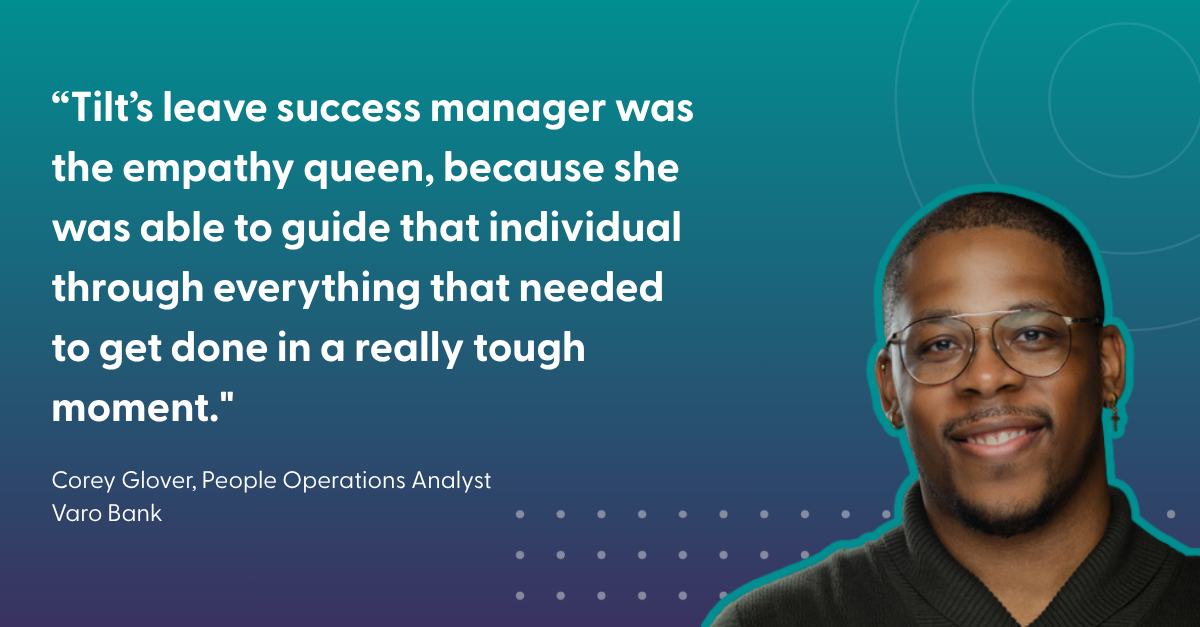
“We had an individual who was going through a mental health situation,” Corey recalls. “Tilt’s leave success manager was the empathy queen, because she was able to guide that individual through everything that needed to get done in a really tough moment.”

Corey Glover Quote

Varo’s Payoff: Better Employee Experience and Business Insights with Tilt

The impact of this approach has been profound for both employees and the business:

  1. Better employee support: “No one asks about leaves anymore at work because they (Tilt and the employee) obviously are doing a good job working together. So it’s never a question of, ‘I don’t understand what’s happening?'”
  2. Faster issue resolution: “This week, we had a payroll situation. Being able to reach out to my Customer Success Manager, and them to be able to get on it immediately has been mind-blowing to me.”
  3. Data-driven insights: “It also helps giving this information to my leader, who then provides it to the board so they know how money is being spent, how people are taking leave, any kind of trends.”

Corey's Tips for Leave Management Success

Based on his experience at Varo and his partnership with Tilt, Corey offers these recommendations:

  1. Prioritize open communication with both employees and vendors
  2. Secure sensitive information in one centralized system
  3. Be proactive with reminders and guidance
  4. Focus on the employee experience, especially around pay concerns
  5. Stay flexible to accommodate complex situations

“I’m an over-communicator, especially in the leave world,” Corey admits. “An employee taking a leave may have a whole team under them, and now that team may have to report to somebody new who has no idea what’s going on. So it’s pure communication and being able to pivot as needed. I couldn’t imagine doing this effectively, for every leave, without a leave partner like Tilt.”

The Bottom Line: Leave Management That Works

For Corey and Varo Bank, successful leave management isn’t just about checking boxes; it’s about creating a system that truly supports employees during critical life moments while giving the business the visibility it needs.

“Having that open door policy, that builds the trust,” Corey concludes. “And then also just knowing that I can have the autonomy to do a few things in the system that I need to do has been a godsend for me.”

Through partnership with Tilt and a commitment to transparency, Corey has ushered in a new era of leave management at Varo; one that ensures a supportive experience that builds trust throughout the organization.

Tilt is leading the charge in all things leave of absence management through easy-to-use tech and human touch. Since 2017, our proprietary platform and Empathy Warriors have been helping customers make leave not suck by eliminating administrative burdens, keeping companies compliant, and providing a truly positive and supportive leave of absence experience for their people.

Related Posts

HR Deserves Leave Accuracy Confidence- Here’s How To Get It

Leave management shouldn’t feel like a scavenger hunt. But for many HR leaders in large organizations and small alike, that’s exactly what it is. Chasing down dates in emails, matching notes from meetings to sticky notes on monitors, deciphering half-complete spreadsheets, and pinging teammates for updates that should already be at your fingertips. And when your tools don’t talk to each other, HR teams waste valuable time trying to piece together a clear picture of employee absences. It’s time they don’t have, clarity they desperately need, and risk they can’t afford. Let’s break it down.

The Day-to-Day Drain of Disconnected Leave Tools

On paper (or in that Excel file you’ve been nursing since 2019), things might seem organized. But in reality, fragmented tools wreak havoc on HR operations.

Raise your hand if you’ve ever had this inner dialogue…“Is the employee actually starting leave when they told me they would? And where did I jot that note down? Is it on the sticky note that’s on my screen in front of me? Is it on my phone somewhere? An email thread?”

Sound familiar? You’re not alone. Also, you can put your hand down.

  • When leave management is decentralized, every update becomes a potential point of failure:
  • A changed surgery date means editing three calendars and sending four emails.
  • A miscalculated return date means adjusting payroll (again) and explaining the mistake (again).
  • A manager never got the update because the HR partner forgot to CC them.

“Those leave dates have changed. And so now you have to go across multiple different systems to be supporting that,” explains Brad Hyland, Director of Leave and Customer Success at Tilt.

Even if you’re used to the chaos, you shouldn’t have to normalize it. Because it’s not just inefficient, it’s risky.

Leave of Absence Errors, Exposure, and Employee Frustration

Let’s talk about spreadsheets for a minute.

Yes, they’re convenient. But they’re also a digital ticking time bomb.

Spreadsheets are particularly vulnerable, as one simple mistake can create a domino effect, turning your HR report into chaos! Surprisingly, a study by The Hackett Group found that a whopping 88% of spreadsheets have errors. These errors can result in unreliable reports, flawed insights, and harmful decision-making.

Spreadsheets offer minimal protection for your data, leaving it susceptible to cyber-attacks, breaches, and other security threats.

Let’s not forget the human side either. If an employee is told they’re eligible for X weeks of leave but a spreadsheet typo only shows they are eligible for Y, that’s not just a misstep, it’s a trust-breaker and can have serious negative consequences for the employee.

“Maybe your formula is off in your tracking sheet, and you didn’t put 12 weeks, but you put 11 weeks in instead,” adds Brad. “If employees have been informed of incorrect information about the amount of time that they’re eligible for that can be a poor experience for the employee.”

Now layer in compliance. Leave laws change, life events don’t follow schedules, and one slip in documentation or data sharing can create HIPAA violations or legal exposure.

“That can lead into some additional pieces around HIPAA,” Brad continues. “Maybe a manager shouldn’t have access to some of that content, and maybe it was shared out to too many people.”

The stakes are too high, and the legacy tools too flimsy, for HR teams to confidently manage leave this way.

You Can’t Be Confident in Leave Management If You’re Always Second-Guessing

Let’s call it what it is: Fragmented systems create uncertainty.

When leave details are spread across emails, spreadsheets, chat threads, and mental notes on sticky pads, it’s no wonder HR professionals spend up to 20 hours managing a single leave. And yet, after all that time and effort, many are still left asking:

  • “Did I miss something?”
  • “Did payroll get the update?”
  • “Was that return date revised… and where did I put it?”
  • “Is this even compliant?”

These questions aren’t hypothetical. They’re real-time stressors that stem from a lack of integration and clarity. The result? Second-guessing every step of your process, double- and triple-checking your work, and constantly firefighting instead of confidently leading.

True confidence in leave management comes from two critical ingredients:

  • Knowing the process is accurate and compliant.
    Put an end to hoping your spreadsheet formula calculated the right eligibility or guessing if a new leave law applies. Have a system in place that does the heavy lifting for you and reduces the risk of errors that can snowball into lawsuits or employee dissatisfaction.
  • Having visibility into the process without micromanaging it.
    Confidence doesn’t mean giving up control—it means having a clear, accurate window into what’s happening without chasing updates. “We want to make sure that HR has a hand in that process, “says Brad about Tilt. “They can go in and see real-time updates and the different types of documentation that have been provided.”

Without both of these elements, you’re left patching holes in a system that should be supporting you. Confidence isn’t a luxury, it’s a necessity. And with modern leave management tools, it’s finally within reach.

Confidence Starts with Connected Tools—Like Tilt

You don’t have to live in leave chaos anymore.

Tilt is a modern, integrated leave management solution built to end the era of disconnected tools, scattered data, and second-guessing. From real-time visibility to automated updates, from compliance guidance to employee support, Tilt streamlines the entire leave experience.

According to a study by The Workforce Institute, 73% of HR professionals believe that automation enhances data accuracy.

And that’s exactly what Tilt delivers. No more manual calculations. No more spreadsheet gymnastics. No more misinformed employees or out-of-the-loop managers. Just streamlined, secure, and supported leave management that puts HR back in the driver’s seat. “We are an extension of the HR team directly, and we partner with them closely,” Brad shares.

HR deserves a world where they can stop chasing updates, questioning data, and holding their breath every time someone asks, “Are we sure this is right?”

It’s time for a change.

Because HR deserves leave clarity. HR deserves leave confidence. HR deserves a better way to manage leave.

Tilt is leading the charge in all things leave of absence management through easy-to-use tech and human touch. Since 2017, our proprietary platform and Empathy Warriors have been helping customers make leave not suck by eliminating administrative burdens, keeping companies compliant, and providing a truly positive and supportive leave of absence experience for their people.

Related Posts

Dear Managers: No, You Can’t Just Deny That Leave Request

Updated on October 27, 2025

The Manager Visibility Gap in Leave Management

Imagine this common scenario: A valued employee requests a leave. Their manager, overwhelmed and lacking context on policy or process, rejects the request immediately. No clear reason, no coordination with HR, just a quick “no.”

For many HR teams, this scenario is painfully familiar. Managers face immense pressure to keep their teams productive. When they operate without real-time information about who is out, when, and what the plan is, missteps are inevitable. This lack of visibility quickly turns the HR team into a reactive help desk for every leave-related emergency.

Why Managers Struggle: The Leave of Absence Visibility Void

Managers typically don’t intend to mishandle leave, they’re simply trying to manage their priorities with limited bandwidth. Allison Whalen, CEO of Parentaly, shared in a recent panel discussion:

“For the person going on leave because they’re expanding their family, this is their number one priority. For the manager, it’s like number 19 on their list. It’s never going to be number one. And so even good managers, they’re just never going to spend all the time figuring out how to be an expert in handling this thing that happens once or twice every few years to them.”

Leave management is inherently complex, highly personal, and unpredictable. Few managers ever gain proficiency in it. Without access to real-time information—like leave timelines, transition plans, or key policy milestones—they’re left to guess.

This guesswork has immediate consequences: Managers repeatedly contact HR for basic details, or they make decisions that contradict policy. Jessica Winder, SVP of People at CoLab, notes:

“HR can enact all the policies they want. If the manager is saying, we don’t care what the policy says, we’re going to do X, Y, and Z, the culture is going to flatline.”

Equip Managers for Empathy and Consistency

While you can’t create a flowchart for every human emotion, you can provide the systems that ensure consistent, informed decisions. Consistency is the foundation of an equitable and compassionate leave experience. Justin Clifford, CEO of Bereave, speaks to this:

“They say you can’t SOP grief. While I get the sentiment I tend to disagree. The SOPs are the things you should consider doing every single time…making it an equitable journey for all.”

Managers don’t need a detailed script for every scenario. They need the right context, clear steps, and a complete picture of what’s happening. Equipping them with this information encourages them to lead with empathy.

“Train managers to lead a little bit with empathy,” adds Justin, “and a whole lot of understanding what’s available and that human touch is going to surface pretty quickly.”

This is where HR leaders can shift their focus. Instead of manually managing every step, you can implement systems that support both employees and managers without overburdening the People team.

The Risk of Excluding Managers from Leave Conversations

A common, yet damaging, misstep is cutting managers out of the leave conversation entirely in an effort to reduce legal risk. This strategy backfires quickly and hurts retention.

As Jen Henderson, CEO of Tilt, points out:

“We have seen companies take the posture of risk aversion to the point of excluding the manager from a leave conversation, which is always damaging, always.”

When a manager is sidelined, the employee on leave often feels like a burden, and trust erodes. The manager, left in the dark, may mishandle the employee’s return-to-work or inadvertently alienate their team.

That’s why visibility is an essential for a seamless experience, not a luxury.

Empowering Managers Without Creating Leave Experts

The goal is not to make every manager a leave expert. Instead, it’s to empower them to show up better for their people.

“Please don’t expect them (managers) to know exactly the right thing to do,” adds Jen. “Instead, empower them to say, ‘You know what? I don’t know the answer, but I’m going to find out and I’m here to help before trying to guess what the right thing is.’”

Empowerment means allowing the manager to participate meaningfully without draining HR’s bandwidth. By providing controlled, role-based access to leave timelines and status updates, managers can:

  • Plan workload redistribution ahead of time.
  • Support re-onboarding with intention.
  • Ensure a consistent employee experience.

These focused moments of support matter. A written re-onboarding plan, a welcome-back note, or a dedicated colleague for re-entry shows employees that their experience was considered and valued.

“I would really encourage everyone to encourage every manager to build a written re-onboarding plan when folks come back from any type of leave,” says Allison. “You wouldn’t believe how good an employee feels from that.”

The Strategic Impact of a Positive Leave Experience

A positive leave experience is a fundamental driver to heightened retention and company culture. When surveyed on workplace culture, a significant majority (83.4% of employees) valued a positive work environment, and 68.1% indicated they were more likely to stay if their employer prioritized work/life balance.

Leave is a foundational, make-or-break moment in the employee lifecycle. Handling it poorly risks disengagement and departure. Handling it well strengthens the employee-employer bond for the long term.

How Tilt Empowers Managers in the Leave Journey

At Tilt, we take the weight off HR’s shoulders by delivering real-time visibility into team leaves without giving managers unnecessary control over the compliance process. Managers see only what they require: leave dates, return plans, and re-onboarding details—nothing more.

This clear, controlled access achieves three core outcomes:

  • HR focuses on strategy instead of fielding repetitive questions.
  • Managers support their people with empathy and confidence.
  • Every leave journey feels consistent and connected, eliminating guesswork.

Managers cannot unilaterally deny a compliant leave request. By equipping them with the right tools, they won’t feel the need to.

Interested in empower your HR Team? Book a demo today to see how we can help.

Tilt is leading the charge in all things leave of absence management through easy-to-use tech and human touch. Since 2017, our proprietary platform and Empathy Warriors have been helping customers make leave not suck by eliminating administrative burdens, keeping companies compliant, and providing a truly positive and supportive leave of absence experience for their people.

Related Posts

Time to Break Up with Leave Data That Ghosts You

If you’ve ever found yourself saying, “Wait, shouldn’t they be back from leave by now?” you’re not alone.

Managing leaves of absence with outdated or incomplete data is like being in a relationship with someone who ghosts you: radio silence when you need answers, last-minute surprises, and a whole lot of second-guessing.

For HR leaders managing leave themselves or overseeing those who do, this kind of dysfunction doesn’t just cause headaches, it erodes trust and creates real risk.

Think payroll errors, missed benefit deadlines, unplanned double coverage, and a growing number of employees wondering if their manager even knows they’re out. Without real-time insight into who’s out, when they’re returning, and what benefits or policies apply, HR teams are left scrambling to put out fires that shouldn’t have started in the first place.

Let’s talk about why it’s time to break up with the unreliable leave data that’s been leaving your questions on “read,” and what a better future looks like.

The Cost of Not Knowing Leave of Absence

They say knowledge is power, but ask the same “they” about the world of leave of absence and they’ll tell you that the lack of knowledge is costly. Take, for example, not having insight into upcoming leaves of absence across your organization.

“You might not know that a specific employee is even out of the office at any given moment,” said Brad Hyland, VP of Leave and Customer Success at Tilt. In a remote or hybrid work world, the consequences of that statement are big.
If someone is unexpectedly out and you don’t have proper coverage lined up, the rest of the team is left to pick up the slack, or worse, key business operations grind to a halt.

And when outdated leave data collides with a payroll cycle? Hyland warns, “If we’re coming up to something like a specific end of pay period… that could result in a massive change in that person’s pay… [they] may end up with that employee being drastically overpaid or potentially underpaid.”

Now layer on compliance risks, leave tracking errors, and the very real possibility of someone missing an application window for job protection or state benefits. What might feel like a calendar oversight turns into a potential legal issue and a human experience gone wrong.

Disconnected HR and payroll solutions usually mean someone is stuck doing heaps of manual data entry, cross-checking systems, or fixing mistakes. And let’s be honest, that “someone” is usually you or your already stretched-thin HR team.

A Manual Leave Process with Too Many Red Flags

Without real-time data, HR teams are often left cobbling together calendars, email threads, and spreadsheets just to understand the basics of a leave. “If your process involves updating a calendar…that’s a very manual task…that can then result in maybe forgetting to add the leave, and then you don’t have a backup person there to help support the team,” said Hyland.

That’s when preventable missteps start stacking up:

  • Gaps in workforce capabilities
  • Missed deadlines
  • A leave return missed with no re-boarding plan in place
  • FMLA tracked incorrectly, exposing the organization to risk
  • A manager left in the dark on how to support their employee (also exposing the organization to risk)

Whether it’s overestimating workforce needs and ending up with idle employees or underestimating them and facing burnout and poor customer service, the stakes are high.

From Administrative LOA Firefighter to HR Hero

But here’s the good news: it doesn’t have to be this way.

Real-time visibility isn’t just about cleaning up the mess. It’s about never creating the mess to begin with. “Having that real-time data is really, really important…to help support both business continuity-related items, but also making sure that pay is accurate for those individuals,” Hyland shared.

When HR teams have up-to-the-minute insight into leave status, eligibility, expected return dates, and applicable policies, they’re able to:

  • Proactively plan for backfills or redistribute workloads.
  • Avoid payroll and benefit blunders.
  • Support managers with clear, compliant info.
  • Offer a more empathetic, human experience to employees navigating challenging life moments.

“Really it comes around again to making sure that we’ve got the right coverage with the right people at any given moment because we have the forecasting ability of understanding what’s happening in real-time,” Hyland said.

That level of clarity turns HR into a strategic engine, not a reactive clean-up crew.

Tilt: The Real-Time Leave Data Partner You Deserve

Tilt was built to help HR teams ditch spreadsheets, reduce manual work, and stop flying blind when it comes to leave of absence.

“We provide leave details directly over to managers within the system itself in a real-time status…that is up-to-date as soon as that information is provided and our team has been able to review that and approve,” said Hyland. That means no more digging through emails or wondering if the calendar’s current.

Tilt gives you full visibility into who’s out, when they’re returning, what policies apply, and how to support both your employees and your operations, all in one place.

You’ll have the insight to avoid costly errors, the foresight to staff confidently, and the control to deliver a better experience for everyone involved.
With Tilt, you’ll never have to navigate leave data in the dark again.

It’s time to stop chasing down updates and making decisions based on assumptions. Break up with leave data that ghosts you or shows up late to important dates. Get with a modern solution that’s transparent, responsive, and fully committed, because you deserve a partner that shows up when it matters.

Tilt is leading the charge in all things leave of absence management through easy-to-use tech and human touch. Since 2017, our proprietary platform and Empathy Warriors have been helping customers make leave not suck by eliminating administrative burdens, keeping companies compliant, and providing a truly positive and supportive leave of absence experience for their people.

Related Posts

How One Growing Media Company Transformed Leave Management with Tilt

Challenge: As a growing organization with over 1,000 employees spread across multiple states, leave management had become a complex and time-consuming burden. Juggling various state laws, multiple types of leave, and limited visibility created inefficiencies, frustration, and compliance risks for the Total Rewards team and employees alike.

Solution: Partnering with Tilt gave the team real-time visibility into leave status, simplified compliance with multi-state leave laws, and drastically improved the employee and HR experience.

Results:

  • Fewer missed state and disability applications
  • Better alignment between HR, Payroll, Managers, and Business Partners
  • Reduced errors in leave pay
  • Centralized access to real-time updates for everyone involved

Keep reading to see how this team took control of complexity and finally got the clarity they needed.

Navigating Complexity as Leave Volume Grows

Leave management had always been part of the job, but for this Sr. Manager of Total Rewards, it didn’t stay simple for long. “A handful of leaves can be managed relatively easily,” she said,
“but as volume increases there are employees in different leave stages and keeping on top of the process becomes very difficult.

As employee headcount and geographic spread increased, the systems in place struggled to keep up under the weight of complexity. “Multiple leaves happening simultaneously in various states” had become the norm, and the team found that a few cases were manageable, but the moment volume picked up, visibility and consistency was hard to come by.

The biggest challenge? Keeping up with different state laws and leave programs, and trying to maintain accuracy as employees moved through different leave stages. “Keeping on top of the process becomes very difficult,” they explained. The team was also dealing with a frequent issue where employees simply didn’t know they needed to apply for state or short-term disability benefits leading to delays, stress, and lots of cleanup on the backend.

Leave Visibility Problems Trigger a Tipping Point

There was a clear moment when the team realized their current setup wasn’t cutting it. “We found that keeping everyone looped in on the process; Business Partners, Payroll, Managers, and Benefits, was not smooth,” they shared. The lack of visibility wasn’t just an HR problem; it was impacting the company’s ability to fully support employees during important life events.

That tipping point led the team to explore new solutions, and they were quickly drawn to Tilt. Unlike other platforms, Tilt offered a centralized portal where “everyone involved in the process could utilize the portal and have access to the same updates on leaves.” It wasn’t just a software upgrade—it was a complete shift in how leave could be managed collaboratively.

A New Standard for Leave Accuracy and Employee Experience

Since implementing Tilt, the impact has been both immediate and long-lasting. One of the most notable improvements has been the reduction in missed applications for state and short-term disability. “The number of employees missing state and short-term disability applications has decreased,” they reported, a sign that both employee education and process clarity had dramatically improved.

The payroll team also saw big wins. With direct access to leave data exports from the Tilt portal, processing pay adjustments became easier, faster, and more reliable. “Managing through leave cases where employees had multiple sources of benefits was tricky,” she recalled. “Trusting that Tilt is stacking these programs properly has made that process less difficult for us.”

That trust has been critical, especially when employees fail to submit paperwork correctly or miss application deadlines. In the past, those errors could result in employees waiting weeks for their pay; a stressful and avoidable scenario. “The major stressor was on employees…they could end up waiting weeks for portions of their pay.” But with Tilt, not only is the accuracy “significantly increased,” but the number of pay-related errors has also been “reduced significantly.”

Supporting Real Life Beyond Traditional Policies

The team also acknowledged how Tilt supports leave experiences that don’t always fit neatly into traditional policy boxes. The company already offers coverage for circumstances like caregiving and pregnancy loss, and Tilt has made a meaningful difference in how these more sensitive leaves are handled. “The main impact has been trusting that the process is explained and employees have access to the resources they need to go on leave.” That kind of trust, both in the platform and in the process, goes a long way in supporting employees through some of life’s most challenging moments.

Tilt: A Platform Built for Clarity Amid Complexity

Tilt didn’t just patch a broken system, it elevated the entire leave experience. From increased pay accuracy and fewer missed applications to improved visibility and empowered employees, Tilt proved it could bring vital visibility into a complicated process. “We’re still involved in the process, but in a much more meaningful way,” she adds.

Managing leave at scale doesn’t have to mean sacrificing precision or experience. With Tilt, this media company moved from reactive problem-solving to proactive support, and in the process, gained back time, accuracy, and peace of mind.

Tilt delivers where legacy systems fall short: making it easy to keep everyone aligned, every regulation accounted for, and every leave taker supported from start to finish. It’s not just about leave, it’s about providing the confidence for HR to focus on what they do best: caring for people, driving strategy, and leading from the front.

Tilt is leading the charge in all things leave of absence management through easy-to-use tech and human touch. Since 2017, our proprietary platform and Empathy Warriors have been helping customers make leave not suck by eliminating administrative burdens, keeping companies compliant, and providing a truly positive and supportive leave of absence experience for their people.

Related Posts

How FluentStream Replaced Compliance Stress with Confidence and Equity Using Tilt

Challenge: As a fully remote company with employees in more than 20 states, FluentStream’s HR team was struggling to keep up with a growing web of complex, state-specific leave laws. The manual process of researching legal requirements, creating custom leave plans, and communicating with employees was eating up time and increasing the risk of errors, inequity, and burnout.

Solution: By implementing Tilt FluentStream automated multi-state compliance, eliminated manual input errors, and ensured every employee got the same clear, compassionate leave experience no matter where they lived or what type of leave they needed.

Results:

  • Significant reduction in time spent on manual leave administration
  • Fully compliant, automatically generated leave plans for every employee
  • Accurate, on-time payroll
  • Consistent, equitable employee experiences backed by human support

Keep reading to see how FluentStream turned complexity into clarity and gave both HR and employees the peace of mind they deserve.

Turning Leave Management Challenges into Opportunities for Growth

As FluentStream expanded across more than 20 states, so did the complexity of managing employee leave. For Allie Morton, Director of People Operations, keeping pace with evolving laws and creating compliant leave plans manually was becoming increasingly difficult. She and a payroll specialist handled each new leave request by hand, researching regulations, customizing plans, and hoping nothing slipped through the cracks.

The process was time-consuming and pressure-filled, and as the company grew, so did the demands. Managing leave without automation or built-in compliance safeguards turned even simple requests into time-intensive tasks. Allie describes how, at one point, “staying on top of the various leave laws was nearly impossible,” and the worry became a constant companion.

But the challenges were also a turning point.

FluentStream recognized that modernizing their leave management wasn’t just about reducing the burden, it was about creating a better, more scalable experience for everyone involved.

Creating Consistency and Equity Through Better Leave Management

As FluentStream’s team grew, it became clear that effective leave management required more than legal knowledge; it required consistency. Without standardized workflows, the leave experience often varied depending on the situation, location, or who was managing the request. That inconsistency made it harder to ensure every employee felt equally supported.

Allie saw how these variations, though unintentional, could impact employees during some of the most important moments in their lives. Without a structured, centralized system, even well-meaning efforts sometimes led to confusion or gaps in communication.

Recognizing the need for a better way, FluentStream set out to bring more clarity, fairness, and empathy into every step of the leave process so that every employee, regardless of role or region, could count on the same level of support when it mattered most.

Tilt Brings Compliance, Equity, and Relief to Leaves of Absence

When FluentStream decided it was time to modernize, Allie already knew where to turn. She’d discovered Tilt years prior and knew it could provide the structure and scale their growing team needed.

The transformation was immediate.

Allie and her team no longer had to spend hours building plans and cross-checking legal requirements. “Tilt has truly streamlined our process,” she explained, noting that they were “saving a huge amount of administrative time by eliminating the need to manually input employee data and double-check every detail. It’s an incredible relief to know the data is accurate and we’re covered.”

A Consistent and Compassionate Leave Experience for Every Employee

Beyond compliance and time savings, the biggest impact has been on the employee experience. Tilt’s Leave Experience Managers act as a natural extension of FluentStream’s HR team by providing hands-on, empathetic support from start to finish.

Allie saw this consistency as a game-changer: “Our employees have had nothing but positive experiences with Tilt. Honestly, it’s even better than if they were just working with me one-on-one.”

That kind of support doesn’t just improve leave outcomes, it builds organizational trust. With Tilt, employees know they’re not navigating the process alone. They’re supported by a team that’s knowledgeable, kind, and fully committed to their well-being. As Allie put it, “It’s reassuring to know our people are in such good hands.”

Modern Leave for FluentStream’s Modern Workforce

Allie’s story highlights a broader truth: today’s leave expectations are changing fast. Employees are looking for inclusive, empathetic policies that support real-life moments.

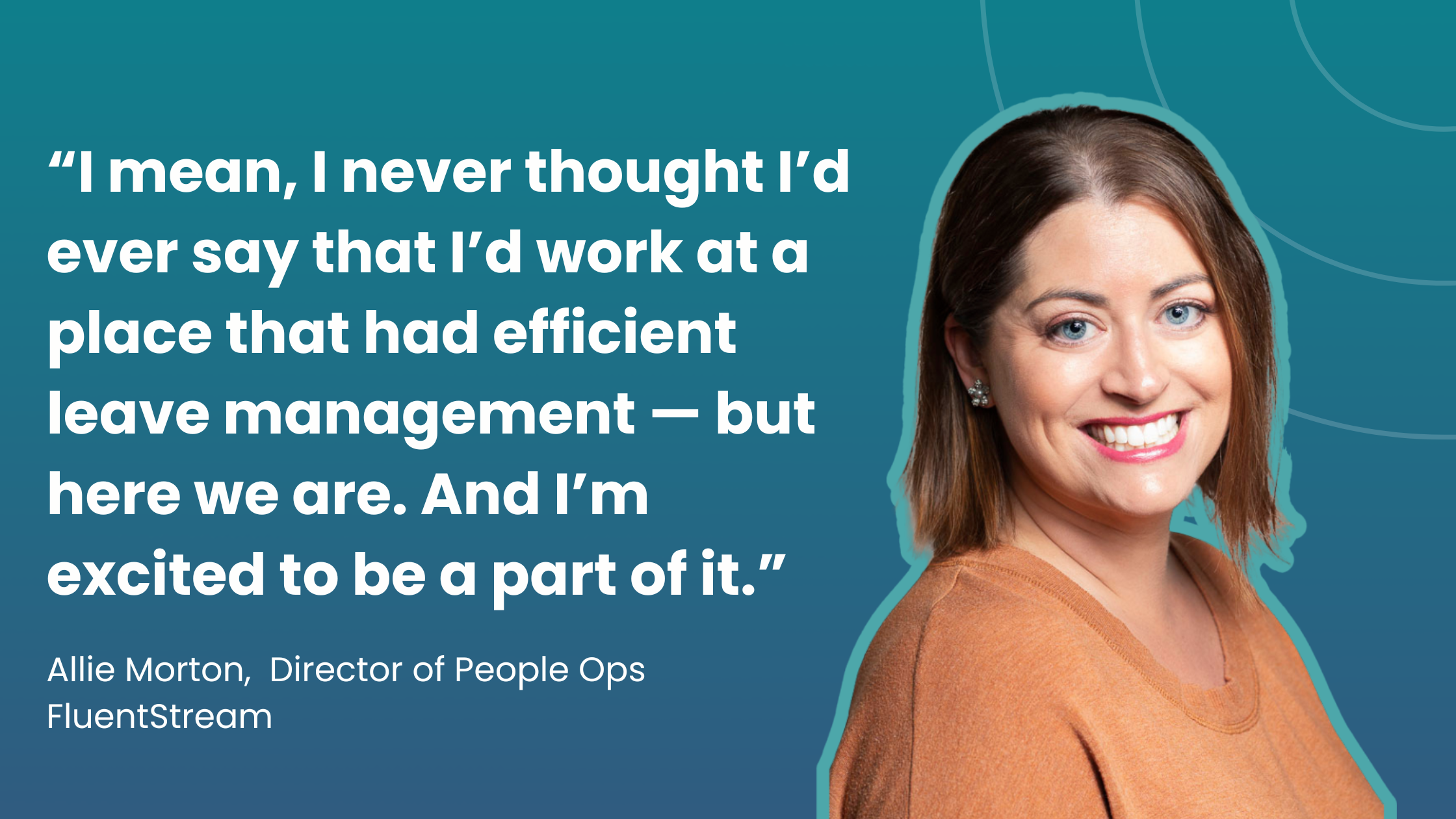
Organizations relying on outdated tools and frameworks are finding it harder to keep up, not just legally, but culturally. Allie summed up the transformation best when she said, “I never thought I’d work somewhere with efficient leave management, but here we are. And I’m genuinely excited about it.”

Bringing Confidence and Clarity to the Leave Experience

FluentStream didn’t just fix a broken process, they redefined how leave should work for a modern, distributed team. With Tilt, they gained:

  • Consistency across every jurisdiction and leave type
  • A smoother experience for HR and employees alike
  • Accurate, timely payroll with less back-and-forth
  • Equity and clarity at the heart of every leave


Tilt helps organizations turn their leave program into a competitive advantage, replacing reactive processes with proactive, people-first support. It’s not just about compliance or policy, it’s about giving HR teams the tools they need to lead with clarity, and employees the peace of mind they deserve.

Tilt is leading the charge in all things leave of absence management through easy-to-use tech and human touch. Since 2017, our proprietary platform and Empathy Warriors have been helping customers make leave not suck by eliminating administrative burdens, keeping companies compliant, and providing a truly positive and supportive leave of absence experience for their people.

Related Posts

Join us February 20th, 2025 at 11AM MST – Tilt Live Demo | Register Now>>