

If you’ve ever spent an afternoon untangling spreadsheet formulas, reconciling conflicting versions of a file, or double-checking FMLA dates for the third time, you’ve probably wondered whether there’s a better way to manage leave.
Spreadsheets can be a practical starting point for tracking employee leave. But as your organization grows and leave situations become more complex, keeping everything accurate and up to date can take more time than you’d like.
FMLA tracking involves more than counting hours. HR teams also need to monitor important dates, coordinate documentation, communicate with employees, and understand how FMLA may overlap with other leave entitlements and benefits. When those details live across multiple spreadsheets, inboxes, and shared documents, it can be harder to maintain a clear picture of what’s happening.
That’s why many HR leaders look for ways to move beyond manual tracking. A more structured process can reduce repetitive administrative work, improve visibility into active leaves, and help your team stay on top of important tasks.
Here’s what FMLA tracking can look like without relying on spreadsheets for everything.
1. Get a Clearer View of FMLA Leave in One Place
When you’re managing multiple leaves at once, finding the information you need shouldn’t require opening several spreadsheets and piecing together the details.
A centralized leave management platform gives HR a clearer view of active leaves and the information needed to manage them.
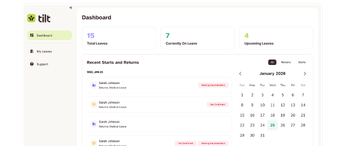
With Tilt’s HR dashboard, HR teams can view active leaves, review FMLA eligibility information, and track FMLA usage. Instead of manually updating multiple records, your team can access key leave details in one place.
And tracking FMLA isn’t just about counting hours. You also need to understand how leave dates align with other applicable programs, benefits, and company policies.
Tilt’s Leave Map brings those details together in an individual employee’s leave plan, helping HR see how FMLA may overlap with state leave programs, company policies, short- and long-term disability benefits, and ADA-related considerations.
Having that information organized in one place makes it easier to understand the broader leave timeline, identify details that need attention, and coordinate next steps.
2. Keep FMLA Tasks and Documentation Organized
Tracking dates and hours is only one part of administering FMLA. HR also needs a repeatable process for communicating with employees, collecting required documentation, and monitoring important deadlines.
When those steps depend on individual reminders or manually maintained checklists, it’s easy for the administrative work to pile up.
A structured workflow can help your team keep track of what needs to happen throughout the leave process, who is responsible, and when follow-up may be needed.
Tilt organizes leave information and related tasks within an employee’s leave plan, giving HR and employees greater visibility into the process. Employees can access information about their leave and the steps they may need to complete, while HR has a centralized place to manage key details and monitor progress.
This can be particularly helpful when documentation or other requirements have specific deadlines. Rather than relying entirely on inbox reminders or a separate spreadsheet, your team has a more consistent way to keep important tasks visible.
The goal isn’t to add another tool to your to-do list. It’s to create a process that makes the next step clearer for everyone involved.
3. Make the Leave Process Easier for Employees to Navigate
FMLA can be complicated for employees, too. They may be navigating a health condition, caring for a family member, or preparing for a major life change while trying to understand eligibility, paperwork, and deadlines.
A spreadsheet might help HR keep track of the administrative details, but it doesn’t necessarily give employees a clear picture of what to expect.
A more structured leave process can help employees understand the steps involved, find relevant information, and know where to turn with questions.
With Tilt, employees can access information about their leave plan and the actions they need to take throughout the process. HR can spend less time piecing together updates and repeating basic instructions, leaving more room for the conversations that require a personal touch.
Technology shouldn’t replace the human side of leave management. It should help make the administrative side more manageable so HR can focus on supporting employees when they need it most.
4. Build More Consistency Into FMLA Tracking
Manual processes can work, but they often rely on the person maintaining the spreadsheet to remember every update, follow every step, and keep records consistent.
That can become challenging when multiple HR team members are involved, managers need information, or several employees are on leave at the same time.
A centralized system and documented workflow can help your organization establish a more consistent approach to tracking leave, recording information, and monitoring follow-up.
Automation can also reduce the need for repetitive manual data entry. That means fewer opportunities for certain types of administrative errors—not a guarantee that errors or compliance issues will never occur.
HR still needs to review employee circumstances, apply the appropriate requirements, and seek qualified guidance when a situation calls for it. The right tools can support that work by making information easier to find and important tasks easier to monitor.
Is It Time to Move Beyond Your FMLA Spreadsheet?
You don’t necessarily need to abandon your spreadsheet tomorrow. But if maintaining it takes significant time, information is scattered across multiple files, or it’s becoming harder to keep track of deadlines and employee needs, it may be time to consider another approach.
Start by asking yourself:
- Can I quickly see the status of every active leave?
- Do I have a reliable way to track FMLA usage and important dates?
- Can I easily understand how FMLA overlaps with other leave programs and benefits?
- Is there a consistent process for documentation, employee communication, and follow-up?
- How much time does my team spend updating spreadsheets and reconciling information?
If your current process is working well, you may only need to make a few improvements. If it’s becoming difficult to maintain, a dedicated leave management platform may help you simplify the administrative work while maintaining visibility and control.
Tilt’s Leave Experience Management platform helps HR teams organize and track leave, manage key information in one place, and provide employees with a clearer leave experience. You can manage leave internally using Tilt’s software, with the option to add Premium Support for dedicated Leave Specialist support for employees and more complex leave situations.
Your FMLA tracking process doesn’t have to be the part of your day that takes the most energy. A more organized approach can give you greater visibility into leave, help you stay on top of important tasks, and free up time for the people behind the paperwork.
Explore Tilt’s platform or book a demo to see how it could work for your team.