How Benefits Brokers Win Big By Providing LOA Management Solutions to Clients

As a benefits broker, you’re constantly thinking about ways to strengthen your relationships with clients to build long-lasting loyalty. Providing the solutions that matter most to People Teams can demonstrate that you understand their needs while providing exceptional value and customer service.

When it comes to leave of absence management, your clients are spending way too much time on administrative tasks and tracking, are nervous about compliance risks, and need a solution that not only alleviates their burdens but also provides real ROI to their organizations. 

Here’s how Benefits Brokers can build trust and be a client savior by offering a leave management solution like Tilt:

Administrative relief

Tilt’s platform gives your client’s leave management support at scale without having to lift a finger. When your client has an employee needing to take a leave of absence, they log into Tilt where all the information and guidance they need to have a successful leave journey awaits them. All of the paperwork, education, communication, and frantic Google leave law research all get taken off your client’s plate. To put it simply, we automate your client’s least favorite to-dos all while giving them complete visibility into each leave through easy-to-use dashboards. 

Even better, our in-house legal and compliance team ensures that our platform is always current with the latest leave laws, meaning your clients can rest easy knowing they’re compliant, and their employees have a trusted resource should any leave law questions arise throughout the journey. 

Here’s what one of our customers says about the administrative relief TIlt provides. It’s the kind of support that will have your clients singing your praises for providing them:

“We really feel we can leave our leaves in the hands of Tilt and they will manage from start to return. We spend way less time tracking down and determining FMLA eligibility and what is needed for a leave. I imagine anywhere between 8-10 hours a week have been saved when we transitioned to Tilt, which has been the biggest benefit to our time management goals.” – Erica Bernal, Sr. Benefits Manager @ Pie Insurance

Return on investment

Relieving administrative burdens and alleviating compliance anxiety is a great way to win big in the eyes of your clients, but if it’s not economical the conversation isn’t going to get very far. There is real tangible ROI on the hours saved by freeing up People Teams to do more meaningful work, but Tilt also provides ROI in the following ways on top of that:

  • Improve retention: A negative leave experience can lead to an increase in employee turnover and a decrease in employee productivity and engagement. Tilt can make it so your clients are reducing the costs associated with replacing employees who don’t return after a mismanaged leave of absence (more on this here). 
  • Capitalize on state benefits programs: Tilt makes it easy for employees to file for state benefits ensuring that your clients are swooping in on state-funded programs meant to help offset salary costs for employees on leave. Tilt is the only solution that can provide empathetic support for employees at scale so that your clients don’t have to (more info on this here). 
  • Avoiding lawsuits: Leave law compliance is massively important to your clients, and above all the other headaches associated with what they need to do to manage a leave, having the leave law experts at Tilt running the show means that costly legal fees and lawsuits over mismanaged leave will be a thing of the past.

Payroll clarity: When your client is managing leaves either through a carrier or manually, payroll inconsistencies can be extremely costly. People Teams need to be mindful of salary increases while employees are on leave, or even start and end dates shifting based on initial leave dates needing to be adjusted (say, for an earlier-than-expected pregnancy). Tilt’s platform gives payroll a window into each leave, and our automated pay adjustments ensure their people are getting paid exactly what their owed: 

“Week one, Tilt saved us tons of money by figuring out an overpayment issue with one of our leaves. It left quite the impression!” – Becca Derrico, HR Generalist @ Booster

Win big with Tilt

People Teams turn to Benefits Brokers to provide them with the guidance and tools that they need to be successful in their operations. For Brokers to establish a high level of trust and long-term relationships with their clients, they need to reliably provide administrative relief while proving to leadership there is a bottom-line return on the investments. You can provide all this and more with Tilt.

About Tilt

Tilt is leading the charge in all things leave of absence management through easy-to-use tech and human touch. Since 2017, our proprietary platform and Empathy Warriors have been helping customers make leave not suck by eliminating administrative burdens, keeping companies compliant, and providing a truly positive and supportive leave of absence experience for their people.

Related Posts

Breakdown: Standalone Leave Management Software Vs. Traditional Carriers

As an employee benefits broker, you understand the importance of providing your clients with the best possible benefits package. One area of confusion that may arise in client conversations is how a standalone leave management solution like Tilt might differ from a traditional benefits carrier. 

To help with that we’ve outlined some of the key factors below so that you and your clients can make an informed decision on what is best for their organization.

How do traditional carriers manage leave?

Some traditional carriers do have a leave management component to their offerings, but the process for employees to actually take a leave, and for HR to effectively manage that leave, creates friction and compliance risks. 

Further, leave of absence (LOA) processes provided by carriers aren’t typically streamlined for HR. The LOA offerings they do provide aren’t designed specifically for efficient leave management or a supported leave journey. People teams relying on traditional carriers to manage leave are stuck navigating siloed systems where visibility is limited and employee information may be stored across multiple platforms, spreadsheets and email threads that are nearly impossible to keep track of and keep secure.

The lack of administrative visibility for HR and the “call center” experience for employees when questions arise are some of the factors that can create a negative LOA outcome. Traditional carriers are not set up to manage a leave of absence in a way that truly helps HR deliver an empathetic and supportive leave of absence to their employees.

How does standalone leave management software work?

If your client is exploring the possibility of a standalone leave management solution like Tilt, it’s important that the solution works in harmony with whichever carrier they use. 

Unlike traditional carriers, standalone leave management solutions are 100% focused on solving the problems and pain points impacting People Teams and employees’ experience with a leave of absence. This means that your clients can be confident that their leaves are being managed by the experts.

Tilt’s approach to managing all types of leave across the country is by providing your clients with:

  • Easy-to-use platform
  • Scalability & automation
  • Visibility for People Teams, Payroll, Employees and Managers
  • In-house legal and compliance team
  • 1-1 support by our Leave Success Managers (AKA “Empathy Warriors”)
  • Carrier agnostic

Benefits of standalone Leave Management Software

Administrative Relief: Leave management software takes all the manual processes required by traditional carriers or in-house methods and automates them under one digital roof. This dramatically reduces the risks associated with mismanaging a leave all while alleviating the administrative burden on managers and HR pros. It allows your clients to provide a smooth, simple and supported leave experience to their employees so they can spend more time on the tasks they were hired to do.

Compliance: A major risk your clients are facing is the legal ramifications that can result from a manager misstep (intentional or otherwise), inconsistent leaves that could potentially be deemed preferential treatment, remote workforces in states the HR team has never known the leave laws for, and the evolution of those laws and state benefits. 

Tilt’s in-house legal and compliance team ensures that the platform is always up-to-date with the most current federal, state, and city laws. This gives your clients the confidence that their leaves are being administered correctly. 

Employee Satisfaction: A leave of absence is often an inflection point in an employee’s relationship with their employer. The way in which an organization comes through for their people when they need it most can play a major factor in them returning to the organization or seeking pastures elsewhere. Having a leave management process that is easy, supportive and empathetic increases trust with the employee and establishes a bond upon their return to work.

If your client currently depends on carrier call centers then there’s a greater chance that those employees won’t be walking through that door, and that increase in turnover due to a poorly managed leave sends a strong message to other employees about how they’ll be treated when a life event happens to them. A solution like Tilt provides your clients with the perfect tool to successfully administer leaves and have employees return feeling engaged and satisfied. 

Money Savings: There are several ways in which a standalone solution like Tilt will save your clients money. For starters, legal fees from a mismanaged leave can submarine an organization, and the costs to replace employees who don’t return from leave at all are substantial.

Further, Tilt’s technology and team of leave experts ensure a smooth and simple process for employees to apply for state benefits, which would save your client $10,000-$18,000 per leave of absence (depending on leave type and state). More on the financial benefits of a solution like Tilt here.


How benefits brokers shine through leave management

At the end of the day it’s essential that your clients trust your ability to steer them in the right direction about what benefits are best for them and their given situation. Not all clients are the same and not all clients will have the same needs.

Every HR team is responsible for managing their org’s leave whether they like it or not, or whether they’re set up for success or not. As a benefits broker, you can give your clients a big win and earn their trust by letting them know there’s a better way to do leave management. A solution like TIlt works in conjunction with their current carriers and puts leave management processes into the hands and tools of the experts.

About Tilt

Tilt is leading the charge in all things leave of absence management through easy-to-use tech and human touch. Since 2017, our proprietary platform and Empathy Warriors have been helping customers make leave not suck by eliminating administrative burdens, keeping companies compliant, and providing a truly positive and supportive leave of absence experience for their people.

Related Posts

Tilt’s Do’s and Don’ts of Leave Conversations

So you’re looking to forgo the “open mouth, insert foot…then open wallet” scenarios that many organizations face when navigating leave of absence conversations? Well it starts by having a better understanding of what can and can’t be said to an employee on leave, and then, educating your workplace on how to follow suit.

Communication breakdowns extend beyond HR departments, as one of the biggest employment law violators are not People Teams, but employee managers. At Tilt, we have major love for all the managers out there, we know they are wonderful at what they do, but leave of absence experts? Well, most are asleep at the wheel and will be in for a rude awakening if they make a communication misstep.

Employers have a responsibility to communicate effectively with their employees, especially those who are on leave. Unfortunately, there are common mistakes that employers make when communicating with employees on leave that can have serious consequences. We’re here to break down some of the do’s and don’ts so you can provide the best leave experiences possible.

Communication frequency

Don’t stay silent: It’s understandable to be so weary of saying something you shouldn’t that you don’t say anything at all. One of the most significant mistakes employers make, however, is failing to communicate with employees on leave. The employee may feel isolated, uncertain, and anxious about their return to work. 

Do stay in touch: Employers should stay in touch with their employees on leave by communicating regularly to show support and provide updates on the workplace. Managers can share about company celebrations or team successes and offer any assistance that the employee may need. Communication should stray away from the unwavering support of the employee or keeping them engaged with the happenings of the organization.

Be Human

Don’t sacrifice empathy: Whether you want to use an external leave management solution like Tilt or you keep it in-house, you can’t overlook the value of providing empathetic communication with all of your leave conversations. When an organization doesn’t show empathy towards their employees on leave, it can create a negative work environment and decrease employee morale. Sending employees to a series of automated sequences via a 1-800 number does not provide the support they need when navigating a bereavement and just want a human to help them.

Do leave compassionately: Employers should acknowledge the very serious nature of an employee’s life situation outside of work and demonstrate compassion through their message and tone. Your people needing a leave of absence may be dealing with a variety of personal issues, such as illness, injury, or family matters. Your conversations should be laced with language that conveys your compassion for their situation, whatever it may be.

There are laws for a reason

Don’t assume managers know: HR pros are aware that as an employer you must comply with federal and state leave laws, which can vary depending on the situation of a given leave. Failure to comply with these laws can result in legal consequences, such as fines or lawsuits. That said leave laws are constantly changing, and if your knowledge isn’t current or being effectively passed on to managers your company is still at risk. 

Do consult the experts: Employers should consult with leave law experts to ensure they are following all applicable leave laws and regulations. Employers should provide support and resources to employees on leave and their managers so they know exactly what their rights are. If an employee has a question that you know you aren’t qualified to answer, it’s best to consult those who do this for a living and not leave your legal fate to the Google gods.

Content matters

Don’t be inappropriate: This seems obvious, but given that managers are uninformed as to what is and isn’t appropriate, this can often apply to mistakes that are made without ill intent. A manager may use language or a tone that is offensive to an employee on leave, further, they may pressure employees on leave to return to work before their leave is up, which can result in further health issues for the employee. Managers also might be unaware that an innocuous text requesting the employee on leave to “just hop on this call to answer a client’s question, it’ll only take 5 minutes,” is a no-no. A manager might think that is an appropriate request, and that manager is wrong.

Do allow them to leave: Organizations must respect the employee’s leave and allow them to take the time they need to recover without communicating anything that could be construed as pressure to return early or do work while they’re away. It’s okay to communicate messages of support to keep them engaged, or to respond with answers to questions the employee may have, but aside from that it’s imperative to allow your people the time they need to leave and not communicate anything aside from that.

In confidence

Don’t be lazy with private info: Sharing confidential information about the employee’s health or leave status with others in the workplace might violate that employee’s privacy rights. If you hear a noise, that’s just an angel getting its wings every time there’s another employee data lawsuit. As employees, our health status and leave status are private, and it is essential to maintain confidentiality when managing employee leave information. Unsecured spreadsheets and rogue email threads with sensitive attachments can, and have, come back to haunt many HR departments. Similarly, be mindful of using 3rd party leave vendors who want to file forms on behalf of employees…you might be communicating sensitive information to external parties in the process.

Do keep employee data secure: The best way to protect employee information is to not have it living scattered across multiple systems at once. Keep your employee information and communication that has their private information confidential by ensuring it’s kept under one digital roof that is safe and secure. Here’s how we do it at Tilt.

Leave convos done right

By communicating with employees on leave of absence in a warm and supportive manner you can help create a positive experience where employees return to work highly engaged and confident. Effective communication during a leave of absence can significantly improve an employee’s likelihood of returning to work while mitigating legal risks by misinformed managers. 

By showing empathy, communicating regularly, maintaining confidentiality, providing support and resources, being clear and concise, and avoiding pressuring the employee, employers can create a positive work environment that supports their employees during their time of need.

About Tilt

Tilt is leading the charge in all things leave of absence management through easy-to-use tech and human touch. Since 2017, our proprietary platform and Empathy Warriors have been helping customers make leave not suck by eliminating administrative burdens, keeping companies compliant, and providing a truly positive and supportive leave of absence experience for their people.

Related Posts

Tilt’s Leave Process Will Have Employees Singing Your Praises

Find your favorite paparazzi shades to wear because when HR pros use Tilt to manage leaves of absence they get a ton of shine from their peeps. Using Tilt to guide your employees through even the most complicated LOAs is the simple, human way to boost the affection your workplace has toward HR.

A well-designed and empathetic leave of absence process is essential for fostering a positive relationship between an employee and their employer. It allows you to demonstrate that you value their well-being, promote work-life balance, build trust and transparency, and show empathy and compassion when their world gets flipped on its head.

The reasons why an employee might need a leave of absence could have your employees scared, excited, or uncertain, but Tilt makes providing a supportive leave easy, and your people will love you for it.

All their leave needs in one place

The first reason why your employees will be thankful you chose Tilt is that we remove all ambiguity around where they need to go for anything related to their leave. As one of our customers put it, “Tilt is the one spot where my employee base knows they can go for anything leave-related. Tilt automatically streamlines everything. Before they were saying, ‘here are the 8 people I tried going to in order to figure out what I needed to do for leave.’”

With clearly laid out and informative customized leave plans, support from one of our in-house Leave Success Managers, calendaring, and payment information all under one roof, your employees will be so grateful that you’ve made their transition from work to life and back a smooth one, even if their life is rocky.

Leave plan love

When an employee logs into Tilt, a customized leave plan will be waiting for them. This will provide step-by-step instructions on what actions need to be taken, when they need to be taken, and information on their rights. We even provide additional information that should they choose to explore will help them feel even more comfortable going on leave.

Every leave is different and every state is different, so when life hits the fan there’s no more impactful way to let your employees know you care than being there for them when they need support regardless of what part of the country they’re in.

From the jump, employees can breathe a huge sigh of relief when their leave journey begins because they know you’ve invested in a solution that will guide them through whatever obstacles life throws their way. When life requires that work takes a back seat, let your people feel confident that you’ve got everything under control with Tilt. They’ll thank you for it!

Mapping out the journey

Leaves can get confusing even for the most seasoned HR pros, let alone someone who has never had to take a bereavement leave. You’ve got FMLA and state benefits and different starting and stopping points for each program…it can be overwhelming for the savviest of us.

Tilt makes it easy for employees to see exactly which programs start when, when they overlap, and how much time left they have. It’s all on the same platform so you know that your people are seeing what you’re seeing. Clear communication FTW!

Payment prioritization

Groundbreaking research has shown that employees like to know when they’re getting paid and how much they’re going to get paid.

When an employee takes a leave of absence it’s imperative that they stay informed on how it will affect their salary. They might be receiving job protection through FMLA but no compensation, or maybe they’re receiving state benefits, or perhaps your organization covers 100% of their leave because you don’t have the bandwidth to manage state benefits form filing (we make that easy too so employers don’t miss out on those funds), or some combination of the above.

Want to have an employee heap praise on HR? Make their money matters as clear as day while they’re on leave. It could be the difference between an employee being hung out to dry, or HR saving the day.

Tilt leave in your favor

Using Tilt to manage your leaves gives your people the support they need when they need it most. Our holistic approach to leave management is an essential element of a supportive and positive work culture. We provide clear guidelines with human support so that we can make it easy for employees feel more connected to and valued by your company, ultimately leading to increased job satisfaction, loyalty, and love for HR and your organization.

About Tilt

Tilt is leading the charge in all things leave of absence management through easy-to-use tech and human touch. Since 2017, our proprietary platform and Empathy Warriors have been helping customers make leave not suck by eliminating administrative burdens, keeping companies compliant, and providing a truly positive and supportive leave of absence experience for their people.

Related Posts

How Do Your Employees Really Feel About Your LOA Process?

As much as we wish it were true, life doesn’t stop throwing curveballs just because we have a job that demands our attention. As employees, we all experience moments where we need to take a break from work to turn our focus and attention toward life, whether it be for mental and physical health issues, extended family circumstances, or bonding with a child (among many other reasons). 

When these life events happen, companies that provide their employees with the option to take a leave of absence can be a huge relief. However, not all leave of absence policies and processes are created equal, and whether HR departments know it or not, employees may have serious concerns about the way their organizations manage LOAs and how it impacts their time away from work, as well as their feelings toward their organization itself

Policy clarity

A lack of clarity around your organization’s leave policies is one of the most significant issues that employees may face when it comes to taking a leave of absence. If your leave policies are even somewhat difficult to understand, this can lead to employee frustration, confusion, approval delays, and administrative errors. All of these concerns get amplified if an employee needs to take time off urgently. 

Further, if your policies aren’t clearly defined and easy to access, you run the risk of an employee not taking leave simply because they might not know it’s allowed. If your people have a lack of understanding surrounding the support they’re entitled to, they’re left to assume that the support isn’t there at all.

Administrative delays

While some employees who need to take leave can plan far in advance, say, for the birth or adoption of a child, a lack of HR bandwidth can be particularly problematic if an employee needs to take time off urgently, like for a medical emergency. If an employee needs to take leave right away and you don’t have an easy and efficient process in place to accommodate them you run the risk of administering a negative leave experience for them when they need it most. 

When a major life event happens and an employee feels like their organization isn’t prepared to support them, it can cause a crack in the foundational trust between them which in many cases can’t be repaired. Supportive streamlined processes that are easy to follow help ensure your people that right out of the gate the last thing that they need to worry about are administrative obstacles that could get in the way of benefits owed to them.

Cancel the call center

If a carrier is currently administering your leaves of absence there is a good chance that when your employee has a question, or needs to know the approval status of a leave, or wants to know what forms need to be filed for state benefits and if they’re filled out correctly, there’s a good chance that what they’ll be met with is a robo-operator coldly telling them to “push 5 to repeat these options.”

Call centers serve a lot of amazing functions in our society, but if you’re an employee who is coming to grips with a maternity leave that suddenly turned into a bereavement leave, the last thing you want to do is navigate a lifeless menu of dial tone options when you really just need someone, a real human, to help you when life feels helpless. 

It’s important to ask yourself if your organization is situated to treat the humans you support as humans when life is hardest.

Better know a stigma

The silent killer of any successful LOA experience is stigma. Stigmas surrounding a leave of absence can take many forms. Perhaps you’re going to be a new mother and assumptions are suddenly made about what you’re career motivations will be in the future. Perhaps you’re going to be a new father and the expectations are that you shouldn’t take paternity leave. 

While strides are being made, mental health still has rather large stigmas surrounding it, especially as it pertains to taking a leave of absence. According to a report by the World Health Organization (WHO), an estimated 280 million people worldwide suffer from depression, yet many people are hesitant to discuss their mental health concerns with their employers. This can lead to hesitation when it comes to requesting time off.

Educating your employees on the do’s and don’ts of a leave of absence can save more than your relationship with an employee going on leave, it can also keep you out of legal hot water. A manager operating with a stigma-infused, outdated mindset not only puts you at risk of costly turnover but also costly lawsuits if you aren’t careful.

Creating a positive LOA experience

A positive LOA experience can help build trust between employer and employee by making the policy and processes easy to understand, providing support with an empathetic touch, and creating educational awareness to start breaking down stigmas in the workplace. 

This is understandably a lot to manage for many HR departments, especially as they’re being asked to do more with less these days. Outsourcing this process to LOA experts can be an effective way to improve in all of the areas listed above while not adding additional responsibilities to a leave manager’s already-overflowing plate.

About Tilt

Tilt is leading the charge in all things leave of absence management through easy-to-use tech and human touch. Since 2017, our proprietary platform and Empathy Warriors have been helping customers make leave not suck by eliminating administrative burdens, keeping companies compliant, and providing a truly positive and supportive leave of absence experience for their people.

Related Posts

How Your LOA Process Impacts Company Culture

Company culture…a nebulous beast for all HR departments. Comprised of bits and pieces from every employee top to bottom, company culture is fluid and unique by its very nature. That doesn’t mean People Teams don’t have tools at their disposal to tame, mold and improve company culture in a way that maximizes both profit and employee happiness.

Perhaps unsurprisingly, taking care of employees when they need it most is one of the most important aspects of maintaining a positive company culture. When an employee takes a leave of absence it can be for a variety of reasons and can range from the straightforward to the complex, which can make it challenging for any organization to make it easy for employees to navigate potentially uncertain waters.

How employers manage a leave of absence can make or break the strongest employee bonds. This is why getting your LOA process right can be a major win for you and your organization, and why a poorly executed leave experience can negatively impact the company culture leading to decreased morale, productivity, and employee satisfaction.

Support and the power of perception

The amount of support, and perhaps more importantly the method with which it’s applied, can play a major role in the perception of your company’s culture. Navigating a leave of absence without empathetic support can lead to a feeling of being undervalued and unimportant, which is more than enough to negatively impact their perception of your organization from within.

Conversely, removing leave support uncertainties beyond a shadow of a doubt can have an undeniably positive effect on your culture. It’s important for companies to communicate clearly with employees taking leave and to provide support and resources to help them manage their absence and transition back to work. 

A common pitfall People Teams face should be aware of is recognizing that there can be a disconnect in the company culture you think you have and the actual culture as it’s perceived by your people. Putting a premium on investing in your employees’ perception of your organization by supporting them successfully through a leave journey is paramount.

Communication and morale missteps

One of the biggest challenges that organizations face when an employee takes a leave of absence is a drastic decrease in productivity and morale. When a team member is absent their workload may need to fall on other employees, leading to an increased potential of both stress and burnout if a plan isn’t communicated properly. On the flip side, having clear policies and procedures in place for handling leave of absence can help minimize disruptions to the workflow and keep morale high. 

Educate managers to ensure they are communicating clearly with the employee taking the leave of absence and with the rest of the team. Make sure expectations are transparent and agreed upon to minimize the chance of employee confusion and misunderstandings. 

Doing so has major positive effects on company culture as other employees will have a complete awareness of any new workload expectations, and further, they’ll feel more confident taking a leave themselves if they know that their work won’t suffer. Not doing so, of course, can have the opposite effect, where poor communication during an employee’s leave can lead to resentment and mistrust, which can erode the company culture over time.

Turnover and inconsistency

As mentioned above, it’s not just the support you provide employees, but it’s the way it’s provided that can have an impact on company culture. Are leaves being handled, but with the warmth of a polar bear’s toenail? Are they being administered inconsistently, where perhaps one employee is granted a leave of absence with little resistance while another employee’s request is denied?

Approaching each leave request with empathy and consistency is a must to avoid creating a sense of favoritism and breed negativity. There may also be legal ramifications for inconsistently managing a leave. Organizations should have training and processes in place so that all leave requests are handled fairly and consistently.

When employees aren’t feeling supported, or they sense favoritism is afoot (whether it is or not…perception is a powerful thing) they may be more likely to leave your organization once they return to work. Not only is it expensive to recruit and train their replacement, but the negativity attached to high turnover can also have a direct impact on the overall culture of your organization as well.

Positive leaves for positive vibes

Creating a positive leave experience for your employees is a vital piece to the company morale puzzle. Doing so correctly requires empathetic support, an emphasis on clear communication, and a consistent experience for all employees regardless of their leave journey.

Not all organizations have the capacity to do this effectively and if you’re one of them you’re likely well aware that you’re one bad leave experience away from submarining morale. If this is your situation then A) you are FAR from alone, many HR teams are strapped for headcount and are trying to squeeze as much out of their people as possible, and B) you have options to outsource your leave management process to experts who live and breathe making your LOA process a dream to help keep your company culture thriving.

About Tilt

Tilt is leading the charge in all things leave of absence management through easy-to-use tech and human touch. Since 2017, our proprietary platform and Empathy Warriors have been helping customers make leave not suck by eliminating administrative burdens, keeping companies compliant, and providing a truly positive and supportive leave of absence experience for their people.

Related Posts

The Importance of Personal Touchpoints in the Leave of Absence Process

Personal touchpoints throughout the leave of absence journey is a subject that doesn’t get touched on enough, so lucky for you we’re gonna touch on it right now. Oftentimes a leave of absence can be an isolating and confusing experience for employees, even if the reason is a positive one. Establishing a very human connection can make all the difference during a leave journey. 

As an employer managing a leave, you need to know what to say to employees, when to say it, and how to say it, in order for your people to feel truly supported in their most vulnerable life moments. Depending on the comfort level and preferences of the employee taking leave, a personal touchpoint might be a phone call, it might be a text, or it might even be an in-person meeting.

As with anything, too much of a good thing can be problematic. If an employee prefers to be texted, but their manager won’t stop calling them, that can have an important negative impact on the leave experience. Similarly, there can be serious legal consequences of a touchpoint pressuring an employee to return to work early, or to “just hop on this one call.” Employee touchpoints should be carried out with an intentional and thoughtful approach during a leave.

Retention through empathy and support

Employees who request a leave of absence are likely going through a major life shift. Whether it’s a positive shift or a somber one, providing personal touchpoints such as a phone call or face-to-face meeting if possible can help show empathy and support, which can make the employee feel heard and cared for.

There is nothing more cold, confusing and alienating to an employee going on leave than feeling like they have to blaze this unknown trail on their own. They might have questions about their leave, they might be unsure what their rights are, so be proactive and communicate with them to ease their fears. Not doing so can leave an indelible mark on an employee’s view of their organization, and it’s not surprising that employees who do not feel supported are more likely to leave

Receiving a phone call or having a face-to-face meeting with a supervisor or HR representative can make employees feel heard and cared for during a difficult time. Knowing that someone is there to listen and offer support can make all the difference.

Clarity = confidence

Even straightforward leaves can be confusing to an employee who has never taken one. Personal touchpoints provide an opportunity to communicate the process and expectations clearly. This can help prevent misunderstandings and confusion during the leave of absence period which in turn can help provide some stability in the lives of employees.

Their world might be flipped upside down while going through a leave of absence, so communicating clearly and effectively what an employee needs to do, why they need to do it, and when they need to do it, takes all the guesswork and confusion out of the process. Being proactive and sending reminders for everything from upcoming form filing deadlines or updates on company celebrations will 

The flow of personal touchpoints isn’t only employer to employee. When employees can ask questions and get answers in real-time, from a real human, it can help prevent misunderstandings and confusion during the LOA journey. By having a clear understanding of the process and expectations, employees can focus on their health and well-being, knowing that their job is secure.

Relationship building

When done effectively, personal touchpoints can help solidify relationships between employees and their supervisors, or HR team. By taking the time to connect on a personal level, employers can show their employees that they are valued members of the team. These connections can build trust and improve the overall working relationship.

Perhaps you can provide company updates, or maybe you celebrated the employee’s work anniversary while they were taking time away from work. Keeping that human connection will keep employees feeling engaged throughout their leave, and ease their minds that they aren’t being forgotten about.

Of course, not every HR team has the bandwidth to provide the support needed to provide personal touchpoints to every employee taking leave, but this doesn’t diminish how absolutely vital it is to LOA efficacy.

If your HR department can’t manage the effort required to deliver the level of service and empathy needed to effectively connect on a human level with each employee taking leave, it might be worth your while to look at external resources to provide dedicated support.

Touching success

A leave of absence is a crucial moment in the lives of employees and in their relationship to their organization. Through personal touchpoints, HR teams can ensure clear communication and expectations of the leave, provide personal and human-centric support throughout the journey, and help build lasting relationships between employees and their managers or HR team. By taking a warm and empathetic approach to the leave of absence process, employers can show their employees that they are valued and supported members of the team.

About Tilt

Tilt is leading the charge in all things leave of absence management through easy-to-use tech and human touch. Since 2017, our proprietary platform and Empathy Warriors have been helping customers make leave not suck by eliminating administrative burdens, keeping companies compliant, and providing a truly positive and supportive leave of absence experience for their people.

Related Posts

How Tilt Turns Leave Anxieties Into Love For Your Company

With stigmas around mental health finally melting away (hooray!), successful HR teams are looking at innovative ways to alleviate anxieties for their people because, despite technological advancements, stress on a global scale has never been higher. HR pros who audit their processes regularly are discovering that a major anxiety-inducing function they’re responsible for is how an employee experiences a leave of absence (LOA) journey. 

Of course, if you’re managing leaves you’re also probably feeling the anxiety of compliance concerns, communication breakdowns, burdensome administrative tasks, and uncertainty around payroll among other things. Tilt alleviates all of these pain points for those managing leaves in the department, and when it comes to employees, People Teams are learning that legacy systems provide a confusing, cold, and unsupported approach to LOA management, furthering employees’ anxiety when they need it most. 

Leave management software like Tilt can help to reduce LOA anxieties by streamlining the leave process and automating many of the tasks and procedures involved.

Transparency

Tilt takes the mystery out of leave by providing a clear roadmap for the entire employee leave journey. Robotic call centers and unintuitive platforms make even the most straightforward LOAs confusing and convoluted. When a leave request gets submitted because of mental health or heaven forbid a bereavement, the additional anxiety caused by a murky leave management process can be more than some can bear, and more than anyone should have to.

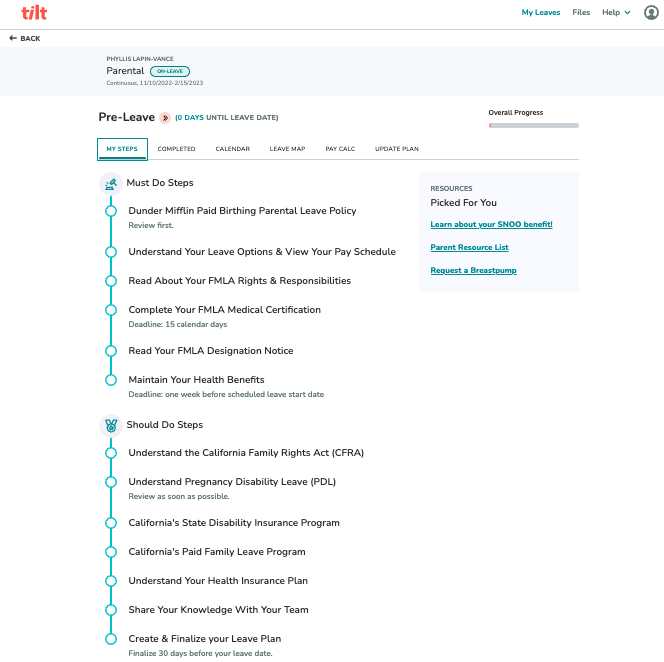
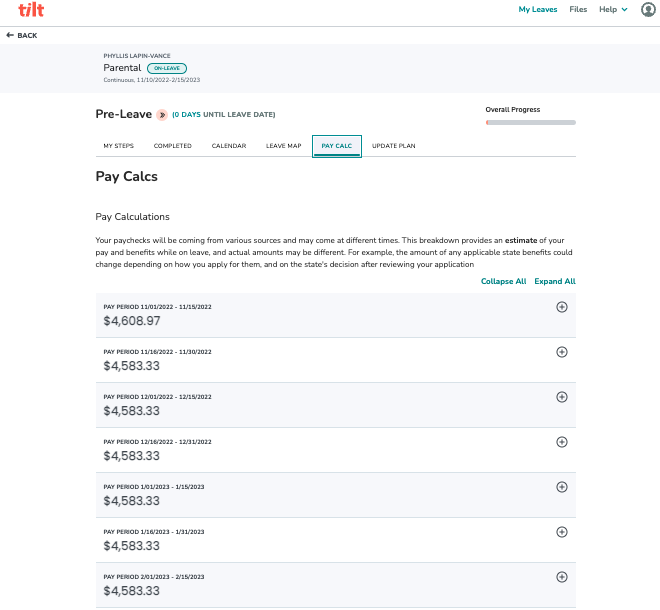
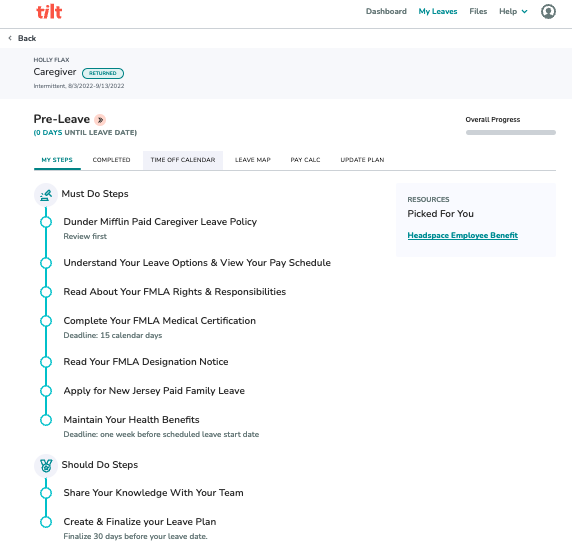
When an employee requests a leave of absence with Tilt not only do they get a clear and concise view of their pay, their time off, all of the forms they need to file, and when. We create a personalized leave plan just for them that ensures they’re prepared before the leave, during the leave, and for getting back on board.

Personalized "Pre-Leave" Plan
Pay Calculation Portal

With Tilt, everything is easy to access, navigate and comprehend because when things in life go sideways that’s when you need a clear path to relief the most. A consistent and efficient approach to leave management for your most important people.

A helping hand with a beating heart

Tilt tech is only one part of the holistic leave management solution we provide. The other way we reduce leave anxiety and make the LOA process a win for HR departments is that employees taking a leave with Tilt also get paired with one of our Leave Success Managers (LSMs). 

This means that there is a real Tilter with an empathetic beating heart there to guide them every step of the way if they need it. We take pride in our platform being easy to use for all leave types across the country, but we beam with pride because of the difference our LSMs make in the lives of so many people who just need someone to talk to when they have a question or are scared, excited and everything in between.

Christian Castorena - Leave Success Manager

Overall a great experience. Christian was very helpful and communicative throughout my entire process. I had absolutely no worries or stress about getting my leave approved! Victor G.

A leave of absence can run the emotional gamut for employees. They might be welcoming a new addition to their family or they might be coming to grips with their new reality of living with a disability. Whatever the reason, big life changes can rock the world of even the steadiest hearts and minds, and when your employees need balance back in their lives out LSMs are there to answer the call.

About Tilt

Tilt is leading the charge in all things leave of absence management through easy-to-use tech and human touch. Since 2017, our proprietary platform and Empathy Warriors have been helping customers make leave not suck by eliminating administrative burdens, keeping companies compliant, and providing a truly positive and supportive leave of absence experience for their people.

Related Posts

How Outsourcing Leave Management Keeps Employee Information Safe

To outsource or not to outsource? That is the question. Well, it’s “a” question at least, but when it comes to keeping employee information safe it’s a question whose answer carries some serious significance. Data security has been an invisible worry humming in the back of the mind of most HR professionals for a long time now, and most are learning that managing leave across outdated systems, spreadsheets and rogue email threads is a risk that they aren’t willing to take.

Outsourcing leave management with solutions like Tilt can help to keep employee information safe by providing a specialized, secure, and compliant system for tracking and managing employee leave. 

Here’s how outsourcing your leave management can help protect employee information and increase your compliance confidence.

Rely on the experts

Leave management service providers like Tilt have, perhaps unsurprisingly (though you would be surprised by others…), specialized expertise in the area of leave management, and offer a unified system that makes security, privacy, and compliance easy. Tilt also has an in-house legal & compliance team who live and breathe leave just for the purpose of supporting HR teams should questions arise. By outsourcing leave management, organizations can benefit from the expertise of the people who know everything about leave and ensure that their employees’ information is being handled in a secure and responsible manner.

Technically sound

Outsourcing leave management gives HR access to cutting-edge technology to manage employee leave, including secure systems for storing and accessing employee information. This provides a safe environment for HR to track and manage employee information without the stress of wondering which email thread housed which important documents.

Relying on in-house systems and Excel spreadsheets that were set up nine HR managers ago is a recipe for data vulnerability, security breaches or data loss. Tilt stores all employee information under one technically tight roof that provides access to HR members who need it while protecting that information from those who have no business seeing it.

Compliance trust and audit confidence

Are you familiar with all of the latest laws and regulations related to employee leave, including data protection and privacy laws? If your answer was somewhere between an audible laugh and a physical cry you are far from alone. By outsourcing your leave management responsibilities to a reputable third party like Tilt, you can ensure that your LOA processes are compliant with relevant regulations and reduce the risk of legal liability. 

Now more than ever HR departments are under the magnifying glass of leadership to ensure the organization’s data ducks are in a row. An outsourced LOA solution like Tilt provides detailed reporting and auditing capabilities, allows you to track employee leave information and ensure that it is being handled securely and responsibly.

V for Vendor Vetting

Outsourcing leave management can help to keep employee information safe by providing specialized expertise, secure technology, compliance with relevant laws and regulations, and auditable processes. Not all vendors are created equally though, so it’s important to thoroughly understand the entire leave management process with any potential vendor. Identifying potential gaps in employee information safety (like third-party file forming) could spell disaster for your employees and your organization.

About Tilt

Tilt is leading the charge in all things leave of absence management through easy-to-use tech and human touch. Since 2017, our proprietary platform and Empathy Warriors have been helping customers make leave not suck by eliminating administrative burdens, keeping companies compliant, and providing a truly positive and supportive leave of absence experience for their people.

Related Posts

Why Protecting Employee Information Is Paramount While on Leave

The phrase “data security” gets tossed around so frequently that sometimes it’s easy to lose sight of why it’s so important. When it comes to managing leaves of absence, protecting employee information is especially important, and if you aren’t careful with it (say allowing 3rd parties to file forms on behalf of employees) you’re running the risk of some serious issues.

Let’s dig into what the issues are and discuss ways to protect employee information.

I fought the law and the law…was expensive

Employers have a legal obligation to protect their employees’ personal information, including information related to their leave of absence. This may include information related to their health, disability status, and other sensitive information. Regardless of if you’re using a 3rd party vendor to manage leaves or you’re relying on spreadsheets (we feel you), your organization is responsible all the same for ensuring that employee information is protected.

Why does such a legal obligation exist? Well, protecting employee information is a matter of privacy and respecting the rights of employees. Employees have a right to expect that their personal information will be kept confidential and used only for appropriate purposes. That expectation becomes difficult to guarantee if employee information isn’t housed and handled in a secure manner.

Getting it wrong not only puts your organization at risk of violating employee privacy, it can also be costly. With the average FMLA lawsuit running roughly $80,000 to defend, it’s in the best interest of everyone to ensure data security.

Compliance with regulations, which of course evolve over time might actually be required by law depending on your country and industry. Violating privacy laws such as the ones under the Health Insurance Portability and Accountability Act (HIPAA) or the General Data Protection Regulation (GDPR) can bring a nightmare scenario to real life for your legal and compliance department. If you’re thinking to yourself, “What if we don’t have a legal and compliance department?” Well, that underscores the importance of keeping your employee data secure even more.

Keeping your rep up

Protecting employee information can do wonders for maintaining the reputation of your organization and building trust with employees. If employees feel that their personal information is being handled responsibly and securely, they are more likely to trust your organization and feel confident in your ability to protect their interests while away from the workplace. 

If that weren’t reason enough, organizations that prioritize protecting employee information while taking a leave can avoid employee discrimination pitfalls. Properly protecting employee information ensures that employees feel protected from discrimination based on their health status or other personal information related to their leave.

There’s no way to positively spin an employer dragging your organization through the mud on the front page of Reddit. A lack of security with employee information can have a lasting negative impact that should be avoided at all costs.

3rd-party protection

If using multiple systems and spreadsheets is keeping you up at night, you might consider using a 3rd party to specifically manage leaves. Doing so can often offer you the technological  sophistication needed to properly manage leaves while keeping data secure.

When vetting 3rd party leave management options it’s important to get a full understanding of how they handle employee information. Being able to house all employee information under one secure roof can alleviate a ton of HR concerns, but depending on how the manage form filings you might not be totally out of the woods.

Relying on 3rd parties to file forms on behalf of employees can have ramifications that tarnish the warm fuzzy feeling you get by outsourcing all LOA-related tasks, but there are risks associated with filing forms representing someone you aren’t. For one, you’re allowing someone who isn’t your employee to act as that employee, and you’re also giving that person outside of your organization access to that information without any real guardrails.

All this to say that 3rd parties can allow you to ditch legacy systems and spreadsheets while offering a fantastic solution to your data security concerns, but it’s important to understand their leave management process from start to finish so you can identify any possible areas where your employee’s information might be compromised. 

About Tilt

Tilt is leading the charge in all things leave of absence management through easy-to-use tech and human touch. Since 2017, our proprietary platform and Empathy Warriors have been helping customers make leave not suck by eliminating administrative burdens, keeping companies compliant, and providing a truly positive and supportive leave of absence experience for their people.

Related Posts

Join us February 20th, 2025 at 11AM MST – Tilt Live Demo | Register Now>>